 In this area
The Bonn issue
Altstadt, Bonn: cherry blossom lanes, cellar pubs and a quiet bohemian grid
Bonn’s Altstadt is a low-rise workers’ quarter that blooms pink in April, then settles back into a lived-in mix of pubs, cafés, studios and small shops.

By Ingrid HoffmannBonn's galleries and concert halls
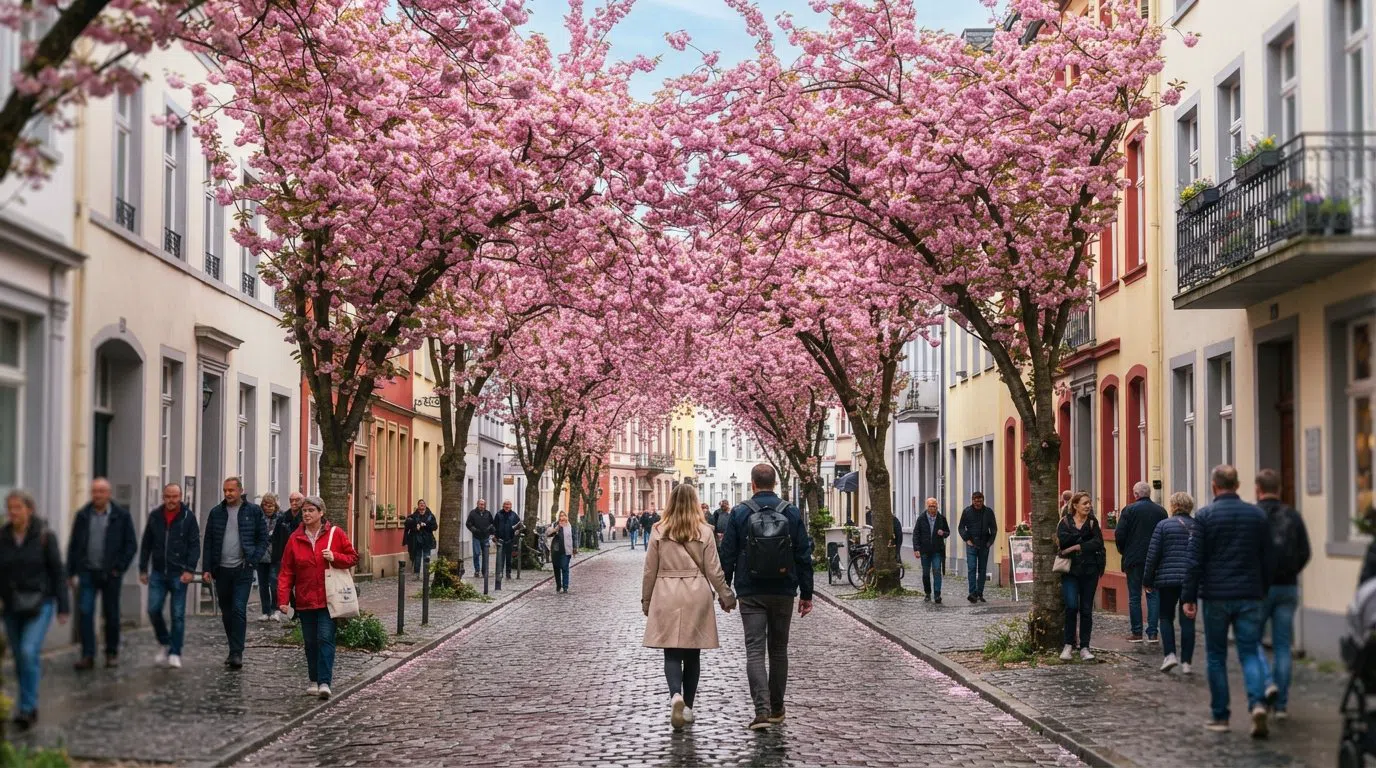
Heerstraße changes colour before it changes character. For about ten days each April, the lane north of Bonn’s centre becomes a canopy of Kanzan blossom, and the pink overhead is so dense that camera crews come from as far as Japan to film it. Then the petals fall, the buses pass again, and the Altstadt resumes its ordinary life: cellar pubs opening early, bicycles locked to railings, a döner smell drifting from one doorway and espresso from the next.
What the Altstadt is known for
The first thing to understand is that Bonn’s Altstadt is not medieval, however much the name may suggest otherwise. It is a former craftsmen’s and workers’ quarter, laid out in the 1800s as a low-rise grid of four-storey rental houses on narrow one-way streets, much of it under monument protection. Officially, it belongs to the Nordstadt, and in practice the two names are used almost interchangeably. The tone is set by the street furniture of daily life rather than by grand heritage theatre: art on the walls, students on bikes, long-settled locals at corner tables, and a demographic that leans more bohemian than polished.
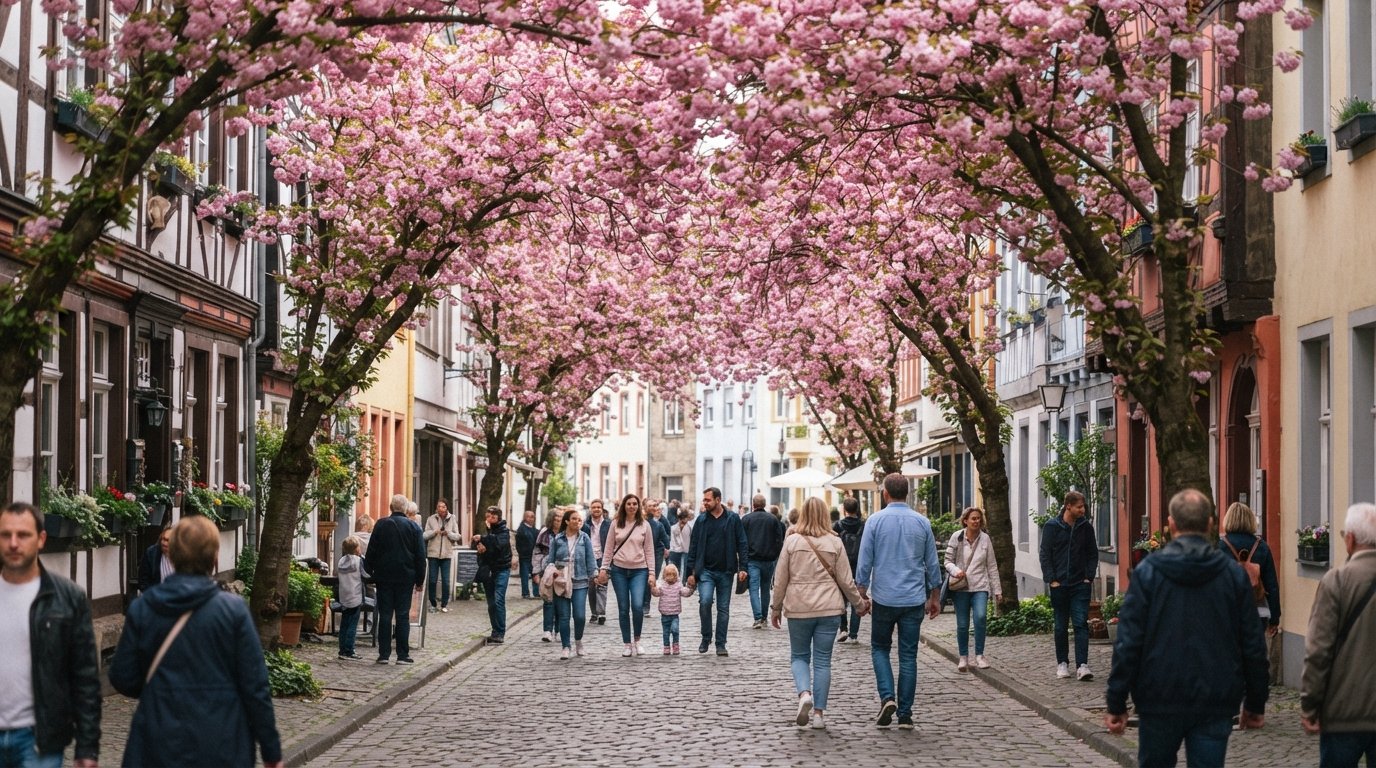
The blossom is the obvious seasonal spectacle, but the street plan is what gives the quarter its lasting appeal. Around 300 Japanese ornamental cherries were planted during 1980s renovations, and each April they erupt into bloom. Heerstraße and Breite Straße are the headline acts, each lined with roughly 60 trees that meet overhead in a continuous pink tunnel. Maxstraße, Peterstraße, Dorotheenstraße and plenty of smaller lanes carry their own blossom too, so the district feels less like one famous photo-op than a whole neighbourhood briefly lifted into colour. Peak bloom usually lands in mid-April and lasts no more than ten to fourteen days; warm weather shortens it further. On the busiest blossom weekends, the city closes the streets to through-traffic, which only deepens the sense that the Altstadt is being walked, not driven.
The other thing the Altstadt is known for is its pub culture. This is Bonn’s densest concentration of Kneipen, many of them in vaulted cellars that are around 150 years old, and the whole district works beautifully for a night on foot. The streets are close enough together that a crawl feels almost architectural: one vault, one back garden, one small bar room after another. Add artists’ studios, the Frauenmuseum, and a scattering of independent shops, and you have a quarter that rewards drifting rather than planning. It is scruffy in the good way, and cheaper than the pedestrianised centre a few streets south. People who live here tend to be quietly smug about it, and after an evening moving between Heerstraße and Maxstraße, it is not hard to see why.
Plan your Bonn trip
Live prices from our booking partners.
Guests & rooms
Free cancellation on many rooms. We may earn a commission when you book.
Where to eat & drink
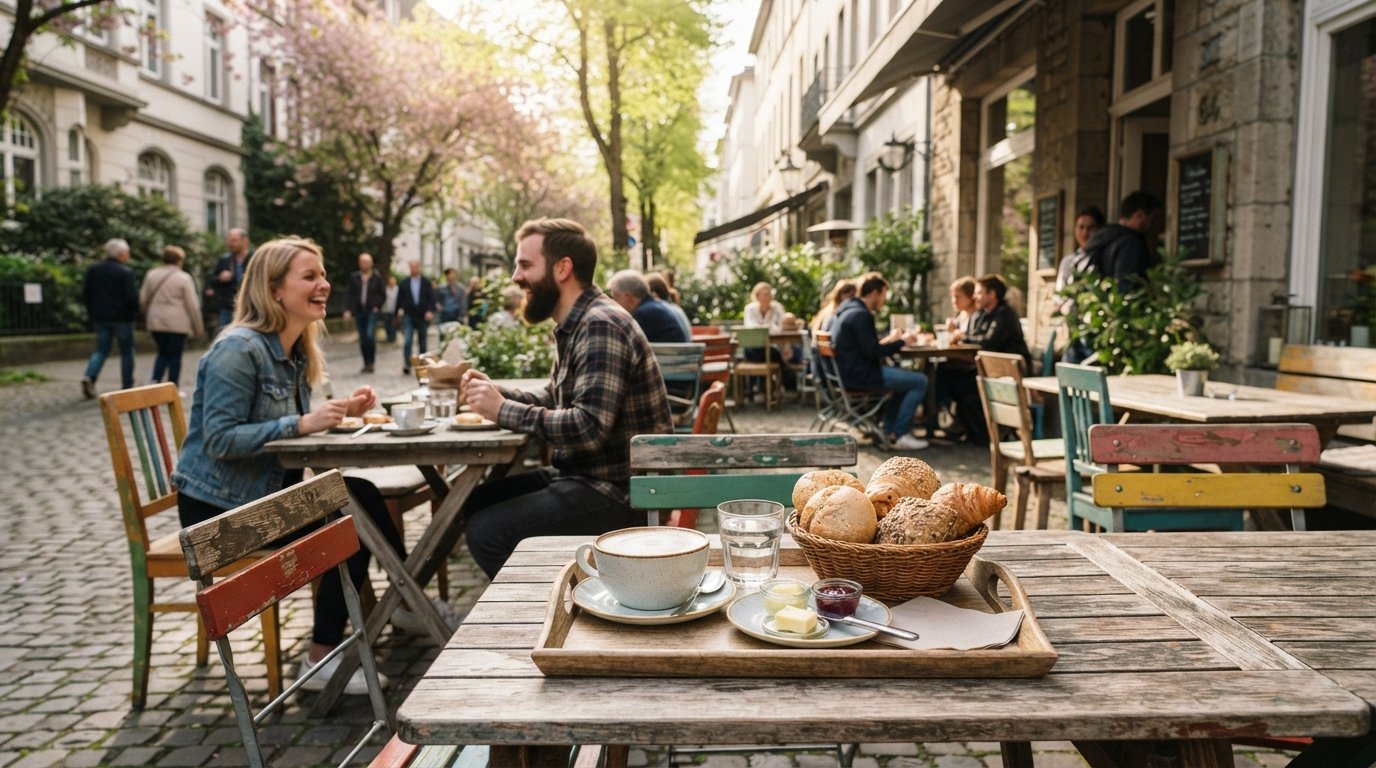
Morning in the Altstadt belongs to Café Pawlow on Heerstraße 64, an arty institution with indie on the stereo, mismatched furniture and a sun terrace right on the lane. Breakfast here is ordered by ticking boxes on a pre-printed slip, a small ritual that suits the place’s easy, unhurried manner. Fresh bakery rolls, café latte in a bowl the size of a soup tureen, and a bill that can come to around €4–5 make it one of those rare neighbourhood cafés that feels both lived-in and good value. On Sundays, its brunch draws Altstadt residents and university kids in equal measure, and the room has the agreeable buzz of somewhere that belongs to the quarter rather than merely serving it.
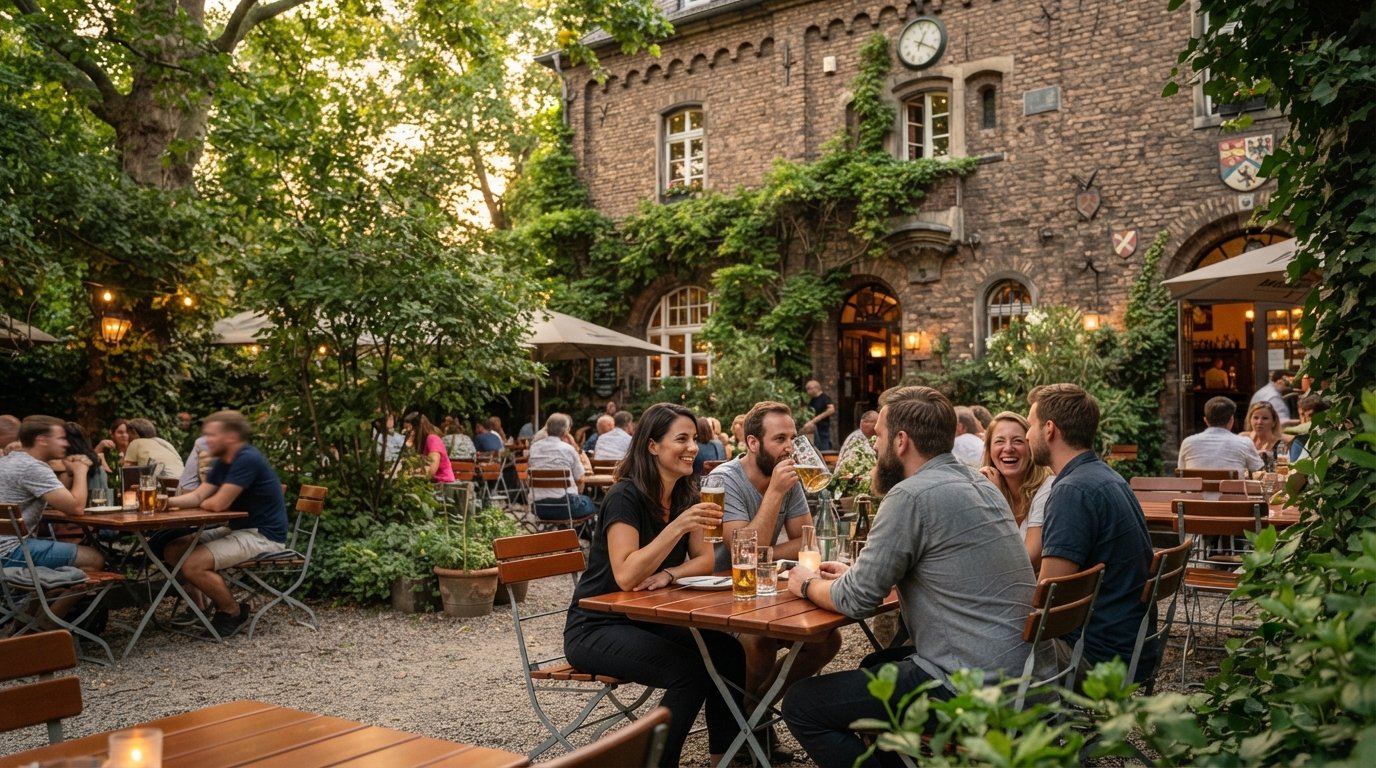
For dinner, the Altstadt’s multicultural streak shows itself plainly. Qué será at Heerstraße 98 is a Spanish tapas bar with live jazz on some nights, and the menu’s reputation rests on dishes like gambas and bacon-wrapped dates. It is the kind of place that changes the whole temperature of an evening: a little music, a little clatter, a street outside that still feels within reach. Not far away, Bierhaus Machold at Heerstraße 52 has been pouring beer since 1905 in a protected brick hall. It brews its own unfiltered top-fermented house special, pours half a dozen others, and serves hearty Rhineland plates alongside a big Sunday brunch buffet. In summer, the leafy back garden has an almost Mediterranean feel. It is worth saying, though, that Machold is noticeably pricier than the cellar pubs a street away, so it reads as a treat rather than a default.
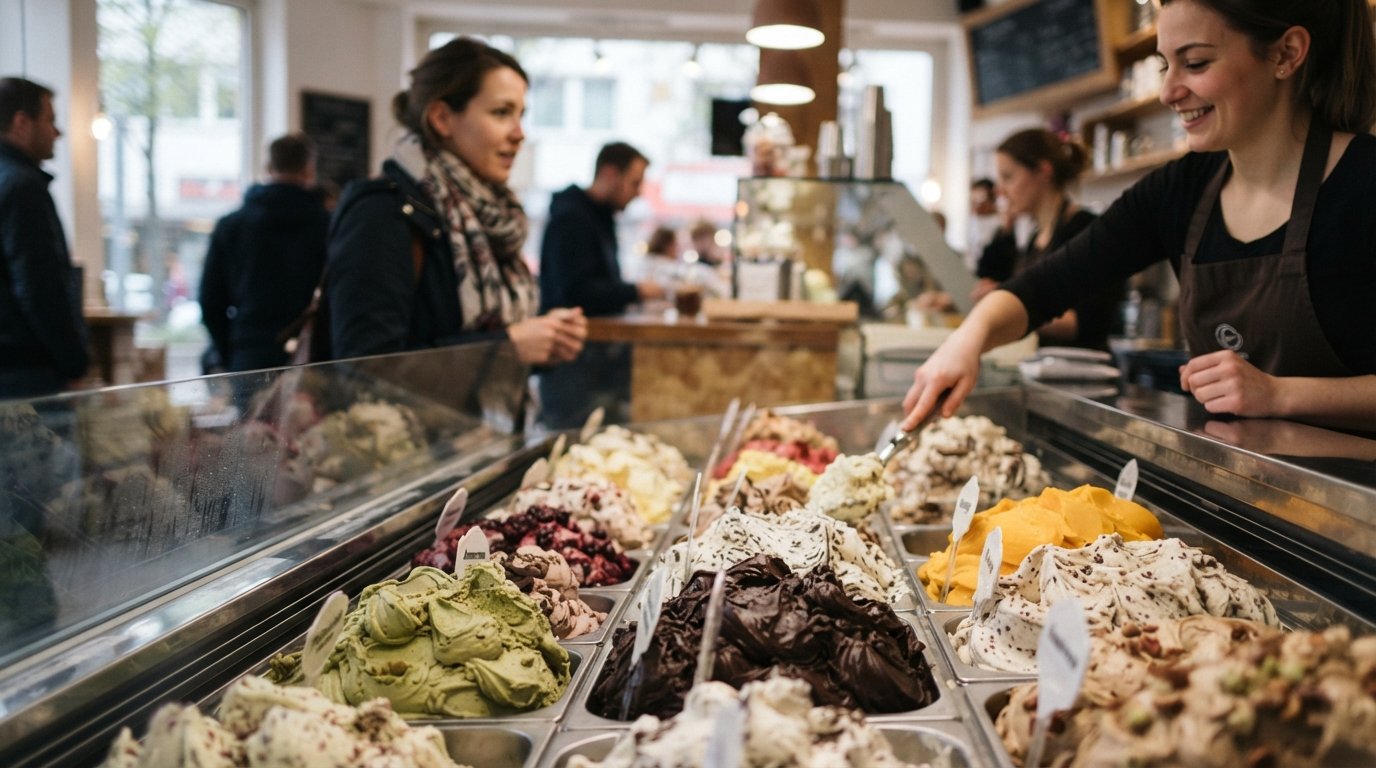
Between meals, EisLabor on Maxstraße 16 is the sweet pause the neighbourhood deserves. This handcrafted gelateria has been going since 2010 and has been ranked among the world’s best ice-cream shops; the flavour list changes daily, which is exactly the sort of detail that keeps a place from feeling frozen in its own reputation. Order whatever is on the board that day and eat it while walking the block, because that is how the Altstadt works best: a little at a time, on foot, with no need to hurry.
Beyond these anchors, the quarter is thick with döner counters, Turkish grocers and Italian kitchens, so cheap grazing is easy. That practical mix is part of the Altstadt’s charm. It is not a place that performs culinary exclusivity; it feeds the neighbourhood it serves.
Going out
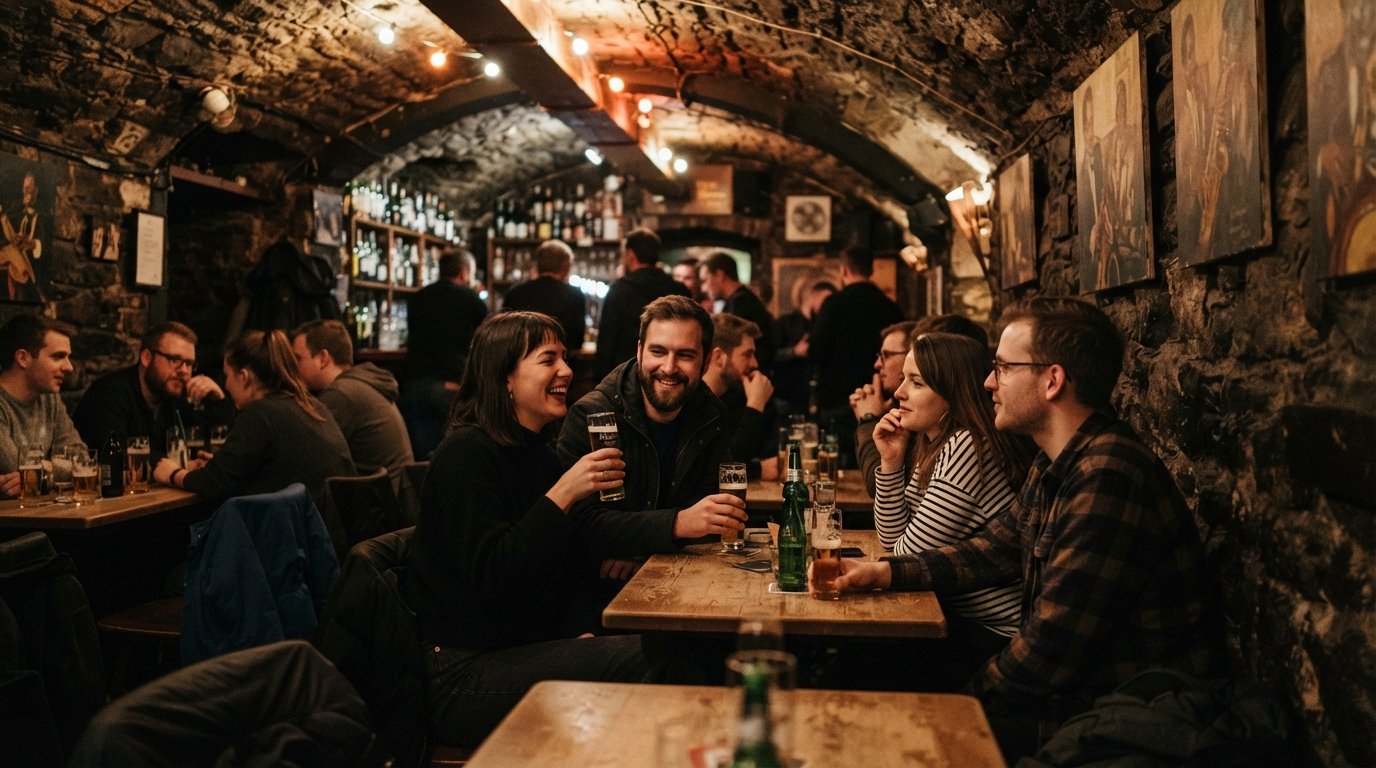
After dark, the Altstadt becomes Bonn’s most persuasive argument for the neighbourhood pub. The joy of it is the density: everything is within stumbling distance, and the routes between places are as much a part of the evening as the drinks themselves. Der Stachel at Maxstraße 30 is the classic stop. It sits in a cellar under a 150-year-old vault, with alcoves painted with New Orleans jazz scenes, cheap drinks, cash-only service and DJs at the weekend. The sound system leans rock, the crowd is students and regulars, and locals will tell you that a proper Altstadt night is not complete without it.
Das Nyx at Vorgebirgsstraße 19 anchors the Frankenbad end of the quarter and behaves more like a pub-club than a simple bar. There is a beer garden, more than twenty beers on the list, karaoke on Tuesdays and Thursdays, pub quizzes, and weekend hours that stretch until 5am from Thursday to Saturday. It is where the evening tends to end, which is saying something in a district with this many temptations packed into such a small grid. The atmosphere is less about spectacle than endurance: people settling in, then not leaving until the small hours.
If the mood turns more Irish, Flynn’s Inn at Wolfstraße 45 is really a whiskey bar with live music and an owner who will talk you through the shelf. On Fridays, fish and chips arrive on newspaper, a detail so specific it feels almost ceremonial. Together, Der Stachel, Das Nyx and Flynn’s Inn make the archetypal Bonn crawl, but the surrounding lanes hold enough smaller pubs to fill the gaps without ever forcing a plan.
Things to do
The Altstadt’s standout cultural draw is the Frauenmuseum Bonn at Im Krausfeld 10, the world’s first women’s museum. Founded in 1981 by artist Marianne Pitzen, it is now the headquarters of the International Association of Women’s Museums and has shown work by more than 3,000 women artists. It also has a rooftop garden and working studios, so you may catch an artist at an easel rather than only see finished work on the wall. It opens Tuesday to Saturday afternoons and Sunday from late morning, which feels right for a place that sits somewhere between museum, studio and living archive.
Don’t miss in Altstadt
Heerstraße (Cherry Blossom Avenue)
Frauenmuseum (Women's Museum)
Local craft beer pubs
In April, the neighbourhood’s main activity is simple: walk. Heerstraße and Breite Straße are the famous blossom tunnels, and the best photographs are usually made early in the morning before the crowds arrive. That is not just advice for photographers; it is a way of reclaiming the street before the blossom turns into a queue. The rest of the year, the pleasure lies in the monument-protected grid itself: hidden courtyards, artists’ studios behind unmarked doors, street art on gable ends, and the Frankenbad square, where fairs and circuses once pitched up and neighbours still gather. The quarter is more about observation than checklist tourism, and that is a virtue.
Shopping
Retail in the Altstadt is small-scale and independent, which suits the district’s character. Think artist studios, tiny boutiques, Turkish and Asian grocers, and old-school corner shops tucked between the pubs. The most distinctive shopping event is the Altstadt-Flohmarkt, a doorstep flea market in which residents lay out antiques, curios and second-hand finds in their own house entrances, courtyards and cellars. It spreads across the block bounded by Adolf-, Köln-, Breite-, Dorotheen-, Max-, Heer- and Vorgebirgsstraße, which gives the whole thing a wonderfully domestic geography. The big autumn edition runs on a Saturday in late September, while smaller doorstep markets appear during cherry-blossom season in April.
The other date worth noting is Sound der Altstadt in June, a free street-music festival with several stages spread through the quarter over an afternoon. It is less a shopping event than a neighbourhood event, but that is the point: in the Altstadt, commerce, culture and daily life are close enough that they tend to overlap. For everyday and chain shopping, it is easier to walk five minutes south into the pedestrianised Zentrum.
Where to stay in the Altstadt
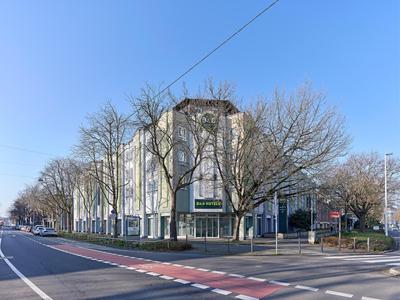
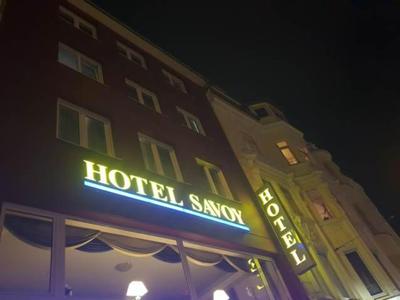
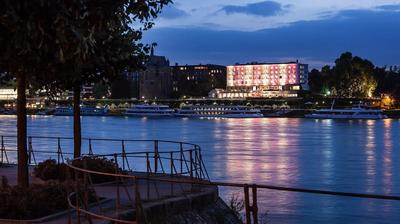
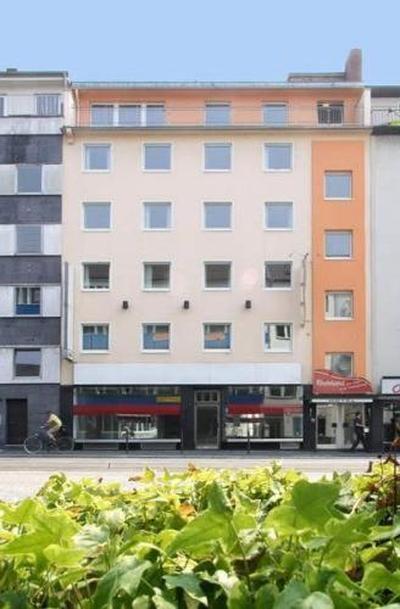
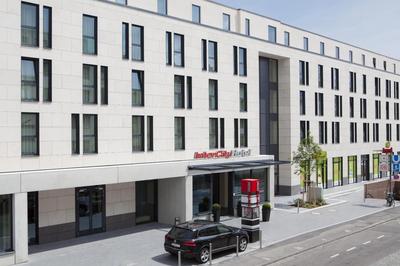
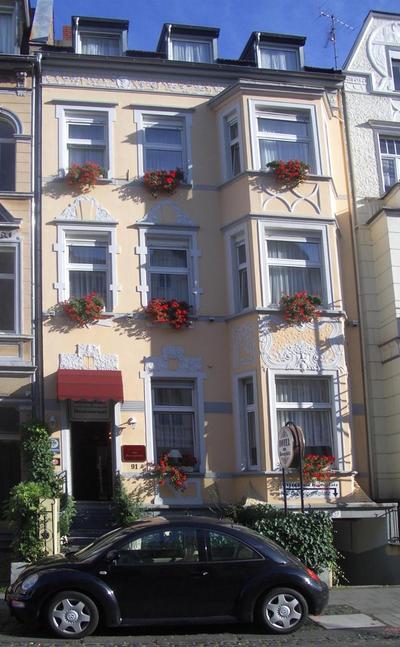
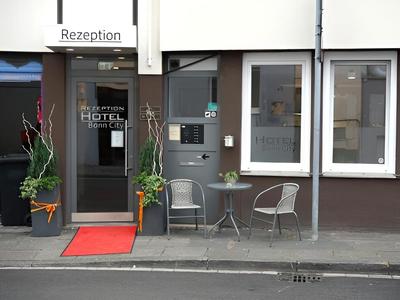
The Altstadt is short on big hotels, because the housing stock is residential and built as four-storey townhouses. What you tend to find instead are small guesthouses, apartments and short-let rooms above shops and bars, which suits the area’s audience: younger travellers, night owls, and people who want the pubs on the doorstep and lower prices than the centre. It is an easy place to like if you value atmosphere and are happy with a more local, less polished stay.
Noise is the main thing to think about. A room directly over Heerstraße, Maxstraße or Breite Straße will hear the crawl on Friday and Saturday nights, so if you are a light sleeper, ask for something set back or on an upper floor. The other point is location: Bonn’s marquee sights — the Beethoven-Haus, the Minster and the Marktplatz — are down in the Zentrum, a flat ten-minute walk away, so you are near everything without being on top of it.
Budget travellers who want character and value should book here; anyone wanting a full-service hotel or maximum quiet will probably be happier in the Zentrum or the leafier Südstadt.
Hotels in Altstadt
Our best-rated stays in this neighbourhood. Prices are approximate “from” rates — confirmed at the provider when you continue. We may earn a commission if you book through our partners — at no extra cost to you.
In this area In this area
 In this area
 In this area
 In this area
 In this area
 In this area
 In this area
 In this area
 In this area
 In this area
 In this area
Getting around
The Altstadt sits at the northern edge of Bonn’s centre, roughly between Kaiser-Karl-Ring, Bornheimer Straße and Kölnstraße, and the practical answer is that you get around it on foot. It is a compact ten-minute grid, and most of the streets are narrow one-way lanes anyway. From Bonn Hauptbahnhof it is about a 10–15 minute walk north, or a short hop by tram or bus toward Bornheimer Straße and Kölnstraße if you are carrying bags.
The Marktplatz and the pedestrianised Zentrum are only a five-minute stroll south, and Stadtbahn lines through the central stops — Bonn Markt is on lines 62 and 65 — connect the quarter to the rest of the city and the Museum Mile. A single city ticket is around €2.80, or about €1.90 for a short hop of up to four stops. Cologne is roughly 25 minutes away by regional train from the Hauptbahnhof, and the airport is reachable via the SB60 bus and rail connections from the same station.
The Altstadt is a place that asks little of you except that you keep walking. That is part of its quiet luxury. It is lively and safe by day and evening, with the usual city-centre caution late at night on quiet, poorly lit side streets and around alcohol-heavy weekend crowds. But the real experience is not caution; it is drift — from café to cellar pub, from blossom street to studio door, from one ordinary-looking façade to the next, until the quarter’s modest confidence becomes its own kind of attraction.
Gallery
Altstadt in pictures
Altstadt — your questions
Is the Altstadt a good area to stay in Bonn?
Yes, if you want nightlife, cheap eats and character on a budget. It is walkable to the centre and usually cheaper than staying by the Marktplatz. It is less ideal if you want a big full-service hotel or total quiet, since most of the stock is small guesthouses and apartments and the pub streets get lively at weekends.
When is the cherry blossom in Bonn’s Altstadt?
Peak bloom usually falls in mid-April and lasts only about ten to fourteen days, ending sooner in warm weather. Heerstraße and Breite Straße form the famous pink tunnels, and early morning is the best time to photograph them before the crowds arrive.
Is the Altstadt in Bonn safe at night?
Generally yes. It is a busy, well-populated pub quarter rather than a rough one, and the crowd is mostly students and locals out for a drink. Use the usual city-centre caution late at night: keep to lit main lanes, watch your belongings around busy bars, and expect some weekend noise.
What is the Altstadt best for?
It is best for nightlife, cheap eats, café culture and the spring cherry blossom. It is also good for a low-key, lived-in atmosphere rather than big sightseeing or chain-hotel comfort.