The Bonn issue
Walking Rüngsdorf, Bonn's villa quarter on the Rhine
A single walk through Bonn's quietest riverside district takes in a flat river promenade, a Romanesque tower of c.1200 and the white hotel where Chamberlain met Hitler, in that order.

By Camille LefèvreBonn on foot, one neighbourhood at a time
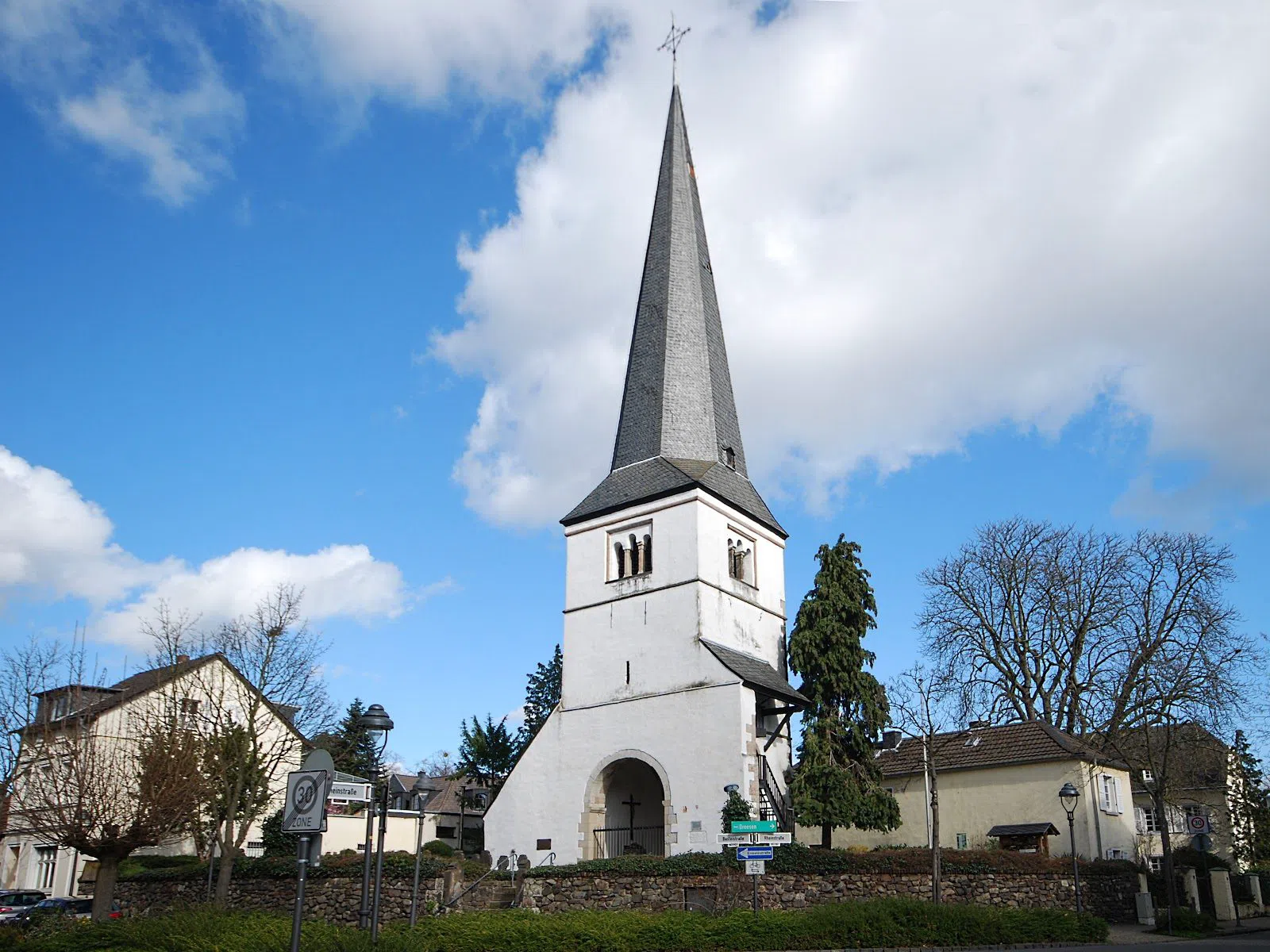
Rüngsdorf's parish is first documented in a papal charter of 1131, and the Romanesque choir tower of its old St. Andreas church still stands alone on a grassy churchyard plot in the village core. The rest of the church was demolished in 1903. The villas along the river came later, when the district grew rich in the closing decades of the 1800s.
The old village core

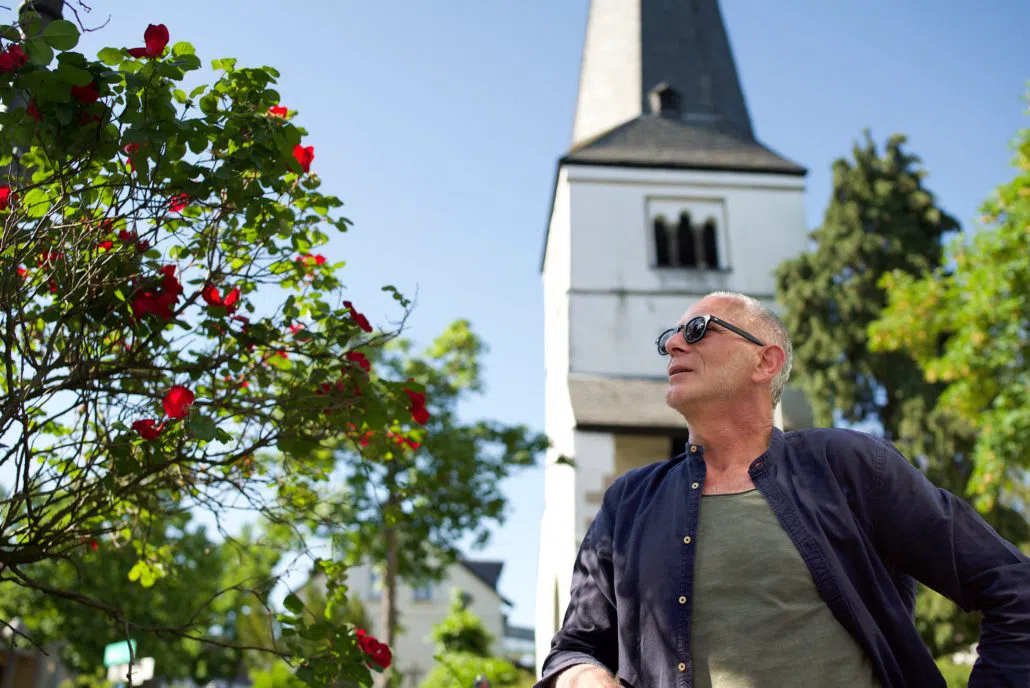
Rüngsdorfer Kirchturm (the old churchyard plot, village core) is the oldest thing in the district, a squat free-standing tower built c.1200 of grey tuff and basalt rubble, with small round-arched sound openings and a slim slate pyramid spire. You can walk up to it at any hour, in any number, without a ticket. The interior is a working bell chamber and opens only occasionally, on Tag des offenen Denkmals. The medieval Rüngsdorf Madonna, found during restoration in 1972, now sits in the modern St. Andreas parish church a minute away.
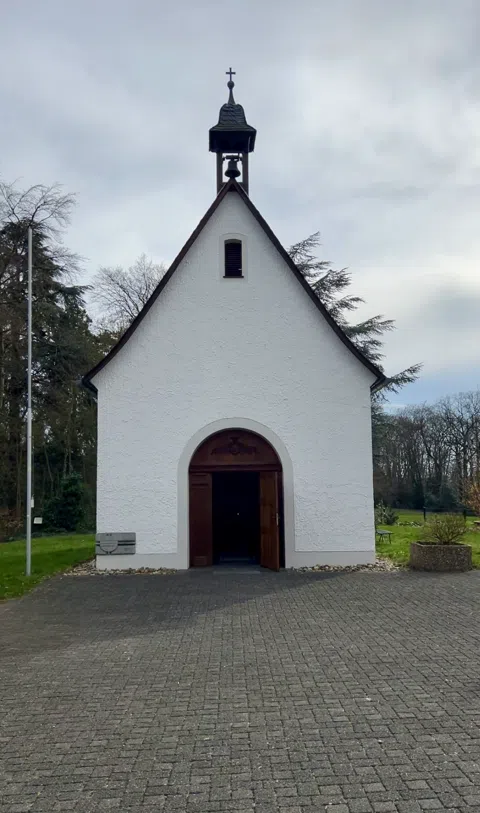
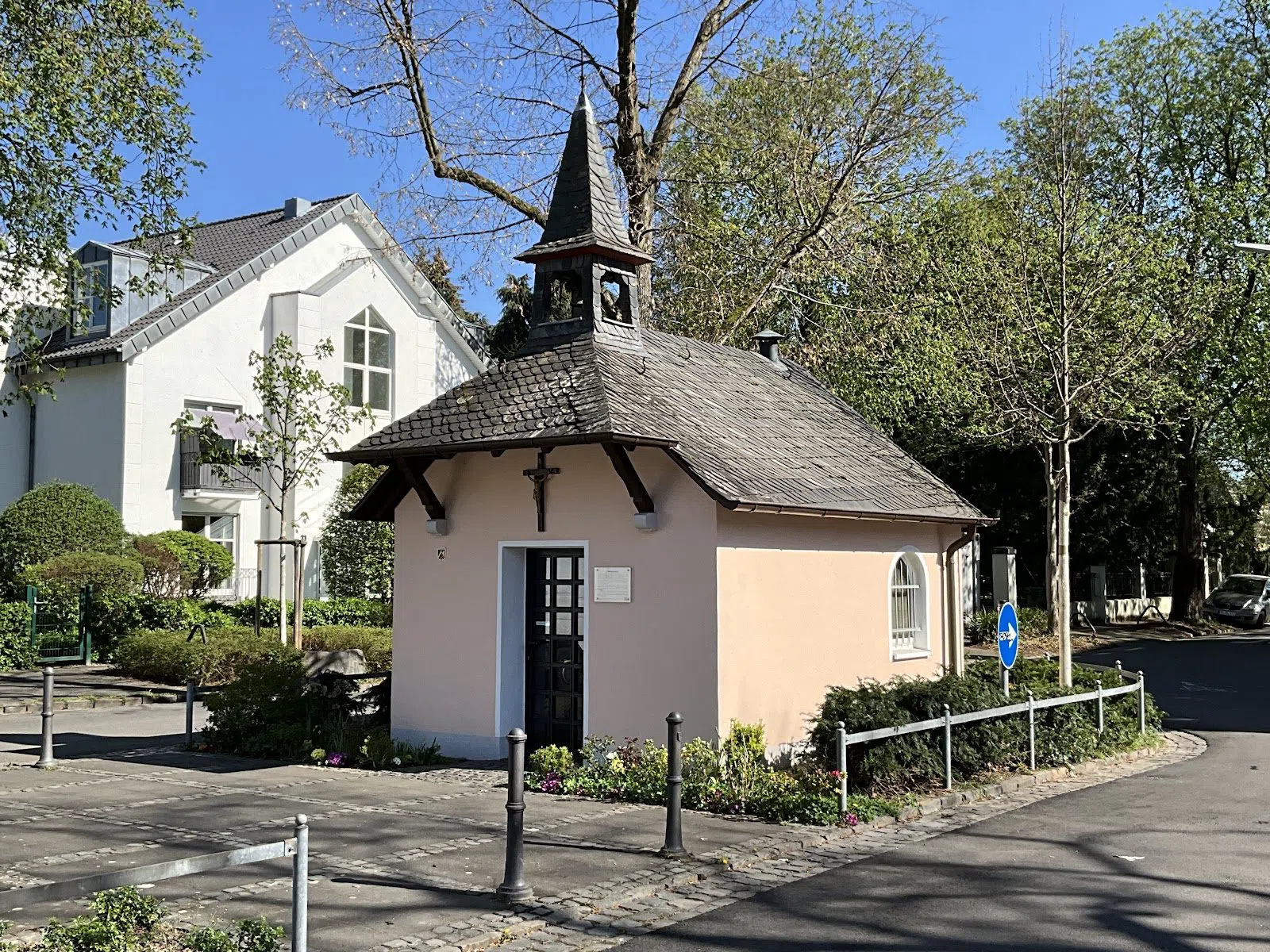
Walk on to Marienkapelle Rüngsdorf (Rolandstraße at Kapellenweg), a tiny whitewashed wayside chapel of around 1800 with a steep slate roof and a single arched door. It sits marooned on an island in the middle of the road, where Rolandstraße splits around it under old trees, and locals call it only Et Kapellsche. It has been listed since 1986 and was restored in 1986 and 1987. You can see the exterior at any hour. Getting inside is at the parish's discretion, and the chapel's own medieval Madonna is kept in St. Andreas now too.
Plan your Bonn trip
Live prices from our booking partners.
Free cancellation on many rooms. We may earn a commission when you book.
The Rheinallee promenade
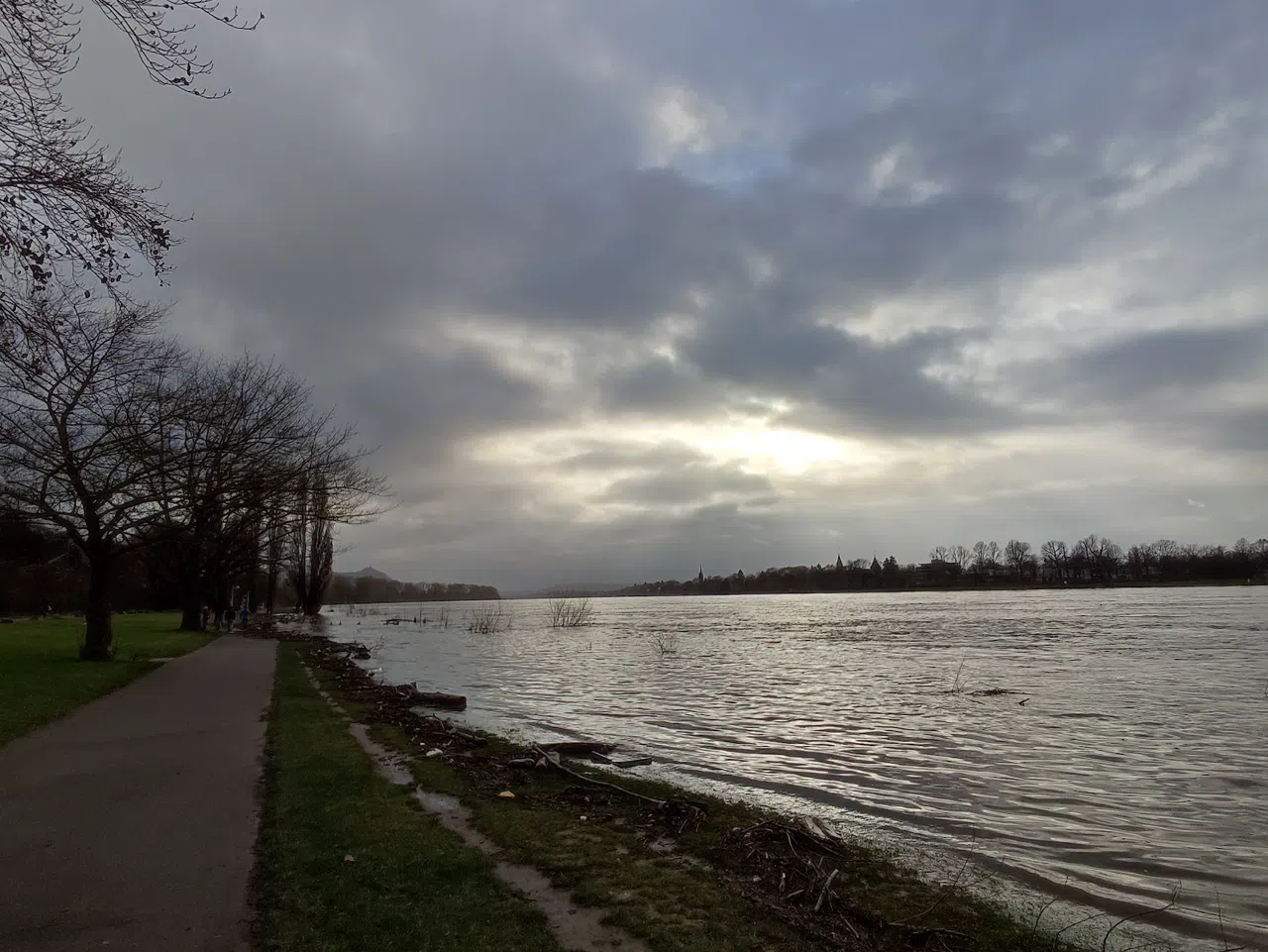
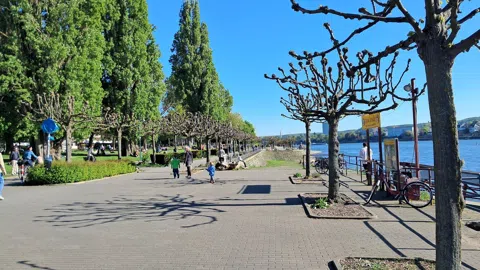
Most people come for the Rheinallee Rhine promenade. It runs broad and tree-lined, asphalt and gravel, right on the water, with plane trees and clipped lawns on the land side and 19th-century stucco and brick villas behind wrought-iron gates. Across the grey-green Rhine stands the twin silhouette of the Drachenfels ruin and the Petersberg hotel on the Siebengebirge ridge, and the sightline to Drachenfels is straight and uninterrupted. The walk is flat, running from Plittersdorf through Rüngsdorf past the Bastei to the Dreesen, and it is the stretch the Godesberg villa quarter was built along.
It is public around the clock and free, with benches and lawns the whole way, so you can take it in pieces and sit between them. Nothing along it needs booking or timing.
Erlöserkirche Bad Godesberg (corner of Rüngsdorfer Straße and Friedrichallee) is a two-minute detour off the promenade, a neo-Gothic red-brick hall church with a pointed tower and a three-sided apse, standing among the villa quarter's stucco mansions and mature street trees. It was consecrated on 1 July 1880, the oldest of Bad Godesberg's large Protestant churches, and it went up as the villas rose around it. The parish is active, with Sunday service at 10:00, a resident Kantor and regular church music. For a visit outside service times, ring the parish office on 0228 935830. Entry is free.

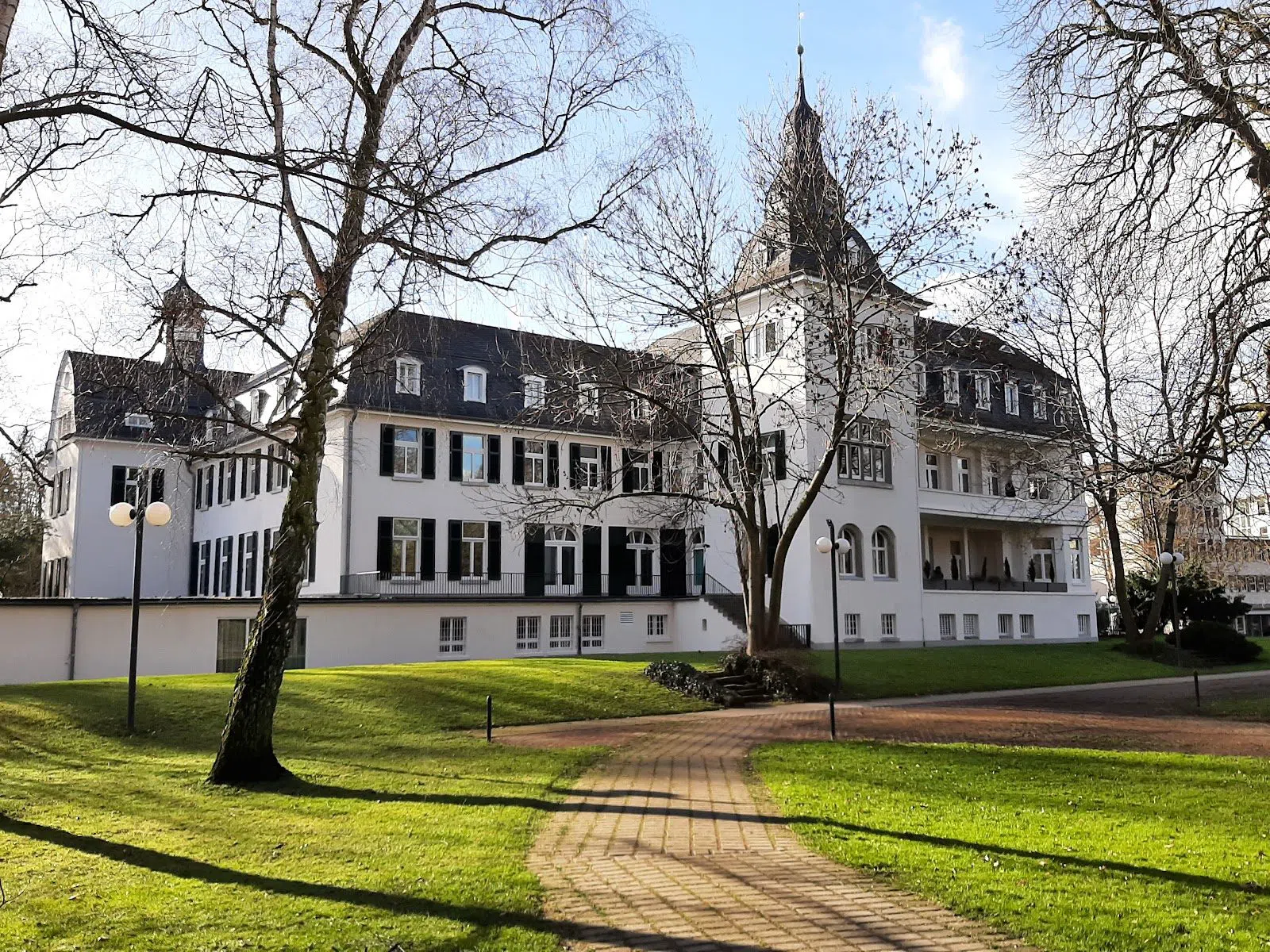
Schloss Deichmannsaue (Deichmanns Aue, between Rüngsdorf and the river) was first recorded as the Auerhof in 1662 and bought by the Deichmann banking family in 1836. From 1949 it was the seat of the American High Commissioner, and from 1955 the US Embassy: this quiet suburb was the diplomatic centre of West Germany. The broad pale-rendered manor house was rebuilt in 1910, hipped roof and symmetrical garden front, set back behind lawns and old specimen trees and now ringed by discreet federal-office annexes. These are working federal government offices. There is no interior access and no tours, so look from the street and the park edge.
Bastei and Panoramapark
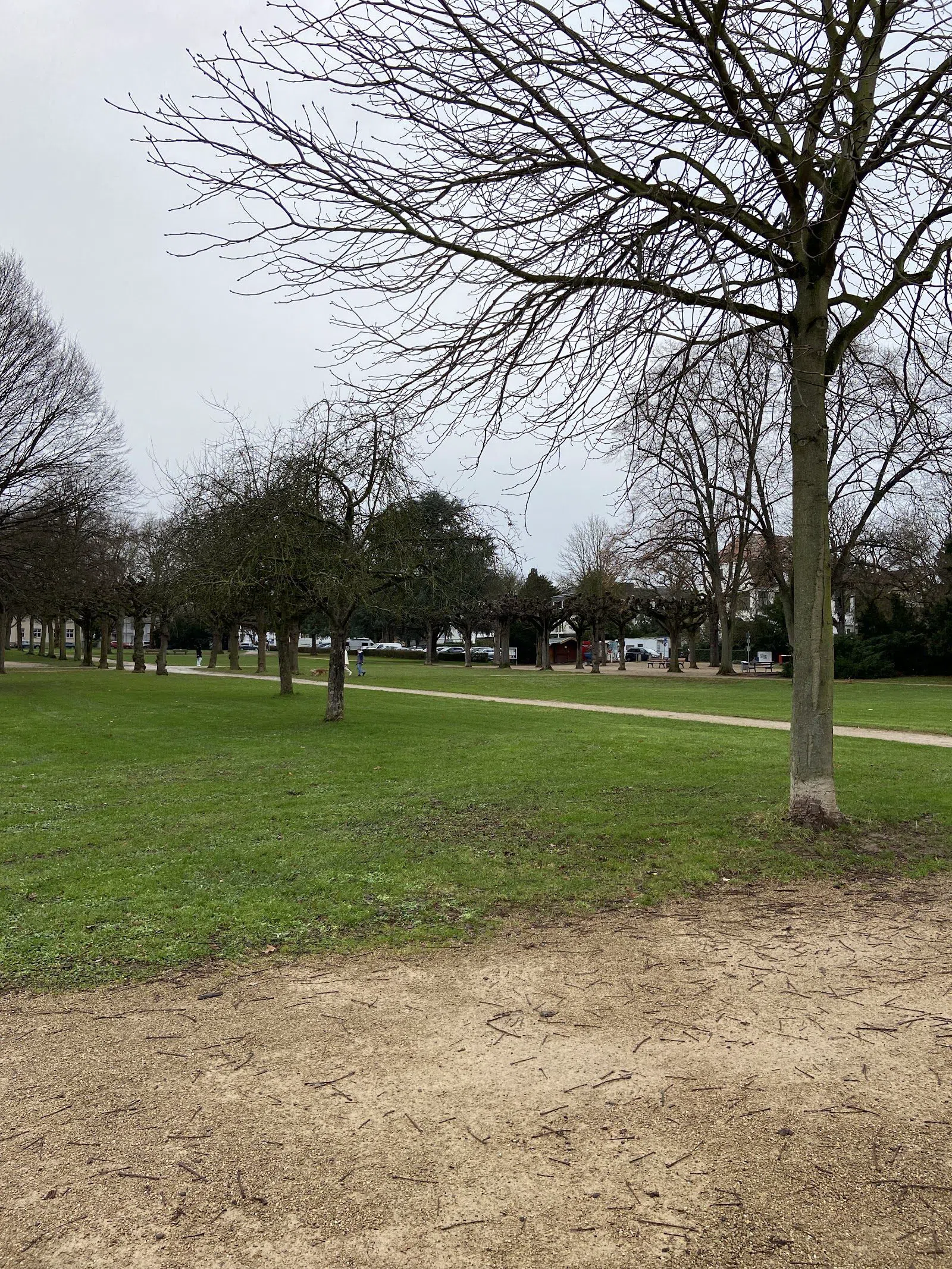
Bastei (Von-Sandt-Ufer at Rheinallee) was the municipality's paddle-steamer landing, a white-rendered steamship waiting hall of 1898 to 1900 built out over the Rhine bank. Three stacked levels of open terraces, with balustrades and awnings, face straight across the water to the Siebengebirge. The kitchen cooks international food, the bar sits on the middle floor, and Neapolitan wood-fired pizza comes out at water level. The rooftop Basteria am Park is shut for winter and reopens in spring. Price band €€. The three levels absorb groups, and the house does private dinners and events, so phone or email ahead for anything more than a handful of people.
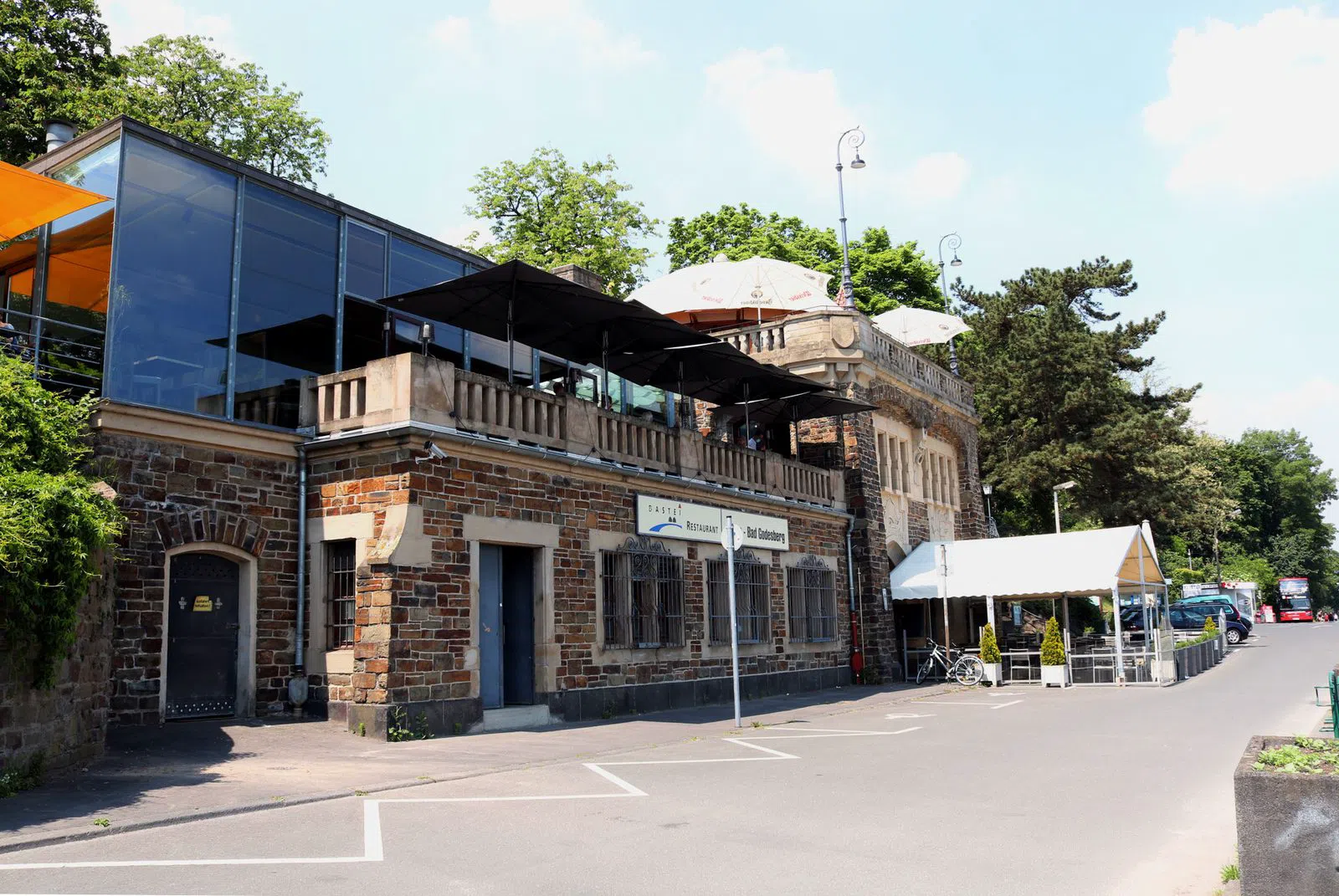
Panoramapark Rüngsdorf lies behind the Bastei, three hectares of raised grass plateau above the river planted with loose groups of mature trees and shrubs. It was laid out in the 1920s alongside the Bastei extension, and the open panorama over the river valley to Drachenfels and Petersberg is the best free view in the district. Gravel pétanque pistes run through the grass, rolled by Germany's oldest pétanque club, founded by staff of the French embassy around 1970. The club holds public tournaments here on Father's Day and for the Bonn city championship. No gate, no charge.
Rheinhotel Dreesen
Rheinhotel Dreesen (Rheinallee, at the far end of the promenade) is a long white Belle Époque riverfront hotel known as the White House on the Rhine, built in 1893 and 1894 by Georg Westen and later given Art Nouveau additions and balconied river-facing rooms. The founding Dreesen family has run it since 1894 and is now in its fifth generation.
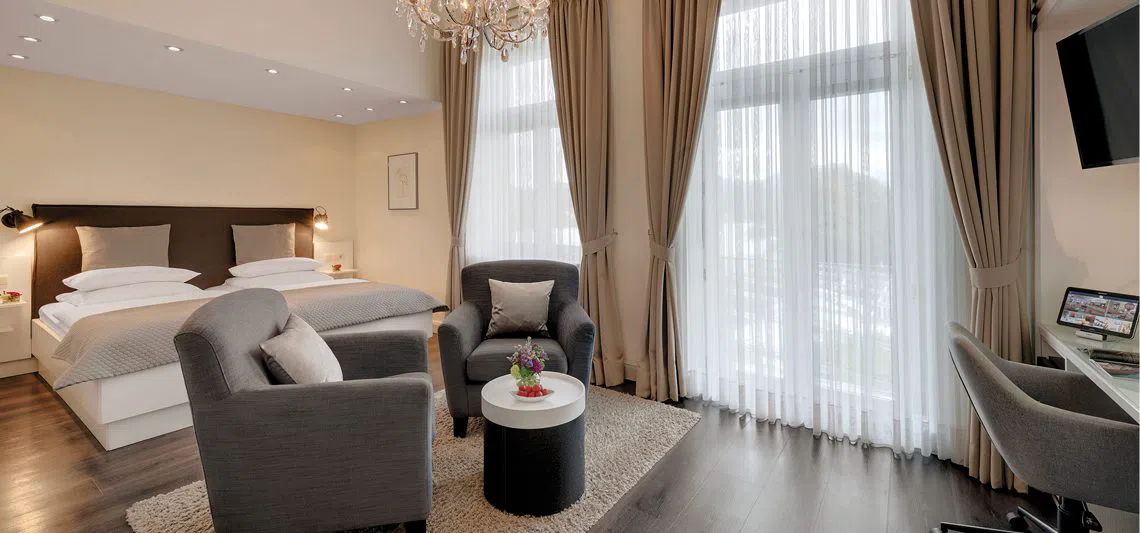
It is the most historically loaded building in Rüngsdorf. Chamberlain met Hitler here in September 1938 over the Sudetenland, and the house later held the French High Commission. Guests before that included Charlie Chaplin, Greta Garbo and Marlene Dietrich. The hotel keeps Restaurant Gobelin and afternoon tea, a chestnut-shaded beer garden running down to the water's edge, and a Wintergarten from late October. Price band €€€.
Crossing to Niederdollendorf
The Rheinfähre Bad Godesberg–Niederdollendorf costs €1.70 on foot and puts you on the Drachenfels side for the climb. The boat is a blunt-nosed flat car-and-passenger ferry, fully electric and running on renewable power, crossing broadside in about five minutes from a concrete slipway on the Godesberg bank toward the vineyard-and-forest slopes of the Siebengebirge. Walk on without a reservation; bikes are carried.
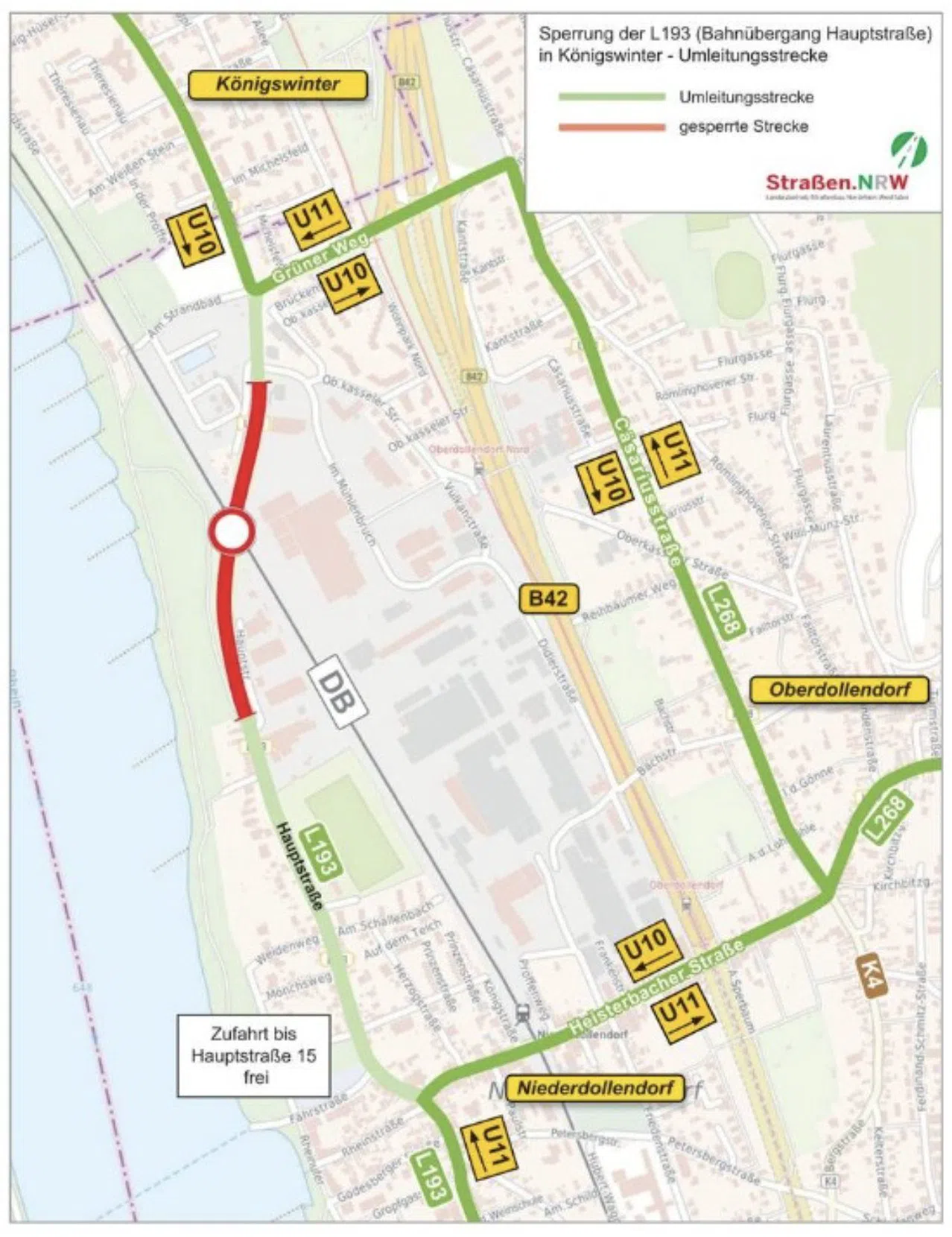
The winter timetable is weekdays 06:30 to 19:00 and weekends 10:00 to 18:00. Extreme Rhine low water can suspend the crossing for weeks, as it did for three weeks in August 2026, so check before you build a day around it. Inland, the hilltop Godesburg ruin and the 18th-century Redoute are 1.5 km from the river.
Panoramabad Rüngsdorf in summer
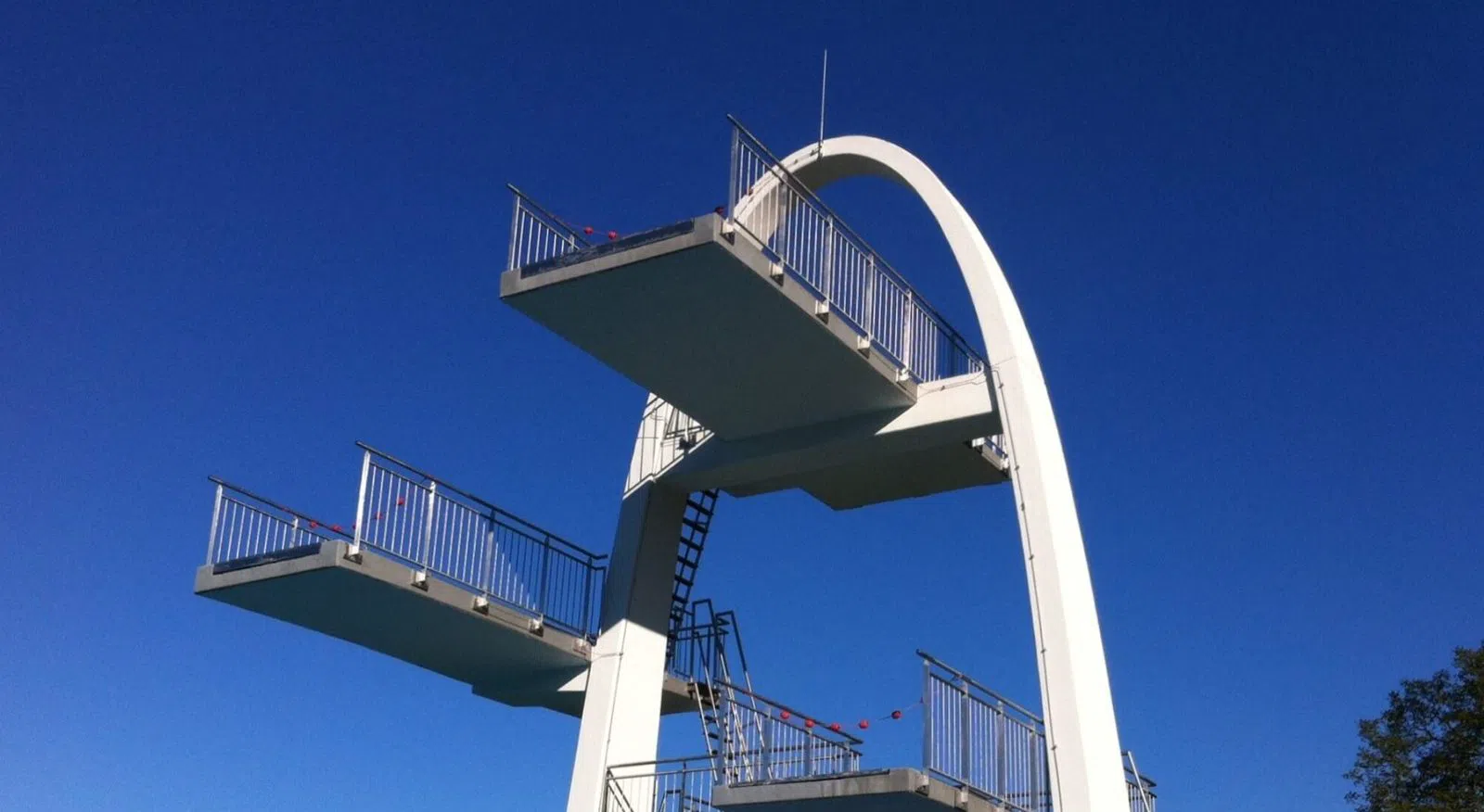
Panoramabad Rüngsdorf is a 1930s open-air pool terraced into the slope above the Rhine, long blue-tiled lanes and sunbathing lawns, with swimmers looking straight out over the water to the wooded hills. It is widely called Bonn's prettiest pool and is usually the first in the city to open. The 2026 season ran from 18 May to 13 September. Entry is cheap (€) and needs no booking. In autumn and winter you can only look at it from the path, so keep it for a summer visit.
Breakfast on Römerplatz
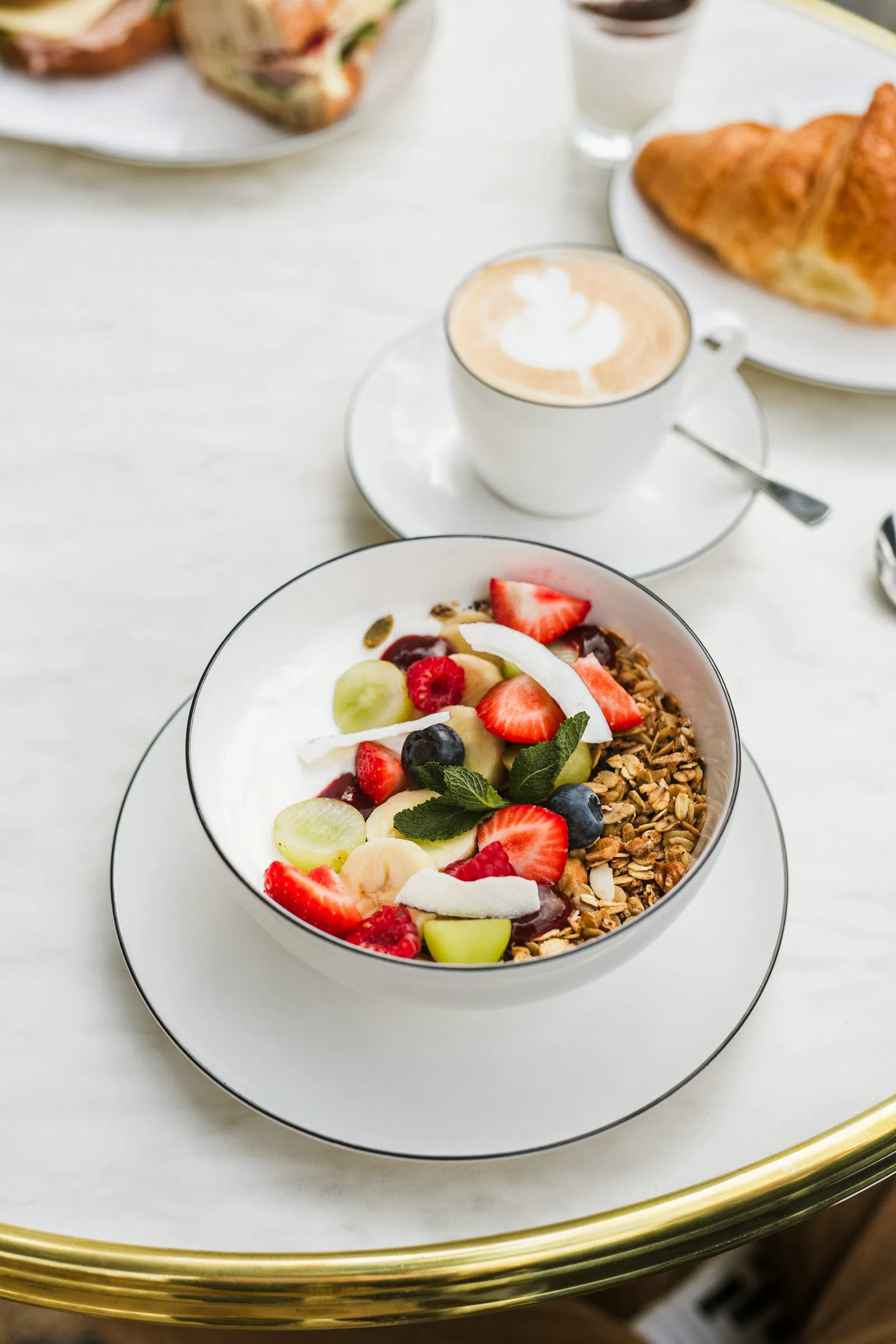
Madame Monsieur Boulangerie Pâtisserie & Café (Römerplatz) bakes its breads and pâtisserie on site to French method, without pre-mixes. Baguettes stand in wicker baskets, glazed tarts sit in the counter, and the pavement tables face the square's fountain, where the village holds its Brunnenfest. It opens daily, Sunday included, from 07:00 on weekdays and 08:00 to 17:00 at weekends. Service is over the counter, and seating is limited at peak breakfast hours. Price band €.
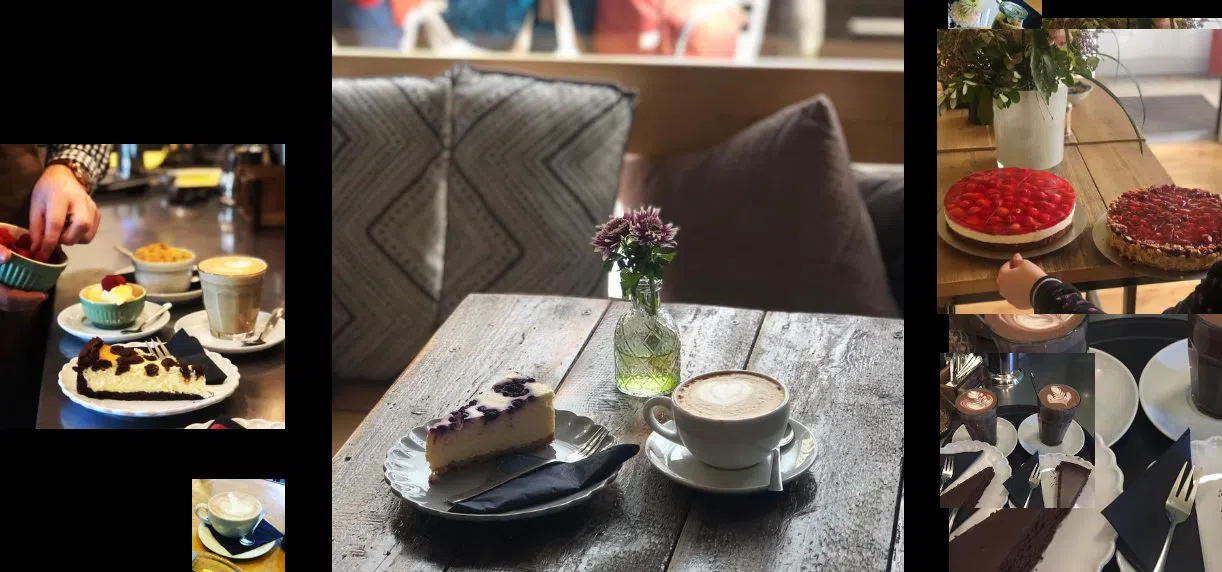
5senses Espressobar Rüngsdorf (Konstantinstraße 2) sits on the southern edge of the district and pours the best coffee in it. Breakfast is cold cuts, fresh bread and flammkuchen, with a chalkboard cake list and cheesecake-brownies and berry tarts under glass. The espresso machine stands on a wooden counter in a bright, informal room. It opens daily 09:00 to 18:00, which rules it out for the evening. Price band €.
Dinner in the villa quarter
friedrich.vino e sapori (Friedrichallee 25) is the district's serious kitchen, Italian cooking with a proper wine list in a restrained dining room of white linen and dark timber, bottles ranked along the wall and a few pavement tables under the street trees. The two-course lunch at €27 is the cheap way in. It closes Monday and Tuesday. Reservations are essential and the booking form takes parties up to 15, which makes it the one address in Rüngsdorf for a seated group dinner. Price band €€€.
Vitus Hostaria (Rheinstraße) opens in the evening only, a block from the river. Chef Leonardo Raciti cooks a daily-changing seasonal Italian menu, and the wine list is the draw. Contemporary art hangs through the small dining room, which doubles as a gallery, and a handful of terrace tables sit out front on the village street. Book by phone well ahead. It shuts on Tuesdays, and on 24 and 31 December and on 1 and 2 January. Price band €€€.
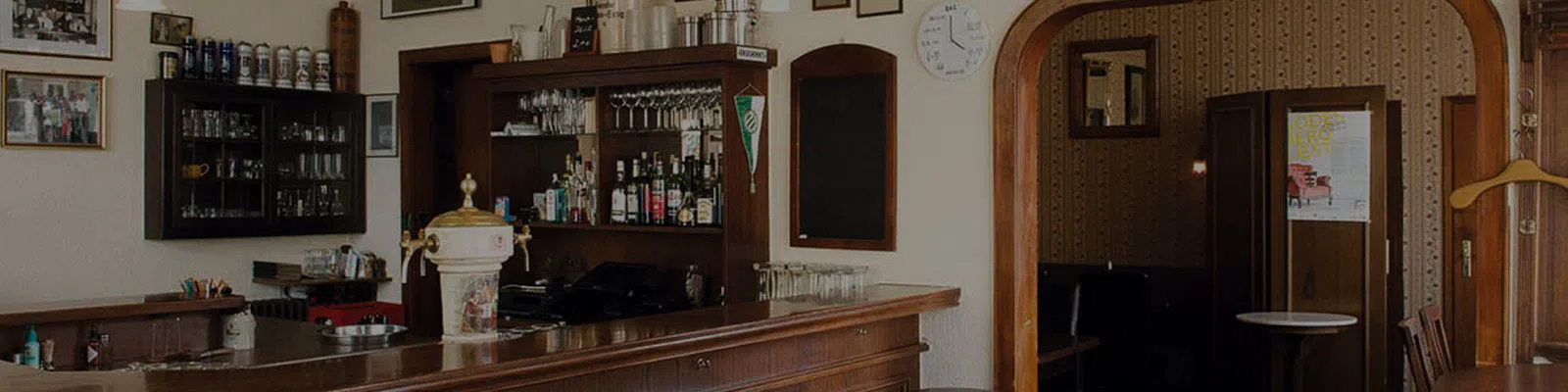
Bistro Rien ne va plus (Friedrichallee 18) is open daily 17:00 to 23:30 and pours wine alongside schnitzel and pizza. The room was converted from an electrical shop in 1986 and is unchanged since, low-lit, with wine glasses hung above the bar front and a few pavement tables under the villa-quarter trees in summer. It is the one address that still feels lively once the restaurants wind down. Reservations are taken by telephone only, on 0228 361108. Price band €€.
Where to sleep
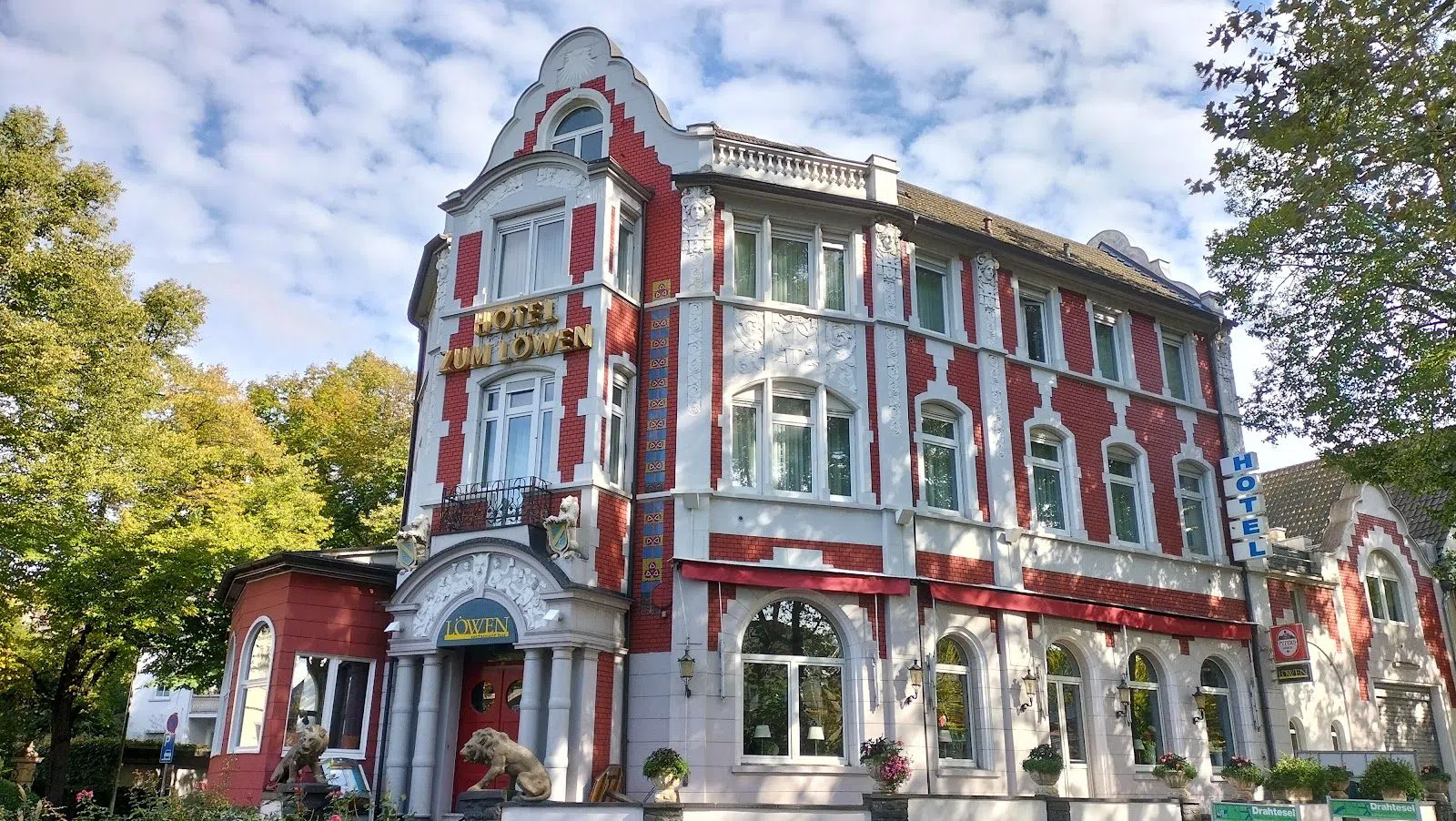
Hotel Zum Löwen (Von-Groote-Platz) is the sensible mid-range bed in Rüngsdorf, a traditional gabled inn with a painted façade and a lion sign on a small leafy square, 40 rooms over the house restaurant, a hotel bar and a shaded garden terrace at the side. The Freckmann family has run it for more than 50 years. It is pet-friendly, seven minutes' walk from the Schauspielhaus and inside the villa quarter. The restaurant serves Monday to Saturday from 17:00 and Sunday from 11:30. Price band €€. The Dreesen is the grander bed on the same stretch of water.
Before you go
Dinner is the only part of this that needs planning, since friedrich.vino closes Monday and Tuesday, Vitus Hostaria closes Tuesday, and the bistro takes reservations by telephone only. Check the ferry before you count on the crossing, and treat Schloss Deichmannsaue as an exterior.
See the Bonn guide and the Bonn hotel search.
Before you go
Can you go inside the Rüngsdorfer Kirchturm?
Rarely. The tower sits on a public plot and any number of people can walk up to it for free, but the interior is a working bell chamber and opens only on Tag des offenen Denkmals. The medieval Rüngsdorf Madonna, found during restoration in 1972, is in the modern St. Andreas parish church a minute away.
How much does the Rhine ferry cost from Bad Godesberg?
€1.70 as a foot passenger on the Bad Godesberg to Niederdollendorf ferry, which lands you on the Drachenfels side. You can walk on without a reservation, and the ferry takes bikes. The winter timetable is weekdays 06:30 to 19:00 and weekends 10:00 to 18:00, and extreme low water can suspend the crossing for weeks, as it did for three weeks in August 2026.
When is the Panoramabad Rüngsdorf open?
Summer only. The 2026 season ran from 18 May to 13 September, and the pool is usually the first in Bonn to open. Entry is cheap and you don't need to book. In autumn and winter you can only see it from the path above the Rhine.
Where can a group eat in Rüngsdorf?
friedrich.vino e sapori on Friedrichallee takes parties of up to 15 through its booking form, and you do need to book there. The Bastei can spread a group across its three riverside levels and runs private dinners and events, so phone or email ahead for more than a handful of people.
Can you visit Schloss Deichmannsaue?
Only from outside. The estate holds working federal government offices, which are closed to the public and run no tours, so you look from the street and the park edge. It was the seat of the American High Commissioner from 1949 and the US Embassy from 1955.