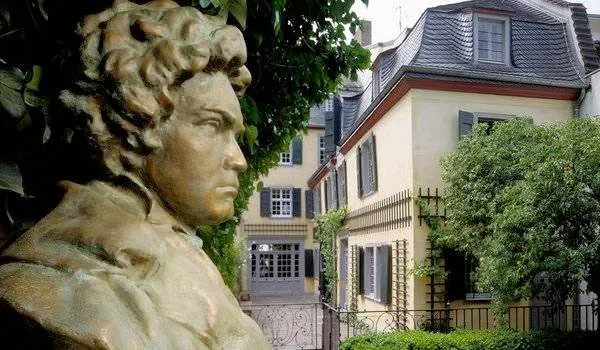

Bonngasse is barely a street. It runs a couple of hundred metres between a tram stop and a market square, and the pale house at number 20 is so plain that people walk past the door looking for something grander. Inside, the ceilings are low enough to make tall visitors duck, and the room where Beethoven was born in December 1770 holds almost nothing at all. That restraint turns out to be the point, and it is also why this walk works: everything the composer knew in this town sits within fifteen minutes of that doorway, and you can see all of it on foot between lunch and sunset.
What you actually see inside the birthplace
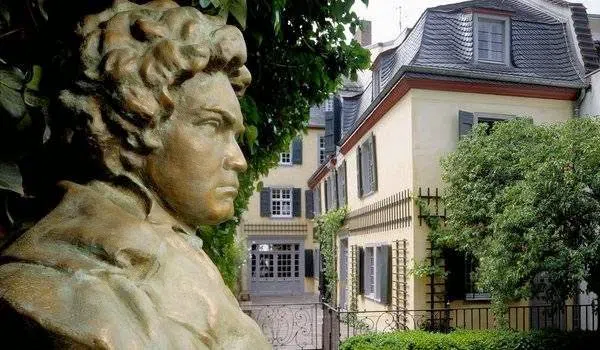
Beethoven-Haus Bonn (Bonngasse, Old Town) is twelve rooms strung through a pair of joined burgher houses, and it holds more than a hundred original objects: manuscripts, letters, portraits, instruments, and his last pianoforte. The route is roughly chronological and it climbs as it goes, ending in the small upper room traditionally identified as the birth room, which is left almost bare. Museums built around a famous life usually overcompensate; this one does the opposite, and the effect of walking from crowded display cases into an empty room under the roof beams is worth more than any amount of interpretation.
Most people need sixty to seventy-five minutes inside, a little longer if you read every label. Admission is €15 for adults and €10 for children. Between 9 September 2026 and 5 April 2027 the house runs a show pairing the composer with Andy Warhol, and prices rise to €17 and €12 for the duration. The building is the constraint, not the collection. The beams are low, the staircases are narrow and single-file, and by late morning the queue on the stairs stops moving. Arrive when the doors open at 10am, or come after 4pm, and you will have rooms to yourself that would otherwise hold fifteen people.
The group policy matters more here than at almost any museum of its size. Tuesdays are reserved exclusively for pre-booked groups, so an independent visitor turning up on a Tuesday will not get in. On other days, group slots still have to be booked in advance, and because the rooms are tiny, parties are split and fed through in waves rather than kept together. If you are travelling as six or more, accept that you will separate for an hour and agree a meeting point outside before you go in.
The church next door and the statue on Munsterplatz
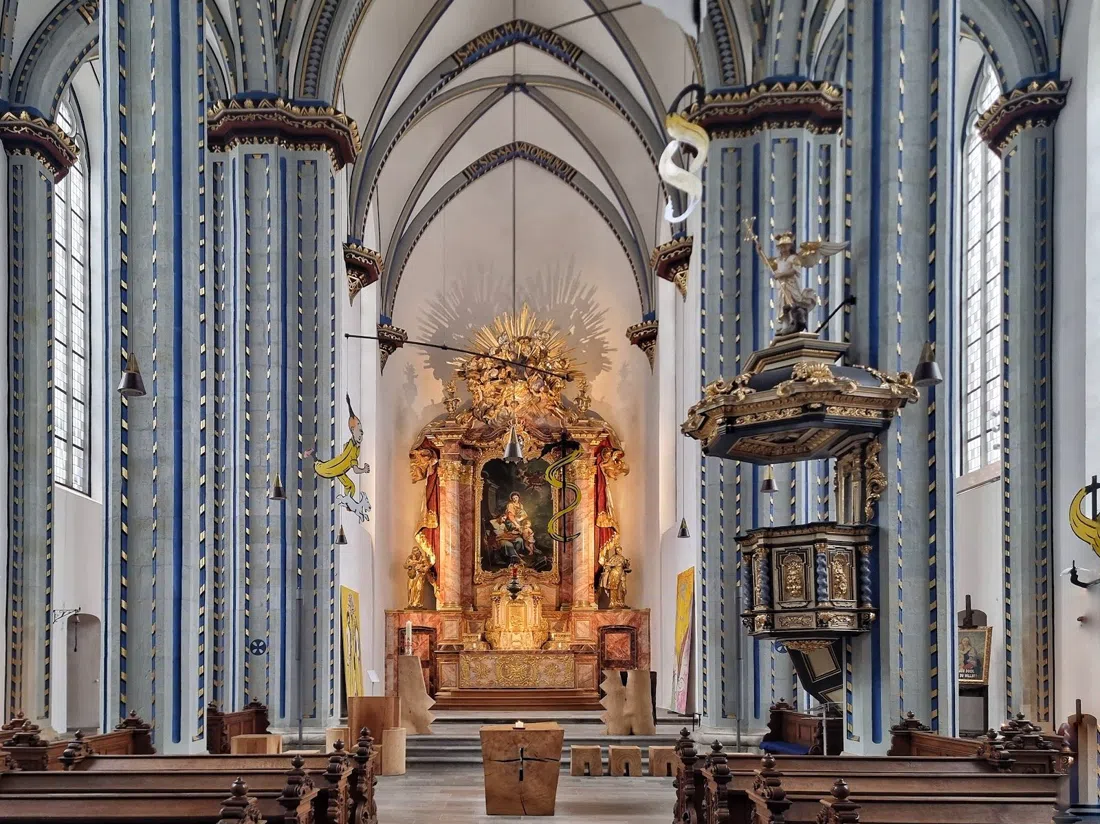
Namen-Jesu-Kirche (Bonngasse, Old Town) stands a few metres from the birthplace door, which makes it the easiest free addition to the walk and also the one most people miss because they are already facing the other way. It is a baroque hall church, and it is a working Old-Catholic parish rather than a monument, so quiet voices are expected and there is no group commentary during services. Opening hours are short and it is closed on Mondays, so slot it in before the museum rather than after; if you come out of Beethoven-Haus at half past five expecting to look in, you will find it locked.
Two minutes south the street opens onto Munsterplatz and the Beethoven-Denkmal (Munsterplatz, Old Town), the bronze unveiled in 1845 in front of Queen Victoria. It is the obvious meeting point and the photograph everyone takes, and the light is best early, before the cafe tables spread across the square. Buskers and market stalls compete for the north side through the day, so if you want the statue clear of people, that is a morning job and not an afternoon one.
Thirty seconds away stands Bonner Munster (Munsterplatz, Old Town), the romanesque basilica that anchors the whole centre. It reopened fully after the general renovation that ran from 2017 to 2021, and the cloister is accessible again, which is the part worth your time: a quiet square of arcades that most visitors never find because it keeps its own shorter hours, 10 to 17 on weekdays and 14 to 17 at weekends. Entry is free. Groups are welcome outside Mass times. It is the one interior on this route that costs nothing and still rewards twenty unhurried minutes.
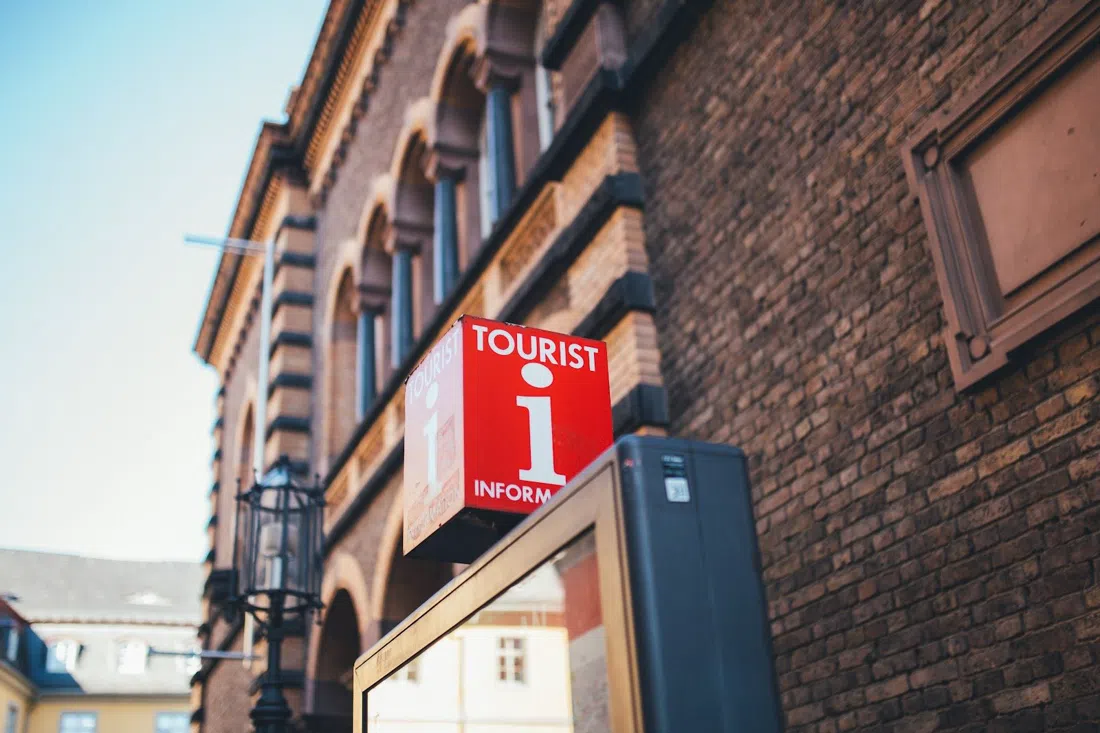
Bonn-Information (Windeckstrasse, off Munsterplatz) is thirty seconds further and worth a stop for one reason. The BonnRegio WelcomeCard sold there runs roughly €10 to €24 depending on how long you want it valid, and it bundles regional transport with discounts at more than twenty museums. If Beethoven-Haus is your only ticketed stop, skip it. If you are making three or more paid visits, or using trams and regional trains, the arithmetic turns in your favour quickly. Guided walks and group bookings are arranged at the same counter if you would rather hand the planning to someone else.
Markt, the rococo balcony and lunch among the stalls
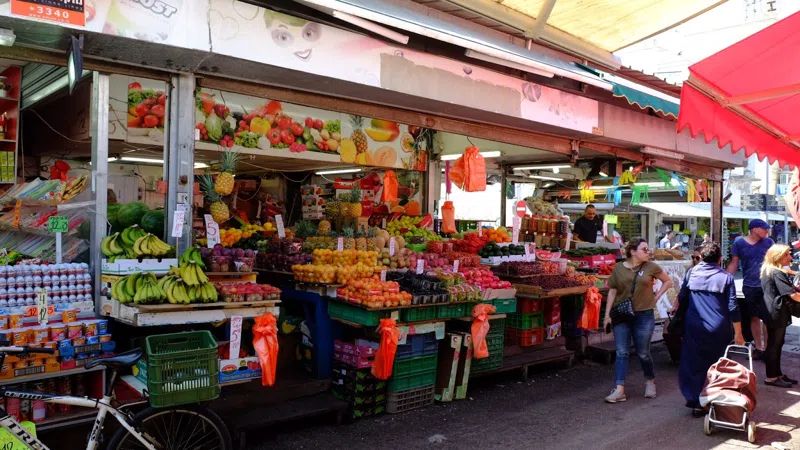
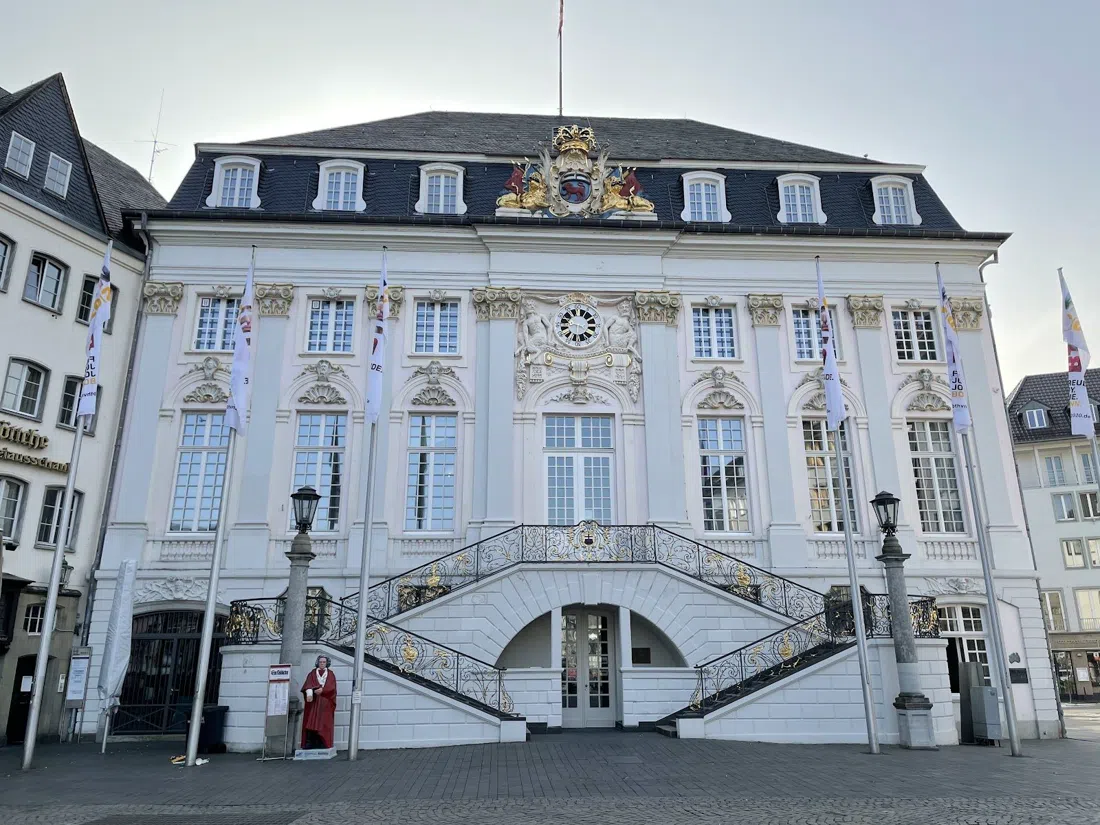
A short walk east brings you to Markt and Altes Rathaus (Markt, Old Town), where the 1737 rococo facade in pink, grey and gold does more work than any museum on this list to explain what sort of town this was: a small residence capital with expensive taste. Kennedy spoke from that balcony, and so did Elizabeth II. The interior is not generally open to the public, so plan on the exterior only and spend the time on the square instead. The produce market in front trades Monday to Saturday; come on a Sunday and you get a handsome but empty rectangle.
On the same square, Cafe-Konditorei Muller-Langhardt (Markt, Old Town) has been run by the same family since 1913 and is the honest Rhineland coffee-house stop rather than the tourist version of one. Coffee and cake runs €4 to €10. It is small, fine for two or four, awkward beyond that, and you should ring ahead for more than six. It closes on Sundays, which is one more reason a Sunday visit to this town underdelivers.
For a proper sit-down after the museum, Em Hottche (Markt, Old Town) has been trading on this square since 1389 and is one of the few Old Town rooms that can seat a coach party at proper tables. Mains run €15 to €30. The terrace looks straight across at the Altes Rathaus, and you pay a small premium for that view; given how little else on this walk costs anything, it is a reasonable place to spend the money.
The font Beethoven was baptised at
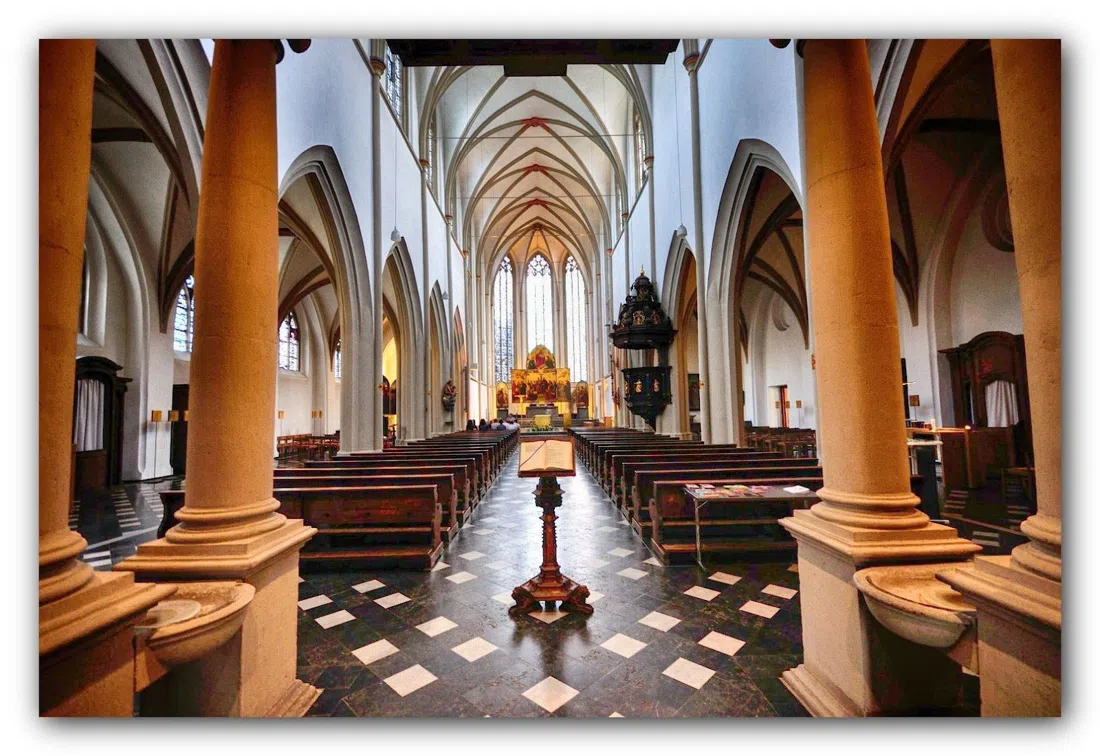
Five minutes from the Markt, St. Remigius (Brudergasse, Old Town) holds the rococo font he was baptised at on 17 December 1770, the original, moved here when the parish church that first held it disappeared. It is free, it is almost always empty, and it is the most under-visited genuine relic of his early life in the city. The catch is that the opening hours are not fixed, so do not build a tight schedule around it. Walk past on your way between the Markt and the palace, try the door, and treat getting in as a bonus rather than a plan. Small groups are welcome outside services.
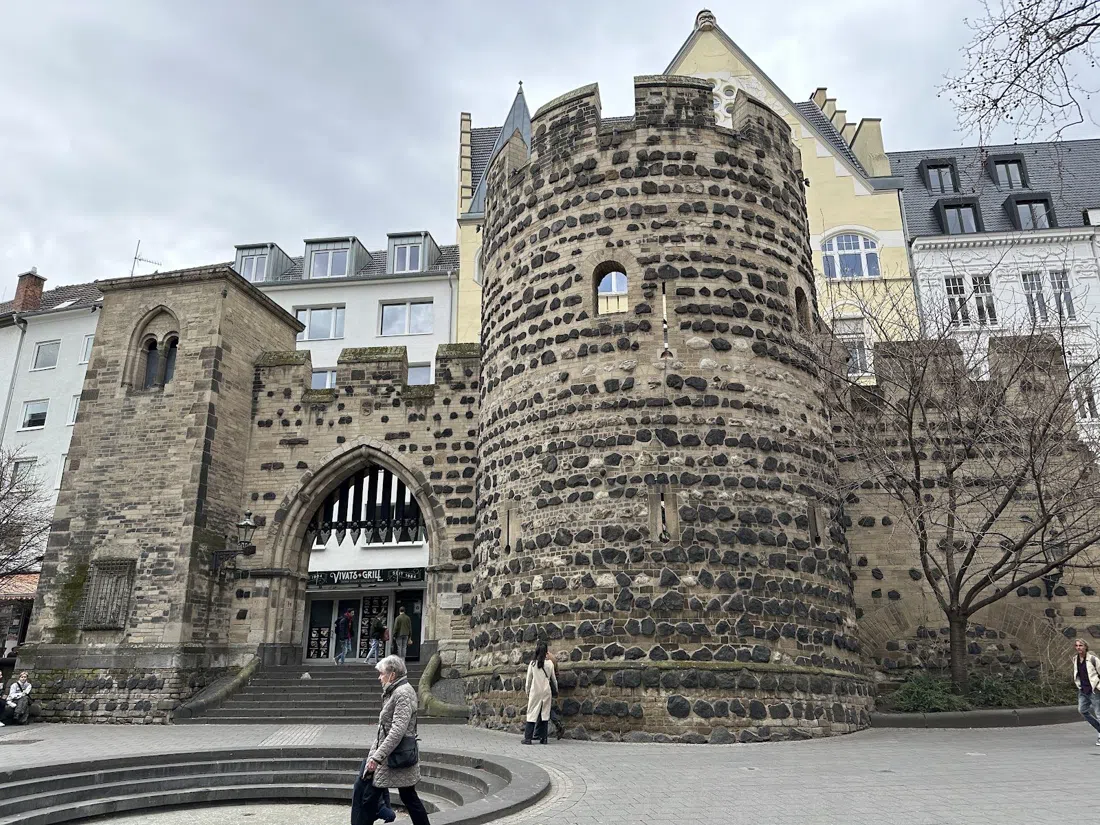
Two minutes further, on the pedestrian run of Vivatsgasse, the Sterntor (Vivatsgasse, Old Town) is the last real trace of the medieval wall, re-erected in 1900 using the original stones. It takes two minutes to look at and it does something useful: it marks where the walled town ended, which is why the streets you have been walking curve the way they do. It sits in the middle of a busy shopping street, so stand clear of the arch rather than clustering under it.
Where the walk ends, and where the river comes in
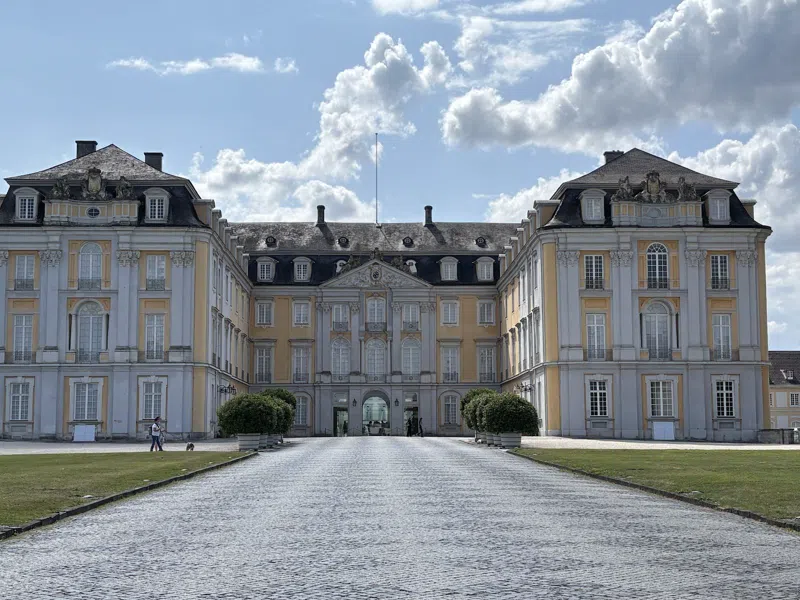
Kurfurstliches Schloss and Hofgarten (Am Hof, university quarter) closes the loop. Beethoven played in the court chapel of this palace as a boy, and the building is now the main building of Bonn University, which means it is a working institution rather than a sight. The grounds and the lawn take any number of people, but keep commentary out of the corridors and stay out of lecture areas. On a warm day the Hofgarten lawn in front is where this walk should finish, with students on the grass and the long yellow facade behind.
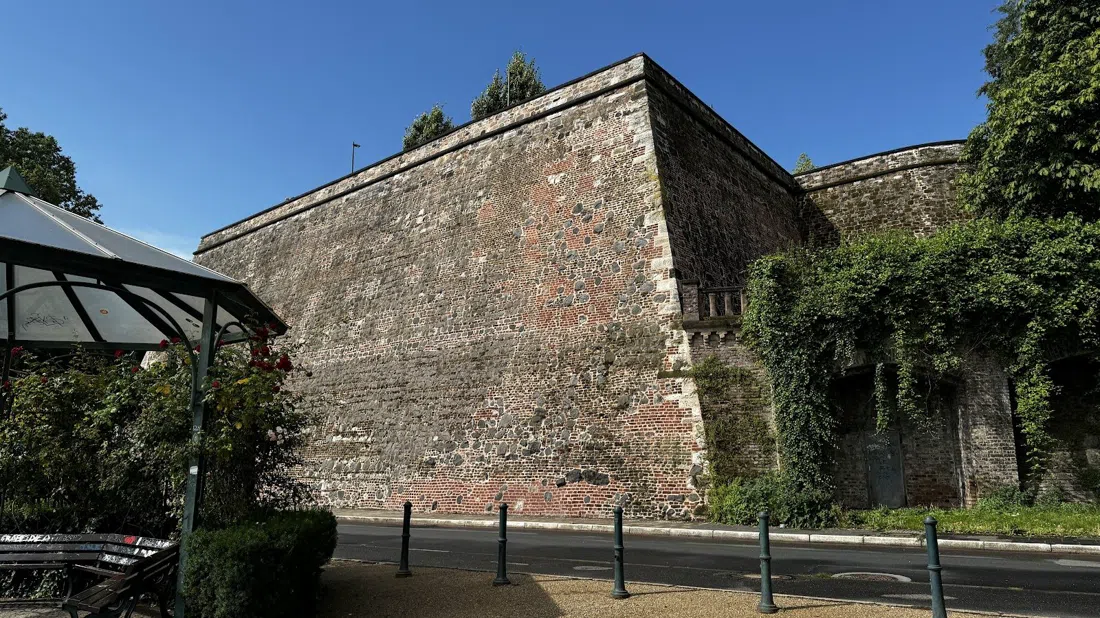
Five minutes on, Alter Zoll (Brassertufer, Rhine bank) is the only real viewpoint within walking distance of Bonngasse, a bastion terrace above the water with the Rhine that Beethoven grew up beside running directly below. It is open, free and takes groups easily. The casemates inside are only opened occasionally, on days such as Open Monument Day, so do not count on seeing them. Come at sunset if the sky is doing anything at all.
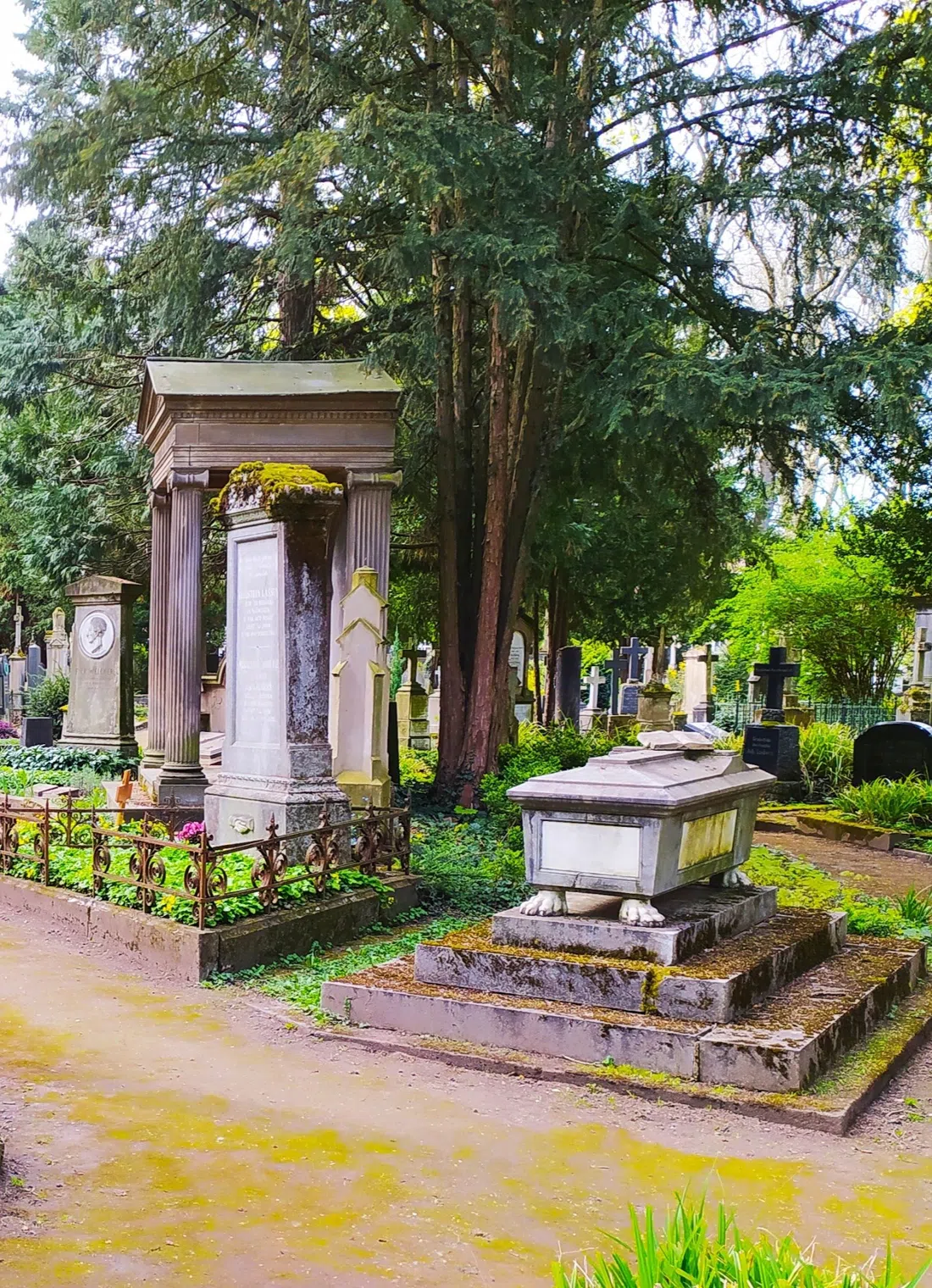
If you want the family story as well as the music, Alter Friedhof (Bornheimer Strasse, ten minutes west of the Old Town) is where Beethoven's mother Maria Magdalena lies, along with both Robert and Clara Schumann. It is a working historic cemetery and it asks for quiet, with no tours in raised voices; the eastern gate is the only entrance now open. It closes at sunset, 20:00 from March to October and 17:00 from November to February, so do it before you head for the river, not after.
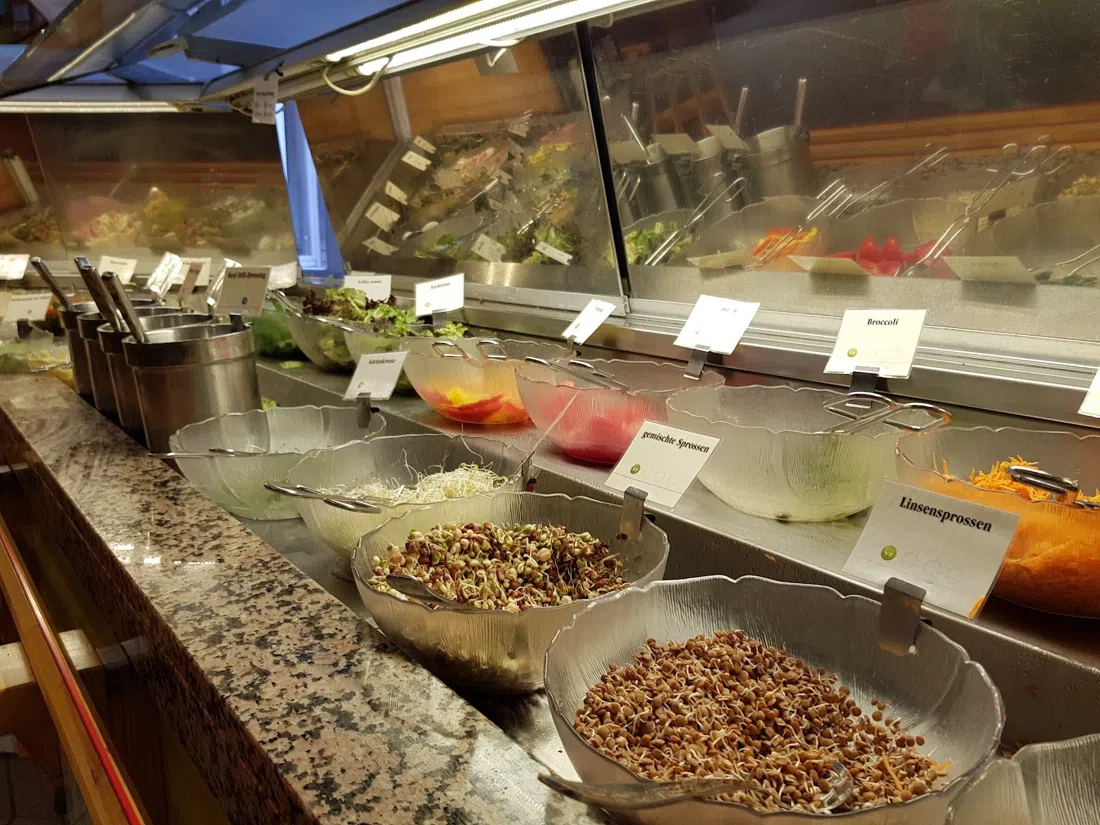
When the museums shut, Brauhaus Bonnsch (Sterntorbrucke, Old Town) is the dependable end-point. It brews its own unfiltered Bonnsch on the premises, serves mains at €12 to €22 with beer around €3 to €4, runs late seven days a week, and has long tables, brewery tours and set menus for parties booked in advance. For a mixed group with different diets, Cassius Garten (Maximilianstrasse, opposite the main station) does what no restaurant manages: a vegetarian buffet where you pay by weight, roughly €8 to €15 a plate, with no reservation needed and everyone paying for their own. It trades Monday to Saturday.
Tickets at the door and booking ahead
For a single visitor or a couple on a weekday that is not a Tuesday, buying at the door of the birthplace is usually fine, since the pressure is on the staircase rather than the ticket desk. Booking ahead earns its keep in three cases: any group, any Tuesday, and school holidays or the run of the Warhol show, when the house draws people who would not otherwise come.
A self-guided audio option covering the birthplace and the Old Town streets around it exists and is bookable in advance, and it is inexpensive, from around 9 USD a person, currently discounted from 10 USD. It runs every day of the week, which is more than can be said for several of the free stops on this route. Be aware that it is new enough to have only seven traveller reviews so far, rated 4.4 out of 5, so that is a thin sample to judge from rather than a settled reputation. It does not replace the museum ticket; it narrates the streets between the stops.
Best time to go
The day of the week decides more here than the season. Tuesday is out for independent visitors, because the birthplace belongs to pre-booked groups. Monday loses the church next door. Sunday loses the produce market, the cafe on the Markt and the buffet by the station, and leaves you with a handsome empty square. That leaves Wednesday to Saturday as the days when every stop on this walk is open, with Saturday the liveliest on the Markt and the busiest inside the museum.
Within the day, work from the two ends. Be at the birthplace door at 10am, do the museum before the stairs fill, then take the church, the statue and the Munster before lunch on the market square. Or invert it: spend the morning on the free stops and the cemetery, and go into the house after 4pm when the late-morning crush has cleared. The hour in the middle of the day is the one to avoid indoors.
Seasonally, the walk is short enough to work in the rain, since the longest outdoor stretch is ten minutes. What changes is the ending. From March to October you can finish on the Hofgarten lawn and carry on to the bastion for the light on the river; in the winter months the cemetery shuts at 17:00 and dusk arrives before you have finished the Markt, so bring the outdoor stops forward and let the brewpub be the evening.
Is it worth doing
Yes, with a caveat about expectations. If you arrive hoping for a large, cinematic music museum, twelve small rooms will feel slight. If you arrive wanting to stand in the actual spaces and see the actual objects (the last instrument he owned, the font he was baptised at, the palace chapel where he played as a child, the river he grew up beside), then this is a remarkably concentrated afternoon, and most of it is free. The paid element is one €15 ticket.
It suits independent walkers, classical music listeners, and anyone with three to four hours between trains. It suits couples better than large parties, because the best rooms hold very few people. It suits families reasonably well if you keep the museum short and let the market square and the riverside bastion do the rest. It suits wheelchair users and anyone unsteady on stairs least, because the birthplace interior is built around narrow historic staircases that no renovation can widen. If that is you, the Munster cloister, the statue, the Markt, the Hofgarten and the Alter Zoll still make a genuine two-hour walk without a single difficult step.
Practicalities
Everything above sits inside a walkable square kilometre. From the main station it is five minutes on foot to Munsterplatz and eight to Bonngasse, and the only stretch that feels like a walk rather than a stroll is the ten minutes west to the cemetery. Trams and buses cover the rest if you would rather not walk; the WelcomeCard from the tourist office folds that transport in with the museum discounts.
Carry cash. Market stalls and some smaller cafes in the Old Town still prefer it, and the produce market in front of the Altes Rathaus is a cash business. Card works at the museum and in the larger restaurants. Budget the walk at three to four hours at a civilised pace, or five if you add the cemetery and a long lunch. A realistic day comes to €15 for the museum, nothing for the churches, the statue, the gate, the palace grounds, the bastion and the cemetery, €4 to €10 for coffee and cake, and €12 to €30 for dinner depending on whether you take the terrace on the Markt or the long tables at the brewpub.
If you are staying the night, the Old Town itself puts every stop here within ten minutes of your door, and the station quarter is cheaper for the same walking distance. Compare both in the Bonn hotel search. For what to do with a second day once the Beethoven route is behind you, start with the Bonn guide.