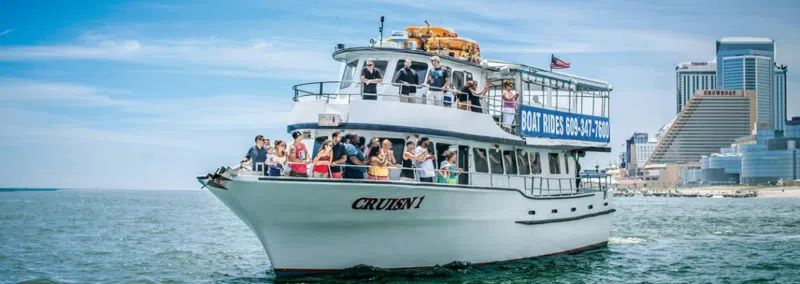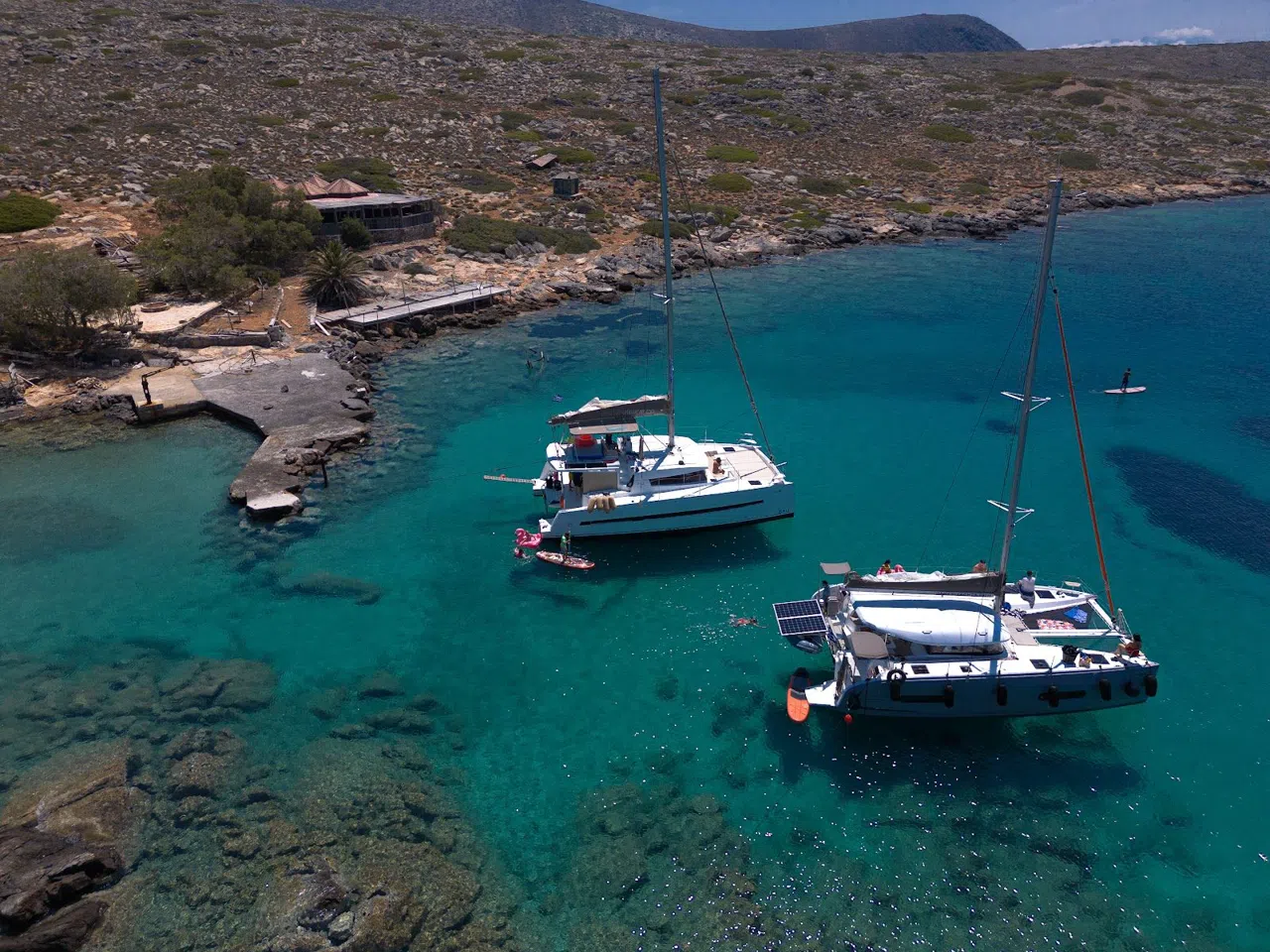

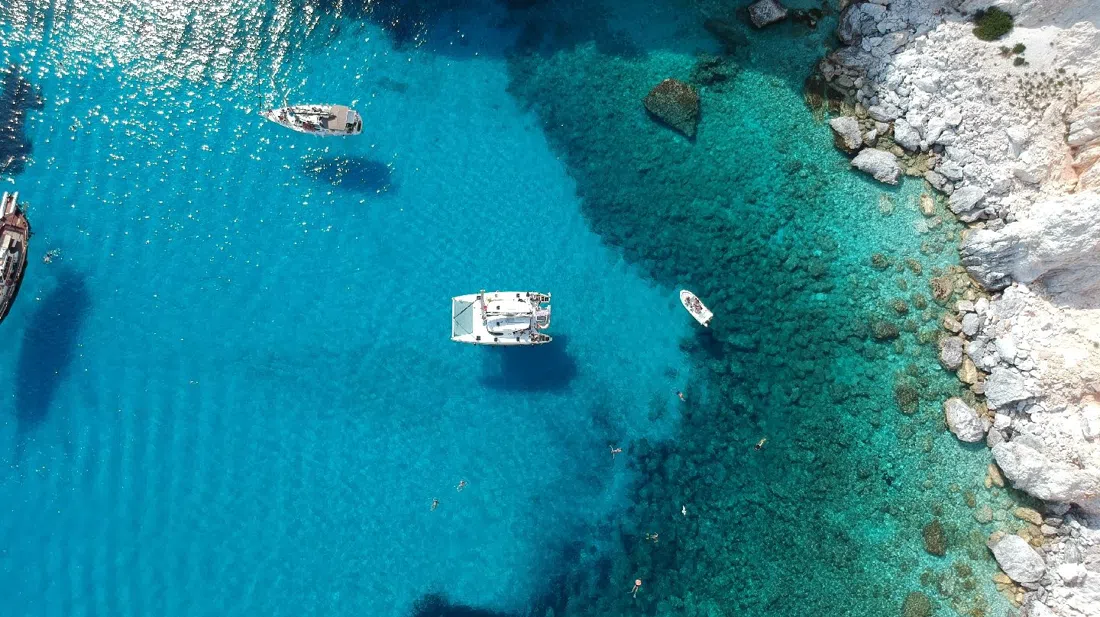
There is a stretch of coast southwest of Adamas where the rock turns chalk-white and the sea stops behaving like sea. It sits flat and mineral and lit from underneath, and the first time a boat noses into the channels there, most of the deck goes quiet. In October the light comes in lower, the water still holds the summer in it, and far fewer hulls are competing for the same anchorage.
What the day is actually made of
The full-day version of this trip is a swimming day with passages between the swims, rather than a sightseeing cruise with one swim attached. A typical departure leaves Adamas at 09:00 and returns eight to nine hours later, and the shape of it is consistent: the white sea-caves and stacks of Kleftiko, the crossing to the uninhabited island of Polyaigos for its Galazia Nera water, then Gerakas and Kalogries on the way back, with a pass at Sykia bay. You are in and out of the water four or five times, you eat aboard, and you spend a good three hours of the day simply moving.
Think about that before you book. Eight or nine hours on a boat is a long time if you do not actually like being on a boat. There is no stepping off early, no shade beyond what the vessel carries, and no facilities at any of the stops. What you get in exchange is access to a coastline that has no road to it at all, which is the argument for the day.
Kleftiko and why it can only be reached by water
Kleftiko (southwest Milos, sea access only) was a pirate anchorage, and the name carries the same root as the Greek word for thief. Look at it from the water and the logic is immediate: a cluster of white stacks and arches with deep channels between them, invisible from anywhere inland, sheltered enough to hide a hull. There is no entry fee and no ticket, because there is nothing there to sell you a ticket: no land access, no jetty, no café, no toilet. Boats are the only way in, which is why it still reads the way it does.
The practical consequence is the queue. Every operator on the island wants their guests in that water, and mid-morning arrivals stack up waiting for the anchorage. It is not a disaster, since you swim regardless and October runs thinner than August, but it does mean the order of the day matters more than the itinerary bullet points suggest. When you book, ask where Kleftiko falls in the route. A boat that takes it early, or takes it after Polyaigos while everyone else is still working through the first half of the loop, gives you a noticeably calmer hour in the caves than one arriving into the middle of the stack.
The uninhabited half most people underrate
Polyaigos (a separate island, boat access only) is the half of this trip that gets treated as an add-on and shouldn't be. It is the largest uninhabited island in the Cyclades: no residents, no roads, no beach bars, nowhere to buy a bottle of water. It is Natura 2000 monk-seal habitat, it was declared an archaeological site in September 2025, and Sykia bay is classed as an underwater archaeological site.
What that designation changes in practice is a question for your crew rather than for a guide, and it is a fair one to ask before you go over the side: where you may swim, and what you may not touch or take, can differ from the ordinary rules elsewhere on the route. The rest is simpler and non-negotiable. There is no bin, no tap and no lifeguard. Everything you carry ashore comes back onto the boat with you. Groups behave worse than couples here almost by default, not out of malice but because a dozen people generate a dozen small pieces of litter and nobody feels individually responsible for any of it.
The water at Galazia Nera is the reason the island appears in the brochure copy. It is worth the crossing on its own terms, but the emptiness is what you are really being shown: a full-size Cycladic island with nothing built on it.
Three boats, three quite different days
Polco Sailing (departing Adamas) runs the version that matches this itinerary most closely: 09:00 out of the port, eight to nine hours, Kleftiko plus the Polyaigos blue water, Gerakas, Kalogries and a Sykia pass, daily from May to October. It carries up to 22 on a semi-private basis, from €150 per person with a barbecue lunch and open bar included. The useful detail for a group is that the whole catamaran is also sold as a private charter, so ten to twenty people can take the boat outright rather than share it with strangers, which at that group size usually works out as a better day for everyone else on the water too.
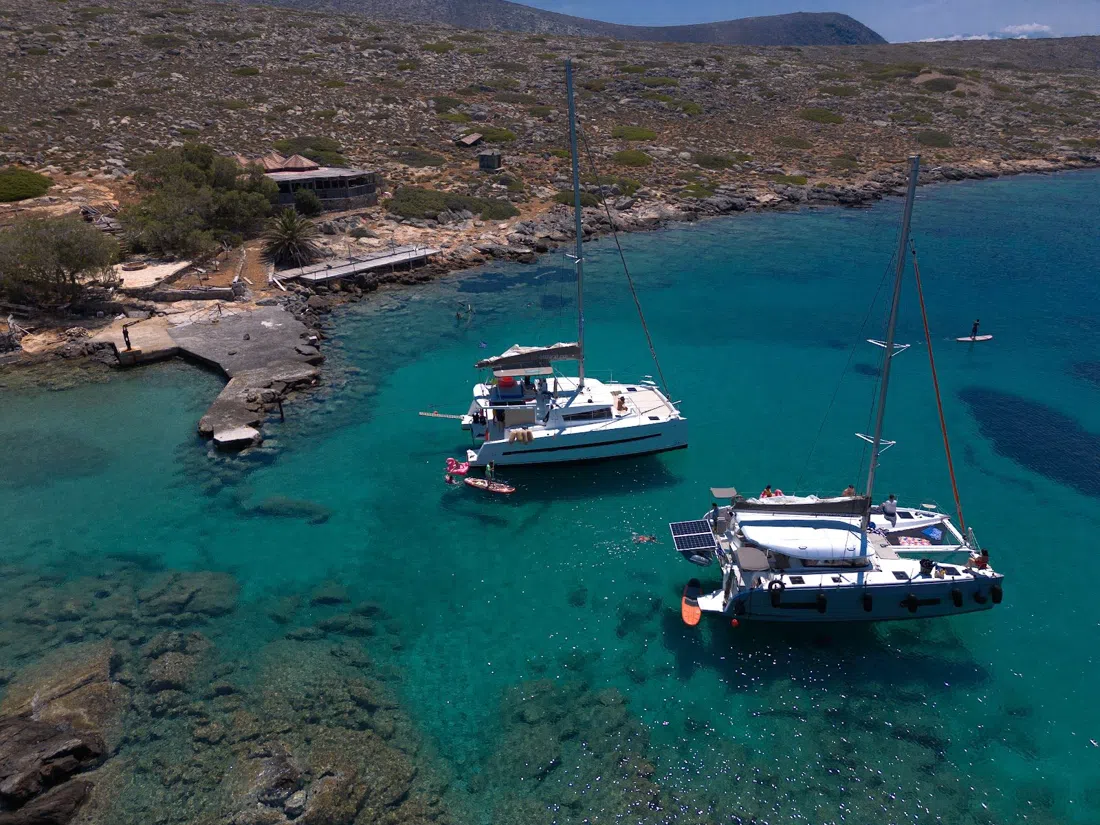
DanEri Yachts (also sailing out of Milos) sits a few euros higher at €155 per person, all-inclusive, with unlimited local wine, beer and soft drinks. Their cancellation terms are the thing to note: private charters carry free cancellation up to 72 hours, shared sailings up to 48. On a weather-dependent October booking, that difference matters.
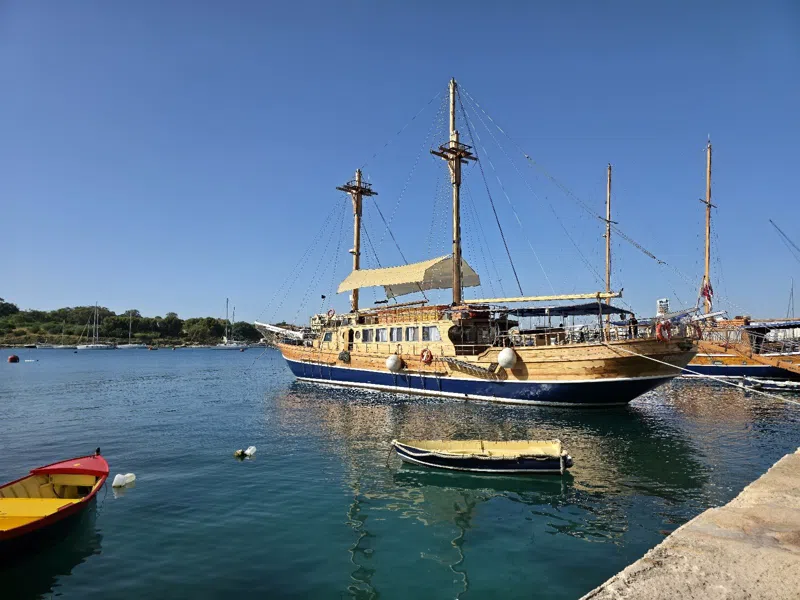
Armi Sea Excursions (departing Agia Kiriaki, not the main port) is the honest counterpoint to a €150 day. It is a traditional wooden trechantiri taking a maximum of seventeen people, running 4.5 hours with an hour each at Kleftiko and Gerakas, at €50 per person in April and May, June and September and October, €60 in July and August, with under-twelves at €30 and €50 respectively. It is listed for April to October 2026, but October specifically is on request rather than scheduled. A group of eight to twelve effectively fills the boat, which makes it the quietest option on this list, and the wooden hull is a genuinely different experience from a catamaran with a bar on it.
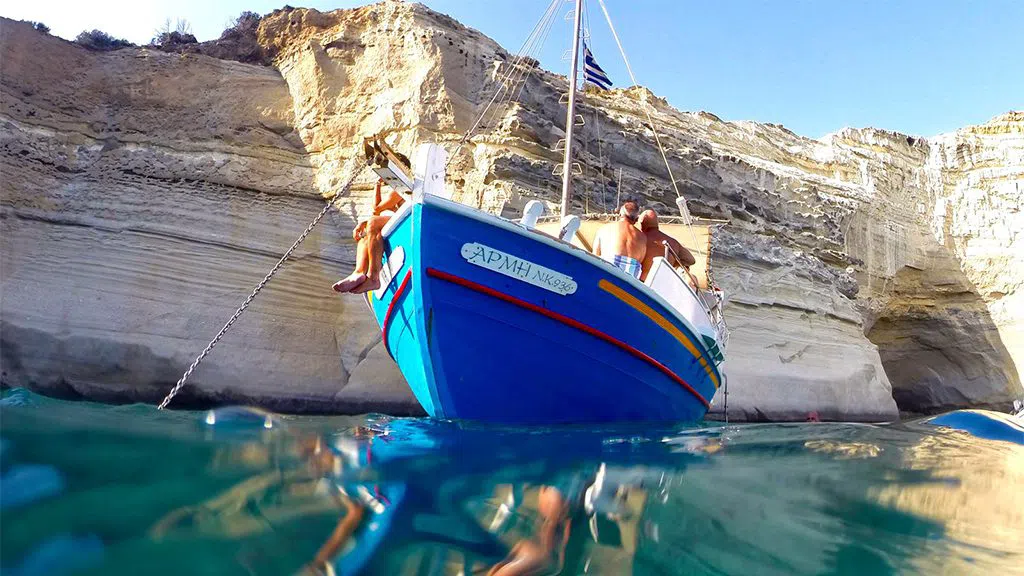
The half-day does not go to Polyaigos. If the uninhabited island is the reason you are interested, the €50 trip is a different and shorter day rather than a cheaper version of the same one. If Kleftiko is what you came for and you would rather not spend nine hours afloat, it is the better buy by a distance.
A separate morning at the museum
The Milos Mining Museum (Adamas) is the one place that explains why the island looks like it does: why the rock goes that white, why the cliffs at Kleftiko are shaped the way they are, and why an island this size spent centuries being dug rather than farmed. Entry is €7, or €10 with the audio tour, with €4 and €7 rates for over-65s and students, under-sixes free, and organised educational groups admitted free of charge.
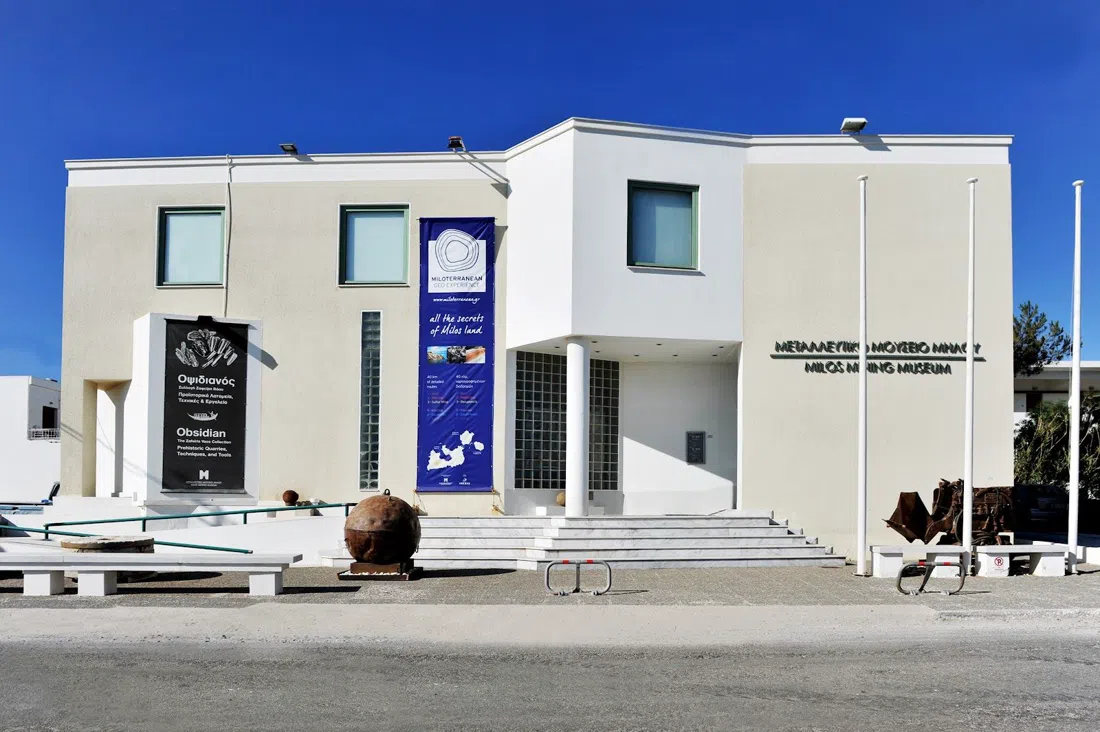
In October it opens 10:00 to 14:00 and closes on Mondays. Since the boats leave at 09:00 and return in the late afternoon, you cannot fit it around a sailing day; it needs a morning of its own. Put it on the day the wind is up, which in October is a day you should be planning for anyway. Half an hour inside it will change what you are looking at from the deck.
When to go, and why October holds up
The operators are consistent about the season: boats here run roughly May to October, with June, September and early October named as the best window, and mornings reliably calmer than afternoons. That last point should shape your booking. An early departure is not a scheduling quirk; it is the boat getting you into the good water before the wind builds.
In October the sea is still warm enough to swim without thinking about it, the anchorage at Kleftiko is less contested than in high summer, and the half-day prices drop back to their shoulder-season rate. Against that, fewer boats are running at all, one of the operators here takes October only on request, and the trip is highly weather-dependent. A blown-out day is not a rare event at the tail of the season. Build a spare day into the trip, and treat the cancellation window as part of what you are buying rather than small print.
Is it worth it
For the right traveller, clearly yes. You are paying for a coastline with no road to it, a protected island with nothing on it, and a day structured entirely around getting into the water. Across the bookable options here there are 382 traveller reviews, with the top one rated 4.8 out of 5. That is a well-trodden day out.
It suits strong swimmers, couples who are content to share a deck, and groups of ten to twenty who can take a catamaran privately and stop negotiating with strangers about lunch. Families do less well out of it than the photographs suggest: nine hours, no shade guarantee, no toilet ashore. Avoid it if you get seasick, if you need to be somewhere at a fixed time that evening, or if you would rather walk a coastline than look at it from a hundred metres out.
Book ahead rather than walking the harbour on the day. The booking platform flags the top tour as likely to sell out, and October has fewer sailings on the water to absorb the demand.
Practical notes
Getting to the boat. The full-day catamarans leave from Adamas at 09:00; the wooden half-day leaves from Agia Kiriaki, which is not the main port and needs its own transport arranged in advance. Settle that the day before rather than on the morning. It is the single most common way people miss a 4.5-hour trip they have already paid for.
Money. Prices are in euros. Reckon on €50 per person for the shoulder-season half-day or €150 to €155 for a full day with food and drinks included; the museum is €7, or €10 with audio. Kleftiko and Polyaigos themselves have no entry fee, because there is nothing there to charge you for. Carry a little cash for the small things; there are no card machines at any of the swim stops because there is nothing at all at the swim stops.
Timing. A 09:00 departure back in the late afternoon eats the whole day. Do not book a ferry, a flight or a table for a fixed hour that evening. Keep the museum, at 10:00 to 14:00 and closed Mondays, for a separate morning.
What to bring. Sun cover you can swim in, a towel, a dry bag for anything that matters, and motion-sickness tablets if you are prone, taken before boarding rather than after the first crossing. Everything you carry ashore on Polyaigos comes back with you.
This guide sits on our Bonn site, so if you are routing the trip through the Rhineland at either end, the Bonn hotel search covers the beds and the wider Bonn guide covers the rest of it.