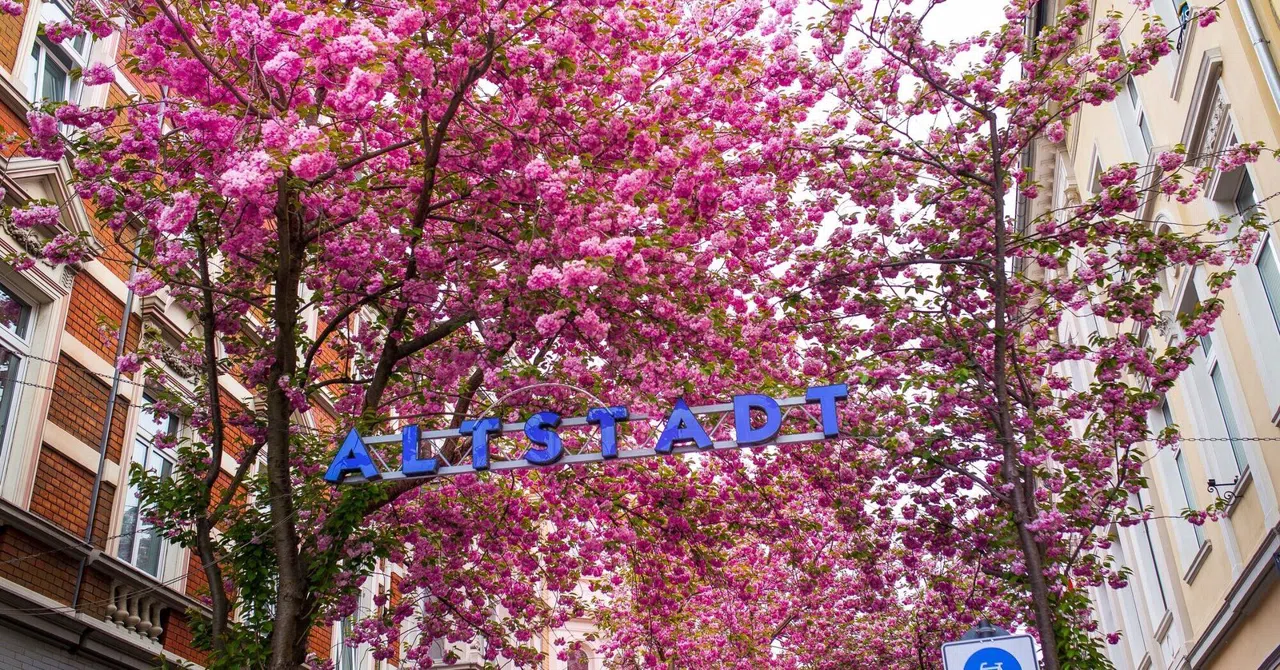

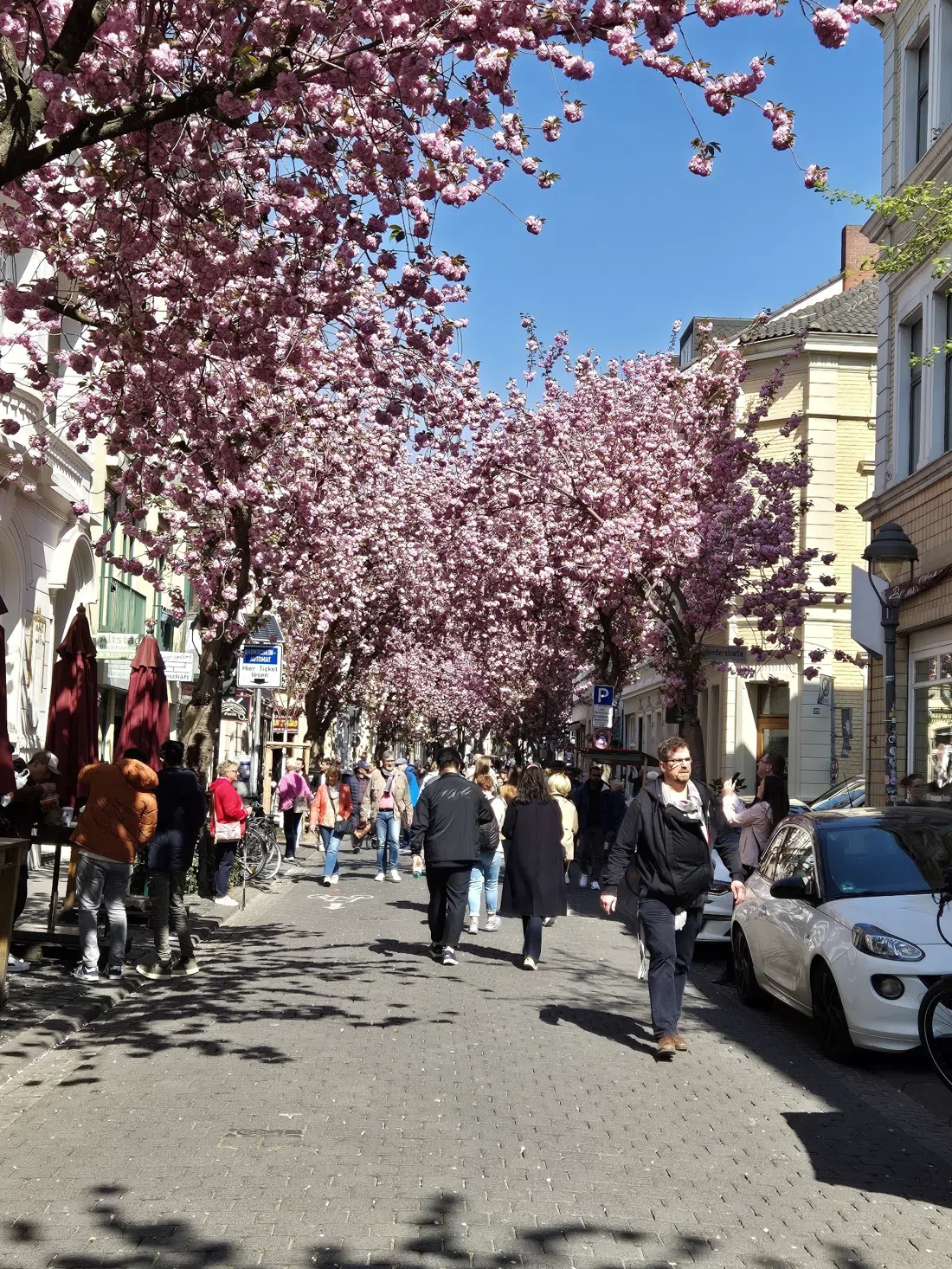
For three or four weeks each April, a run of ordinary residential streets in Bonn's Altstadt stops being ordinary. Cherry trees planted decades ago close ranks overhead into a solid pink ceiling, and the pavement below turns into something that looks, in nearly every photograph taken there, like it belongs to Japan rather than the Rhineland. The trees don't know they're famous. The residents who live under them still have to get the bins out, past the tripods.
A Street That Wasn't Meant to Be Famous
The story most visitors get told — and the one repeated in half the write-ups about this city — is that Bonn's cherry blossom streets are a piece of post-war healing, trees put in to soften a rebuilt streetscape after 1945. It's a tidy story. It's also not quite true, and the guides who actually walk this route for a living will correct you if you ask. On the StattReisen Bonn – Kirschblüten-Stadtführung (€12, €10 reduced, drop-in ticket purchase at the meeting point, small groups, and bookable privately for larger parties on request), the guides trace the planting not to the ruins of the war but to a deliberate streetscape renewal scheme in the 1980s — a decision by the city to soften a fairly plain residential district with a single, repeated ornamental cherry, planted close enough together that the canopies would eventually meet overhead. Nobody involved in that decision was thinking about photography, or about a season that would one day draw people from across Europe with a phone in one hand. What they built, more or less by accident, is one of the most photographed residential streets in Germany, and the walking tour is worth taking for that correction alone — it's the one version of the story with a paper trail behind it, rather than a romantic guess repeated because it sounds right.
The street in question is Heerstraße (Altstadt), and it is the reason any of this gets written about at all.
Heerstraße Before the Tour Buses
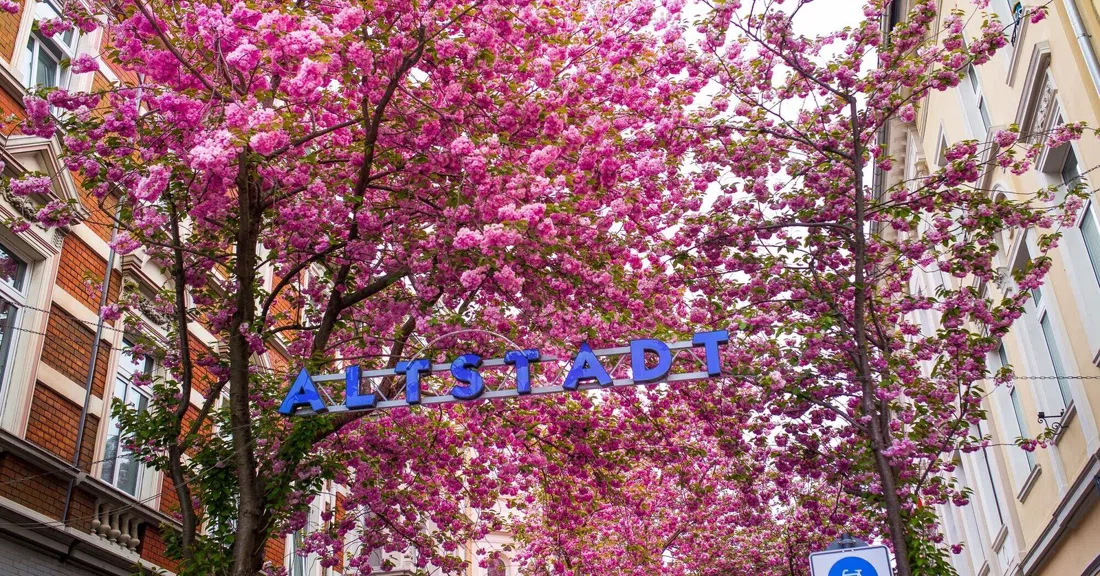
Heerstraße is a public street with no booking and no door policy — anyone can walk it any day of the year — but during peak bloom, usually the first two to three weeks of April, the city closes it to traffic on the busiest weekends, and by mid-morning it fills with coach parties and photographers working in relay for the same ten metres of tunnel. That crowding is real, and it is the single most useful thing to know before you plan a visit: go before 9am on a weekday and you will get the tunnel shot — the one where the blossom closes overhead and the street recedes into a point of pink — without another phone in frame. Go on a Saturday afternoon at the height of bloom and you'll mostly be photographing the backs of other people's heads.
At the near end of the street, Café Pawlow (Heerstraße) does coffee and cake, roughly €3–8, with terrace seating that becomes genuinely scarce during peak blossom hours. It's a fine place to sit once you've got your photographs and want to watch the street do its thing from a chair rather than standing in the middle of it — but don't count on a table between 11am and 3pm in bloom season without some patience, and a willingness to wait.
Breite Straße and the Cafés Underneath
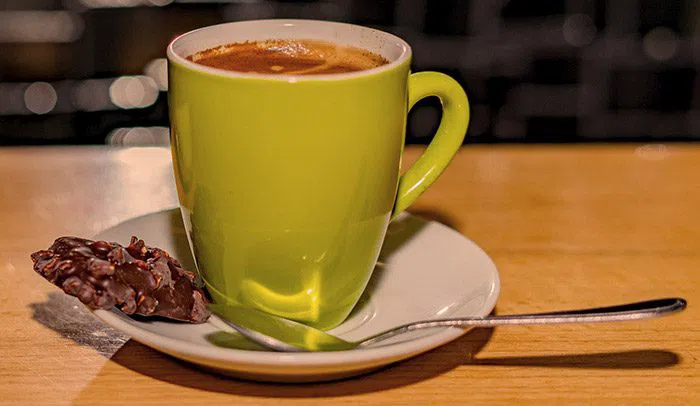
A few minutes' walk away, Breite Straße (Altstadt) does the same trick with less fame attached to it. It's closed to cars over the busiest weekend of the season — from Good Friday onward in 2026 — and it photographs less iconically than Heerstraße; the canopy is a little more broken, the street a little wider, the light less dramatically funnelled into a single frame. What it has instead is café culture that actually sits under the trees rather than beside them. Café Camus (Breite Straße) is the pick here — walk-in, no reservations needed, happy to take small groups, coffee and cake from about €4–9 with vegan options on the menu — and it has the unhurried, literary feel that makes it the right counterpoint to Heerstraße's photo-op intensity. If Heerstraße is where you go to get the picture, Breite Straße and Café Camus are where you go to actually sit under the blossom for twenty minutes with a coffee and remember why you came in the first place.
The Quiet Truth: One Block Off Heerstraße
Here is the thing nobody selling a tour of Heerstraße particularly wants to advertise: walk one block off it, into the Altstadt side streets — Dorotheenstraße, Paulstraße, Maxstraße, Wolfstraße, Franzstraße, Georgstraße, Michaelstraße, Peterstraße, Schützenstraße — and the blossom is exactly as real, on exactly the same trees from the same 1980s planting programme, with none of the tripods. These are quiet residential streets, free to walk, with nothing to book because there's nothing being sold; you're simply passing people's front doors under trees that happen to be extraordinary for three weeks a year. This is where a slower visit pays off. Spend an hour zigzagging through this grid rather than parking yourself at the one famous vantage point on Heerstraße, and you come away with a truer sense of what the season actually looks like here — not a monument to be ticked off, just a neighbourhood that happens to flower spectacularly and briefly.
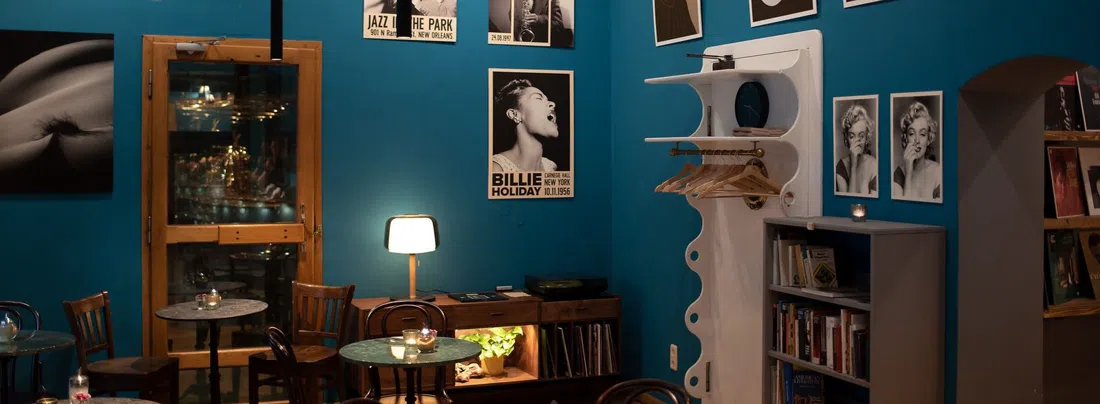
Tucked into this quieter grid is Jaz Boutique Café Art (Altstadt side streets), a small space doing a light lunch for roughly €8–14. It's walk-in and fine for small groups, but the room is genuinely tiny, so call ahead if there are more than five or six of you. Note too that it's closed on Mondays — worth flagging plainly, since a blossom trip timed around a short weekend can easily land on exactly that day.

When the City Turns Japanese: Rheinaue
The blossom streets are the headline, but the idea that the city turns Japanese has a literal answer too, a twenty-to-thirty-minute walk or short bus ride south of the Altstadt: the Japanischer Garten (Rheinaue). It's an open public park with no booking and no restriction on group size, free to enter, and it's worth treating as the second half of a blossom day rather than a rushed add-on. Where the streets give you a corridor of pink overhead, the garden gives you the fuller composition — raked gravel, stone lanterns, koi, the kind of deliberate Japanese garden design that the blossom streets only accidentally gesture at. It's a good place to end an afternoon that started at 7am on Heerstraße: slower, less photographed, and rarely crowded even when the streets are full of people doing exactly what you were doing that morning.
Seeing It From Above, and Seeing It Properly
Two ways to see the blossom differently from street level, and they suit different kinds of trip.
The Kirschblüte für Frühaufstehende ("Cherry Blossom for Early Risers") is an official City of Bonn rooftop tour, booked individually through Bonn-Information, run on fixed dawn dates from late March into mid-April, in small groups — €13 for adults, €7.50 reduced. It's the only sanctioned way to see the blossom from above rather than through it, and it leans directly into the same logic as the weekday-morning advice for Heerstraße: dawn, small numbers, before the city and its coach parties have properly woken up. Dates are tied to bloom confirmation and sell out quickly once the city announces them, so this is not a tour to leave until you land — book as soon as dates are published if the rooftop view matters to you.
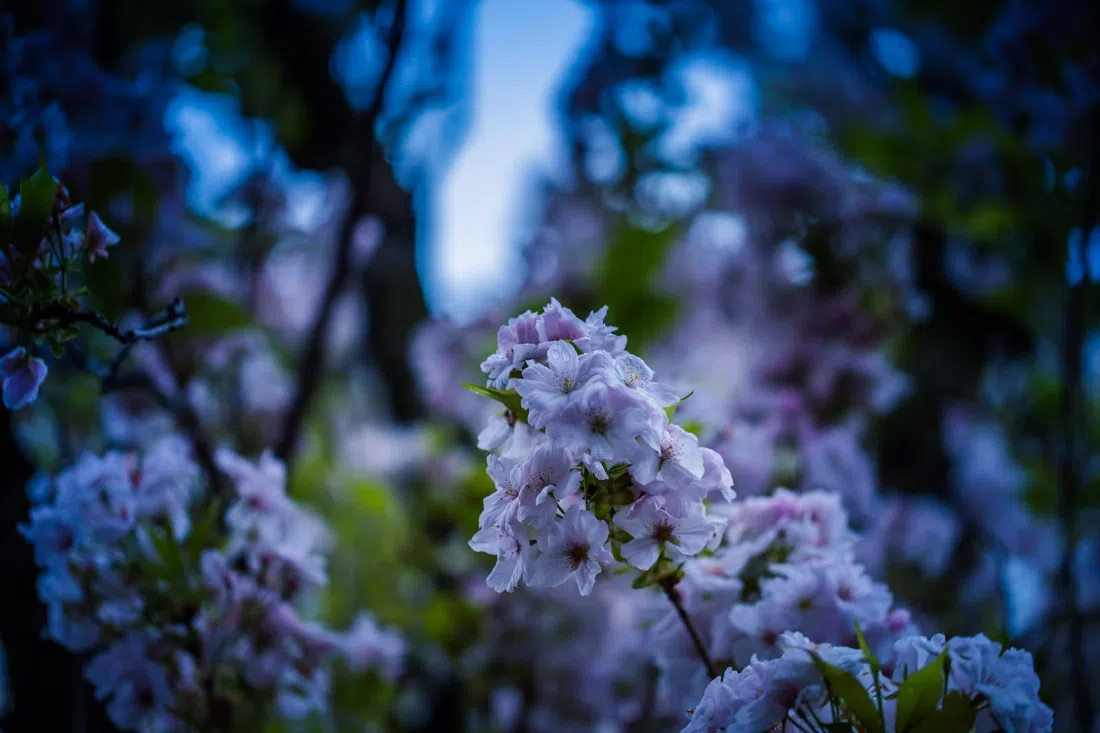
For photographers specifically, the Fotowalk zur Japanischen Kirschblüte ("Pretty in Pink") is a private booking with a licensed Bonn city guide, capped at 15 people, with family and small-group rates available — €110 per group booking, plus €5 per head over 15. This one is built for exactly the premise of this piece: a guided walk timed and routed to beat the tour buses, with the meeting point given only after you've confirmed and paid. Book directly with the guide rather than through a third party, and expect to book at least a few days out — this is a specialist product for a three-week season, not a walk-up option.
Across the River, and Up the Hill: The Quiet Alternatives
If Heerstraße's crowds simply aren't worth it to you — a reasonable position — there are two genuine alternatives using the same tree variety, both free, both unbooked, and both nearly empty even at the height of the season.
Across the Rhine in Beuel, the Beuel cherry avenues — Professor-Neu-Allee, Rilkestraße, and Heinrich-Heine-Straße — do the same tunnel effect five minutes from the Altstadt by bridge or Stadtbahn, with a fraction of the foot traffic. Locals know this; visitors mostly don't, which is rather the point.
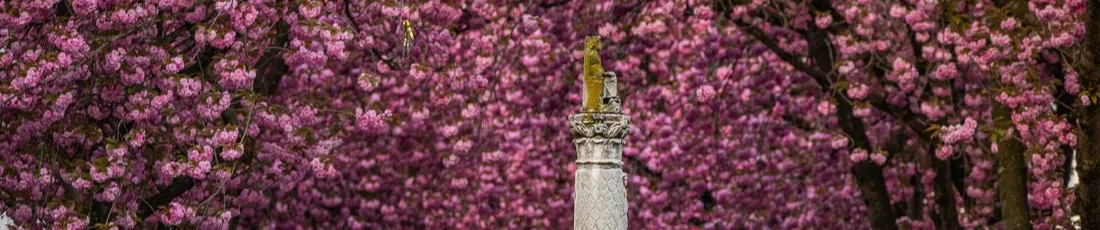
Further out, in the spa town of Bad Godesberg, Straße Am Lenkert (Bad Godesberg) is the second quiet option, and it pairs naturally with a wider look at Bad Godesberg itself — a genteel, villa-lined district with its own unhurried pace, worth an afternoon regardless of the blossom. Neither of these streets will hand you the single most famous photograph of the season. Both will hand you the same trees, the same light, and a truer sense of what a residential street under cherry blossom actually feels like when there's nobody else there for it.
One Weekend to Avoid
Worth flagging rather than recommending: the Bonner Street Food Festival, held in the Altstadt in mid-April, is a large open public event with no admission charge and no booking — entry is free, individual stalls are priced per item — and it draws heavy foot traffic straight into the streets this piece is about. If the festival dates overlap with peak bloom, which happens most years, the Altstadt will be dense with people regardless of whether a single tour bus is in town that day. It isn't a reason to avoid Bonn that particular weekend, but it is one more argument for the weekday-morning strategy that runs through everything above: turn up early, before either the blossom crowd or the festival crowd has assembled, and you'll see the streets closer to how they're actually meant to look.
Practical Notes
Getting there and around. The Altstadt blossom streets are walkable from Bonn Hauptbahnhof in under fifteen minutes. Beuel is a short hop across the Kennedybrücke or one stop on the Stadtbahn. Bad Godesberg and the Rheinaue are both reachable by Stadtbahn or bus within twenty to thirty minutes of the centre. You won't need a car for any of this, and driving into the Altstadt during peak bloom weekends is actively discouraged by the street closures themselves.
Cash. Cafés generally take cards, but smaller stalls at the Street Food Festival, and some walk-up tour tickets, are easier handled in cash — carry a little just in case.
Timing. Bloom is weather-dependent and shifts from year to year, but the reliable window is the first two to three weeks of April 2026, with individual streets sometimes reaching their peak a few days apart from one another. Check the city's own bloom updates before locking in a rooftop or photo tour rather than fixing a date months out on guesswork.
Budget. The streets themselves cost nothing to walk. A café stop runs roughly €4–14 per person. The rooftop early-bird tour is €13 (€7.50 reduced); the StattReisen history walk is €12 (€10 reduced); the private photo walk is €110 per group of up to 15, plus €5 per extra head. A day built around Heerstraße at dawn, a coffee at Café Pawlow or Café Camus, and an afternoon in the Japanischer Garten costs less, all in, than a single restaurant dinner elsewhere in the city.
If you're building a longer stay around the season, the Bonn guide covers the rest of the city beyond the blossom, and it's worth sorting accommodation early — April books out fast once bloom dates firm up — through Bonn hotel search.