
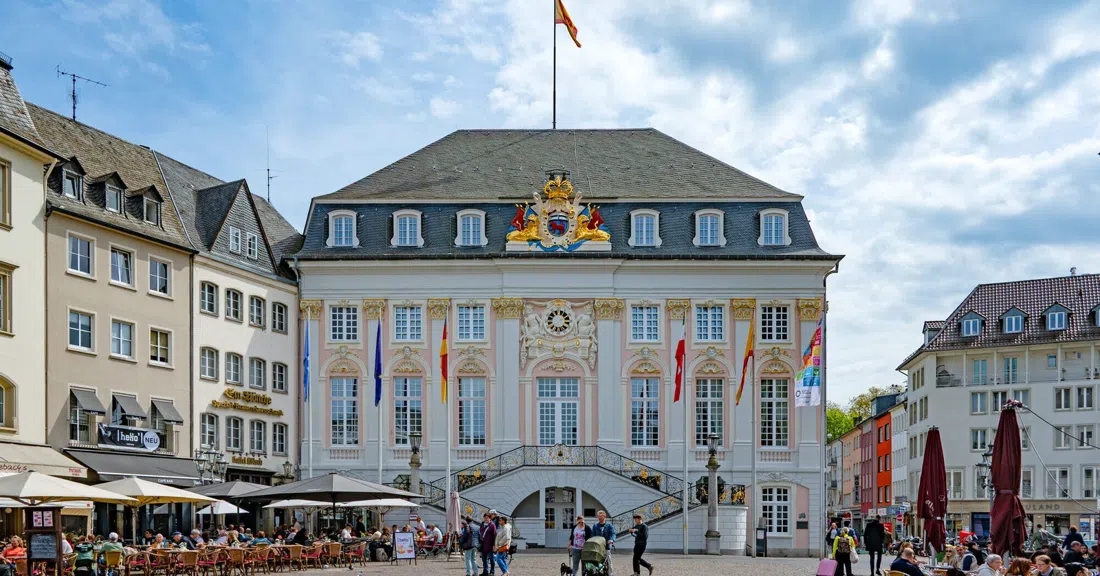
Bonn hands over its history slowly. The pink-and-grey front of the old town hall on the Markt reads as pure theatre until somebody tells you who has stood on those steps and what the crowds below were shouting; the plain townhouse on Bonngasse looks like any other narrow Rhineland front until you know who was born in its attic. That gap, between what you can see and what you can be told, is the argument for walking this city with someone who knows it.
What you are actually buying
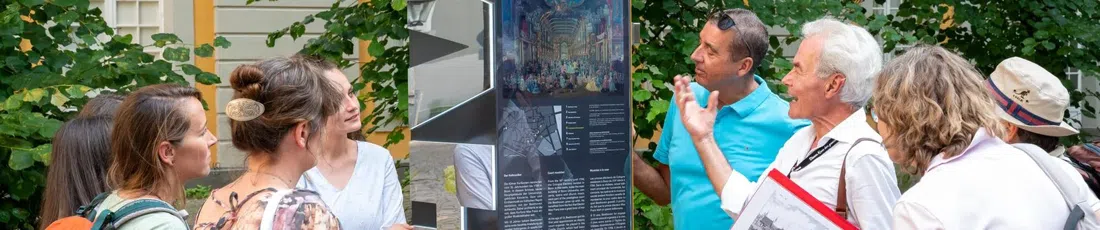
A private walking tour in Bonn is not an excursion. It is ninety minutes to two hours of one person's attention, on a route bent around your party, in a compact old town where almost everything worth seeing sits inside a fifteen-minute radius of a single square. There are no coaches, no headsets, no waiting for stragglers you have never met. You can stop, ask a follow-up, and change your mind halfway through.
The city's own booking desk is Bonn-Information (Windeckstraße, a few steps off Münsterplatz in the centre), which sells private walks for your party alone, up to twenty people, on the date and at the start time you choose, with dozens of themed routes covering everything from Beethoven to the former government quarter. From 1 January 2026 the rate is €120 for two hours in German, €130 in a foreign language and €140 bilingual. An extra hour costs €35-42, a start from 20:00 carries a €10 evening surcharge, and going inside a building adds €10 per building plus the admission itself. Read those numbers carefully: they are for the whole group, not per person.
The alternative-angle operator is Stattreisen Bonn (city centre, private bookings by email), which takes groups of up to about twenty for €140-200 and also runs scheduled public walks anyone can join at €12-14 per person, €10-12 reduced, with 2026 dates published through to early 2027. Its catalogue is sharper than the highlights loop, taking in Nazi-era Bonn, brewing history and a Beethoven walk built on private life rather than plaques, and its beer-culture route costs €15 with an optional €20 tasting. Most of these themed walks are German-first, so confirm the language in your first email rather than at the meeting point.
Privately bookable walks also reach Bonn through the usual international channels, and the option attached alongside this article runs seven days a week and lists from 268 USD per person. Set that figure next to the city office's group rate and you have the honest shape of the market before you book anything.
The route the city walks itself
Almost every guided walk forms up at the Altes Rathaus and Markt (Altstadt), because there is no better exterior in Bonn and nowhere easier to find. The rococo front with its double staircase has been the city's backdrop for civic ceremony for nearly three centuries, and the square in front of it still runs a working market rather than a souvenir row. It is free, it is outdoors, and there is no door policy to negotiate. Set your expectations honestly, though: the famous staircase is photographed from below, not climbed. The Gobelin room inside opens only for weddings, civic functions and specially arranged visits, which a two-hour walk will not include unless you asked for it weeks ahead.
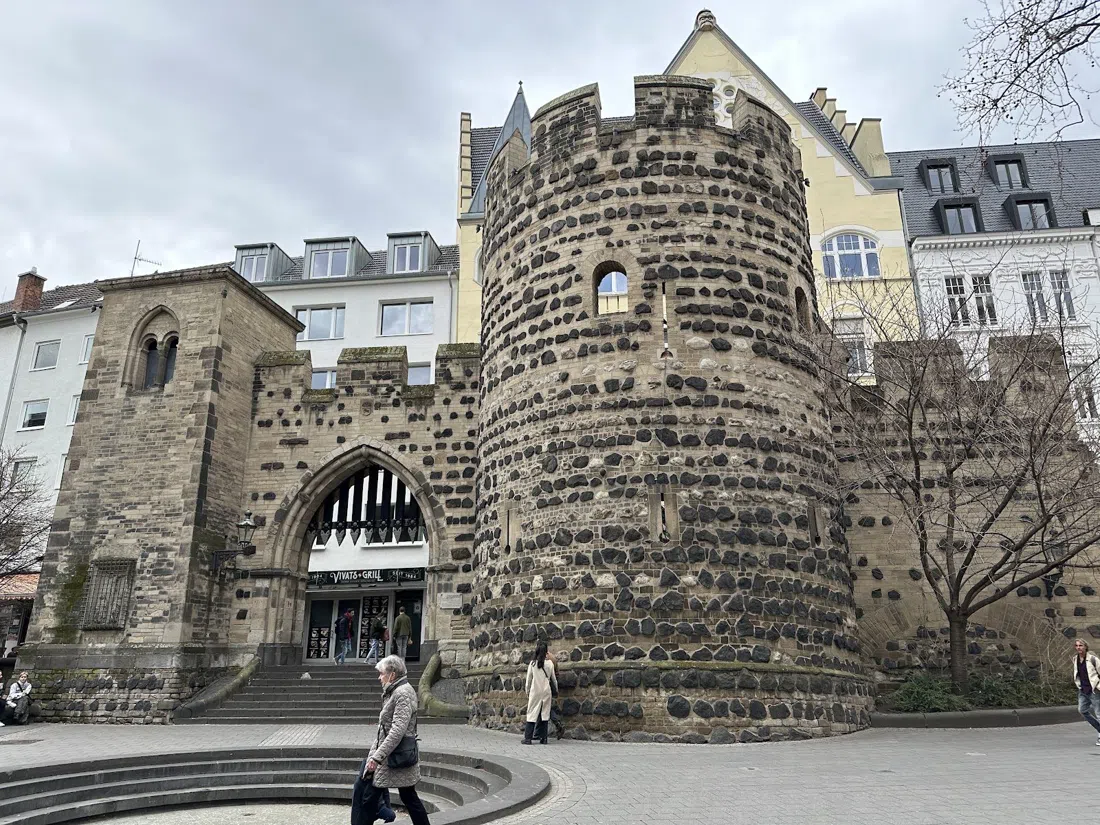
From the square most guides drift to the Sterntor (Stockenstraße, city centre), and this is where you find out quickly whether your guide is any good. The gate looks like a survivor of the medieval wall. It is not. The 1244 original was demolished in 1898 and rebuilt two years later a few metres from where it stood, using the original stones, a relocated reconstruction that tells you more about how the nineteenth century felt about the Middle Ages than about the Middle Ages themselves. A guide who gives you that twist is worth the fee; one who says "thirteenth-century gate" and walks on is not.
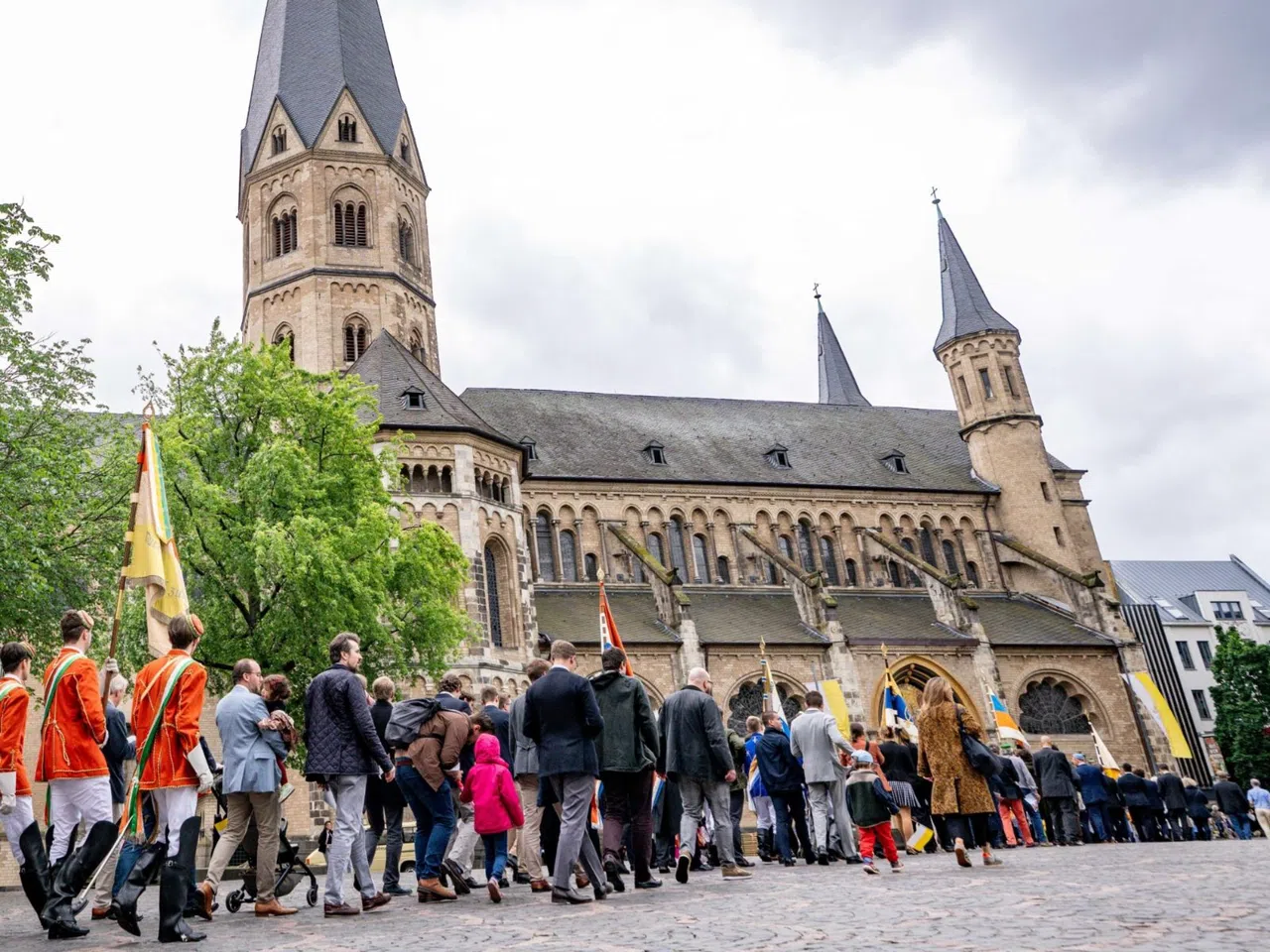
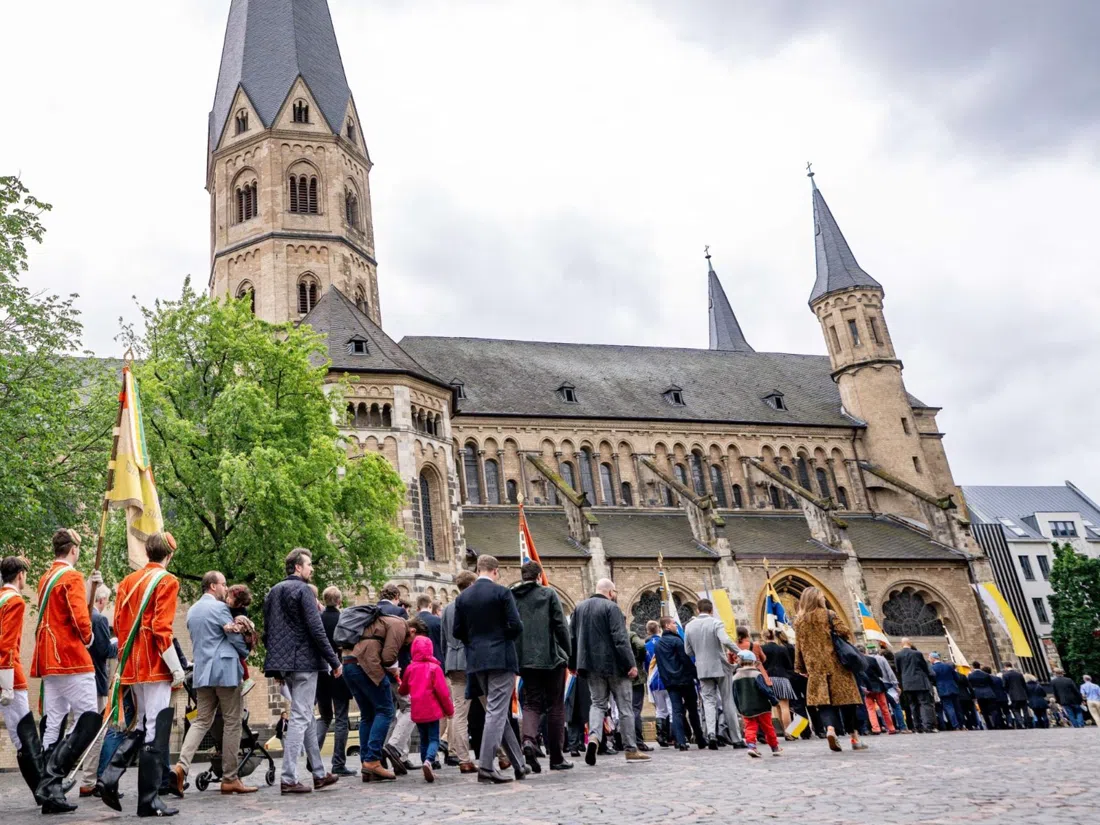
The Bonner Münster (Münsterplatz) is the anchor of the centre and, for a walking party, the easiest interior in the city: entry is free during open hours and groups are welcome, with themed and guided tours bookable separately through the parish's own online shop. If you have been given older advice that the basilica is shut for works, discard it. It reopened on 31 October 2021 after five years of restoration. The cloister keeps shorter hours than the church, roughly 10:00-17:00 on weekdays and 14:00-17:00 at weekends and on holidays. Guides are also asked to keep voices down when a service is running, so a large group may find itself briefed outside on the square instead.
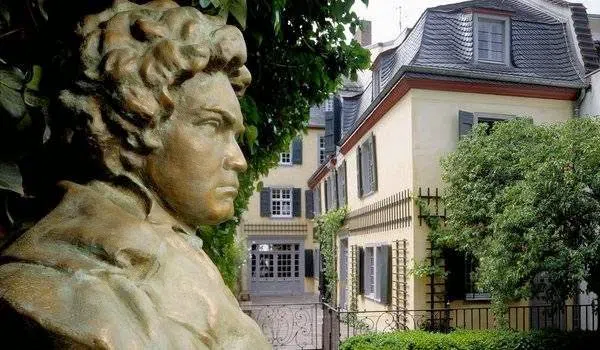
Then Beethoven-Haus Bonn (Bonngasse, Altstadt), the one paid interior most Bonn walks are built around. Admission is €15 adult and €10 child, rising to €17 and €12 during the 'Beethoven by Warhol' show, which runs 9 September 2026 to 5 April 2027. Guided visits must be booked ahead, and on Tuesdays the museum opens for pre-booked groups only at reduced group rates. Unless your guide bought tickets in advance, you will see the exterior and the courtyard and hear the story there, which is not nothing but is not the rooms. If you do go in, know what you are walking into: low beams, changes of level between floors, and no air conditioning, which matters in July.
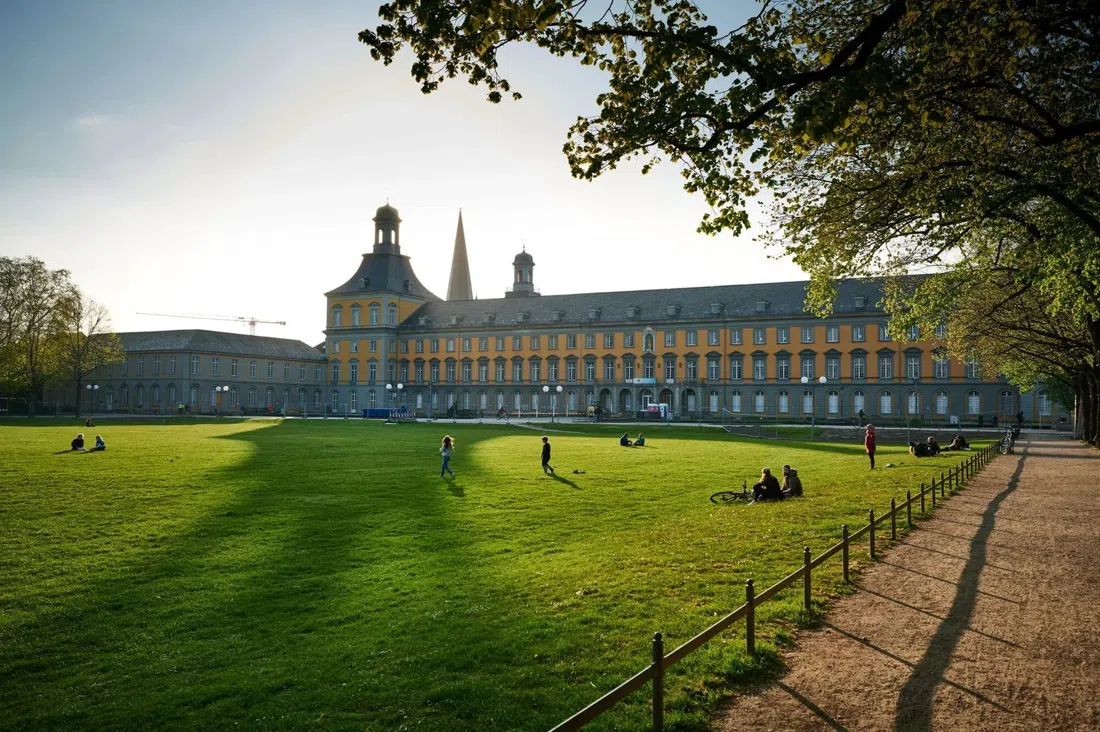
The walk usually swings next through the University of Bonn Main Building (Am Hof, centre), the former Electoral Palace, and the Hofgarten lawn in front of it. Be warned rather than disappointed: BLB NRW netted the Hofgarten facade in late August 2025 ahead of a general renovation expected to run at least ten years, and interim lecture structures are planned around the lawn. The hero shot is compromised for the foreseeable future. The arcade passage is still open at any hour, the park still takes groups of any size, and a good guide will simply spend the time on what the palace became rather than on how it photographs.
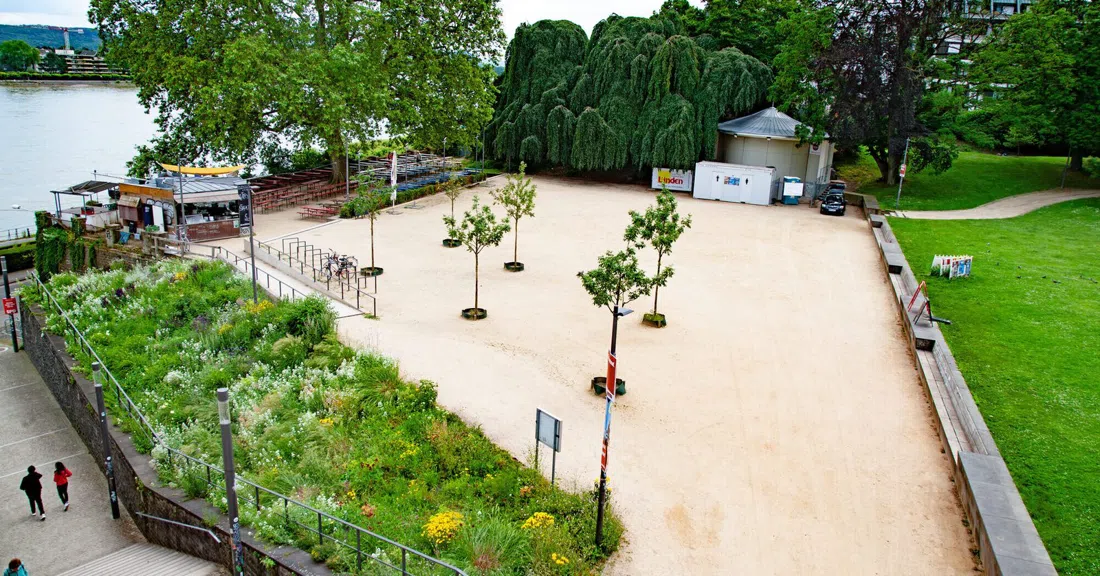
The natural finish is Alter Zoll (the old bastion above the Rhine at the end of the Hofgarten), the one genuine viewpoint on a central Bonn walk. The terrace is free and takes any group size, and the river bends away below towards the Siebengebirge hills. Time it for late afternoon, when the light is on the hills rather than in your eyes. The beer garden below runs seasonally and fills fast in fine weather (drinks are roughly €4-6 and plates €10-18), so a party of more than six should call ahead rather than hope.
Where a longer walk goes
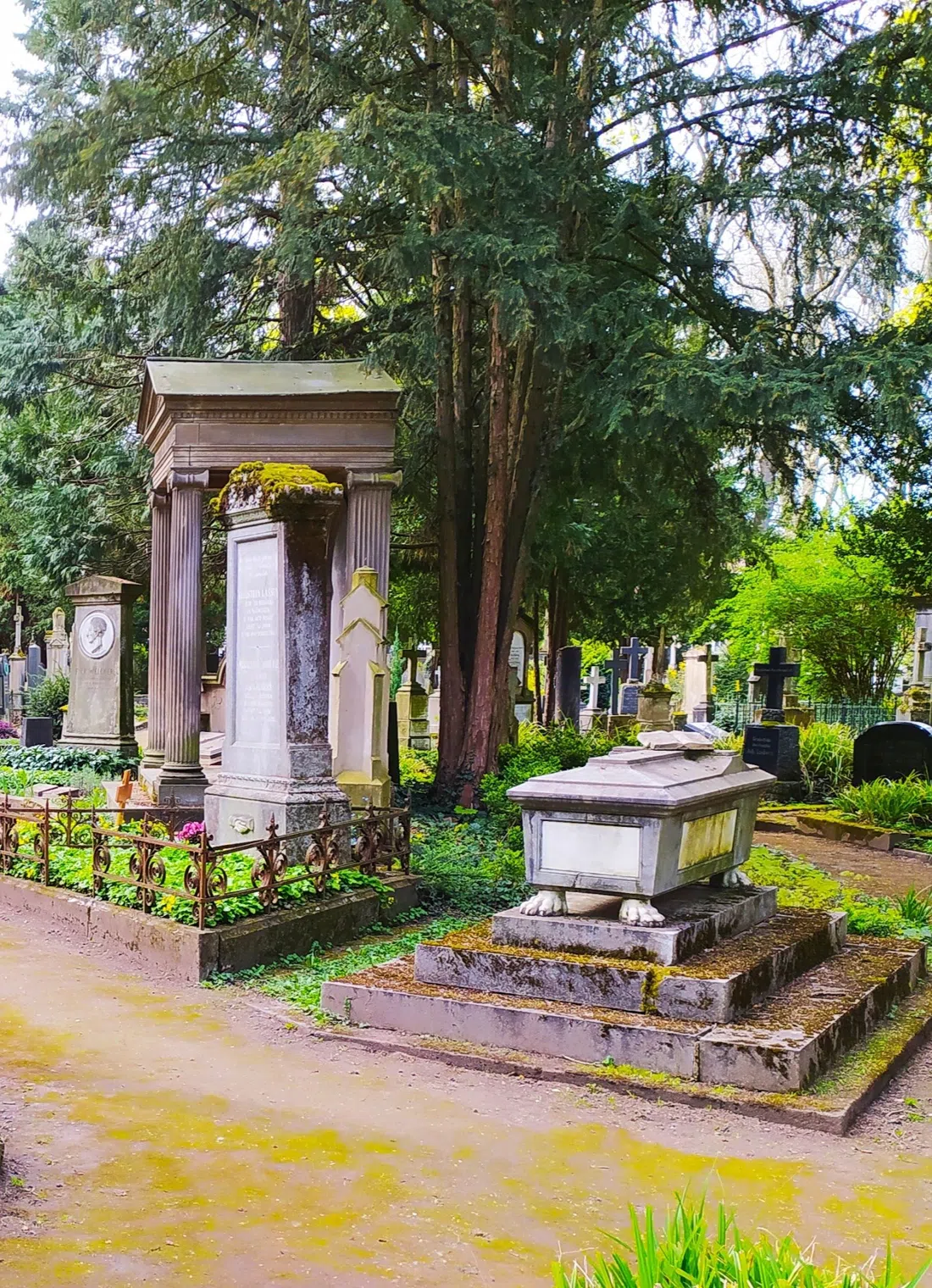
Book the third hour and the city opens up. The Alter Friedhof (Bornheimer Straße, a ten-minute walk from the Markt) is a shaded historic cemetery where a private guide finally has somewhere quiet to actually talk, which is harder than it sounds in a busy centre. It is free and open to all, guides ask for quiet, and the gates follow daylight, roughly 07:00-20:00 from March to October and 08:00-17:00 from November to February. Themed cemetery walks run mainly in spring and summer and are often German-only.
Poppelsdorfer Schloss and the Botanische Gärten der Universität Bonn (Poppelsdorf, about twenty minutes on foot from the centre down a straight avenue) is the best add-on for a longer private walk, and the garden tours are bookable through the university. The gardens are free Monday to Friday and €5, or €3 reduced, at weekends and on holidays, with under-12s free. The winter arrangement catches out a lot of November visitors: from 1 November to 31 March the gardens open weekdays 10:00-16:00 only and stay shut at weekends and on holidays.
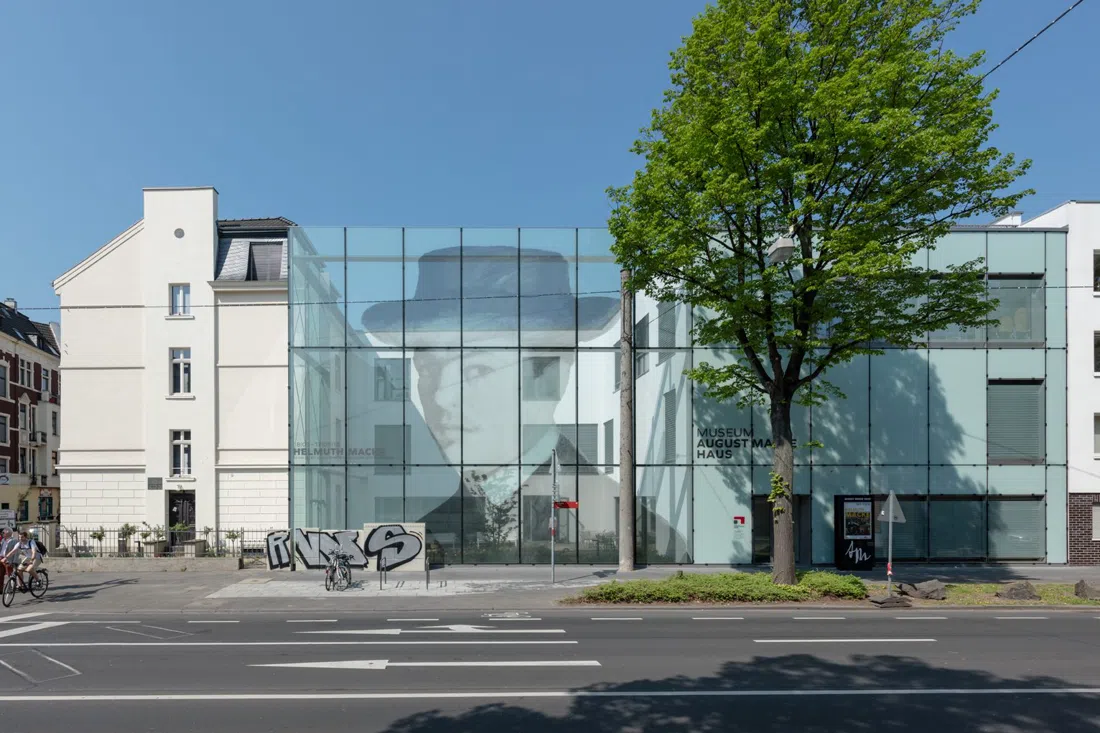
South of the centre, Museum August Macke Haus (Südstadt) pairs naturally with a walk through the Wilhelminian streets around it, but the opening hours are tight enough to plan the whole day around: Wednesday and Friday 12:00-16:30, Thursday 12:00-17:30, weekends and holidays 11:00-16:30, closed Monday and Tuesday. Admission is €12 adult, €9 reduced, €6 for ages 7-18 and €24 family, dropping to €5 on Thursdays after 16:00 with the audio guide included. Groups of ten or more pay €10 per head, €7 reduced, and school groups €4, but book, because the short hours fill.
When the sky turns
Walking tours in Bonn are only lightly weather-dependent, and the sensible move in rain is to end the walk early and go indoors rather than to cancel. The strongest free option is Haus der Geschichte der Bundesrepublik Deutschland (Museumsmeile, Gronau), a museum of post-war German history that costs nothing for everyone including groups, with guided tours bookable through visitor services. It opens Tuesday to Friday 09:00-18:00 and weekends 10:00-18:00, and closes on Mondays.
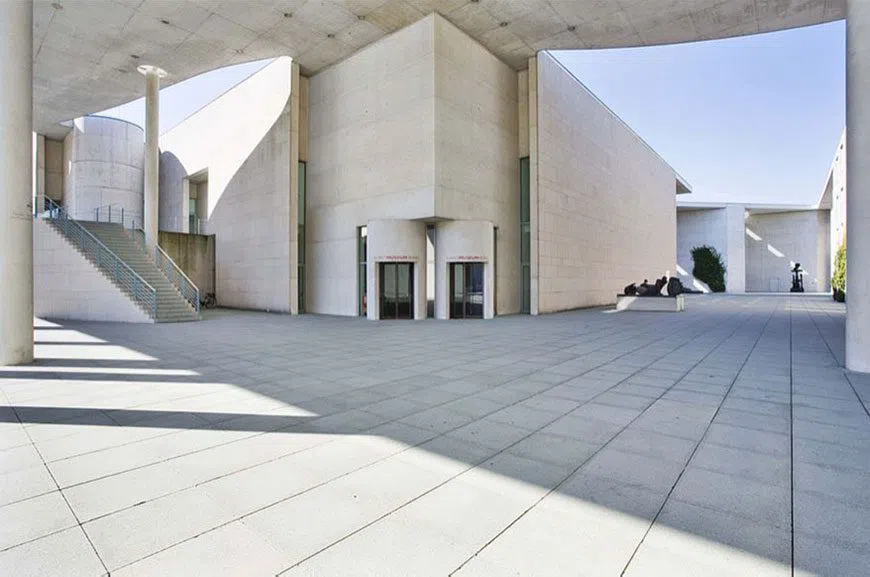
A few minutes along the same stretch, the Bundeskunsthalle (Museumsmeile) charges €14 for a day ticket, €7 reduced, and €11.20 per head for groups of ten or more. It opens Wednesday 10:00-21:00 and Tuesday and Thursday to Sunday 10:00-18:00, closed Mondays except public holidays. Its roof garden is free when no exhibition is installed up there, but treat it as a bonus rather than a plan: it shuts in snow, ice, storms and heavy rain, and during exhibition build-ups.
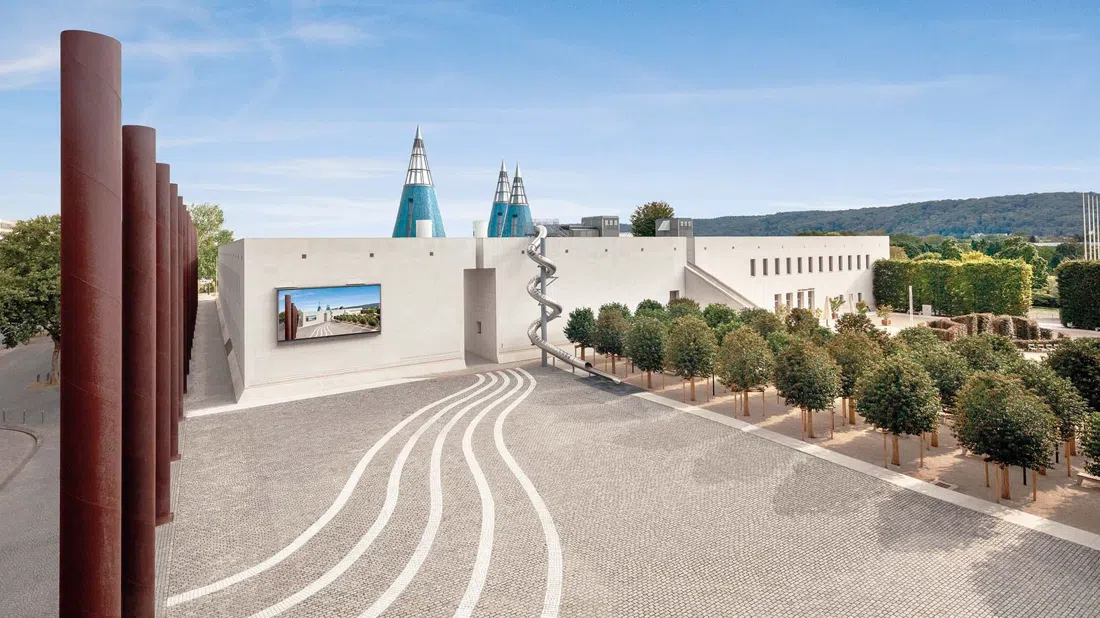
For value, Kunstmuseum Bonn (Museumsmeile) is the one to choose: €7, €3.50 reduced, free under 18, open Tuesday to Sunday 11:00-18:00 and Wednesday to 21:00, closed Monday. It holds the world's largest collection of August Macke, which makes it the natural second half of anything you started at the Macke house, and it costs about half what a comparable German city gallery asks. Groups are welcome with advance notice.
Where the walk should end
On the Markt itself, Em Höttche (Markt 4, Altstadt) has been serving for six centuries and is a documented Beethoven-era haunt, so it works as a tour stop and lunch at once, which is exactly what a ninety-minute walk needs at its end. Mains run roughly €15-25, group reservations are taken by phone or email, and the terrace on the square absorbs larger parties in fine weather.
Two minutes from the Sterntor, Brauhaus Bönnsch (Sterntorbrücke, city centre) is Bonn's only private brewery, pouring its own cloudy Bönnsch in the tall narrow glass the Rhineland favours. It is walk-in friendly and used to groups, opens Monday to Saturday 11:00-23:00 and Sunday 12:00-23:00, and charges roughly €12-20 for mains with beer around €4. For a walk that finished at the Sterntor rather than the river, it is the obvious last stop.

Is it worth it
For a couple, the maths is close. Two people can walk this centre unguided in an afternoon with a decent map, and every outdoor stop on the standard route is free. What you buy with a guide is the Sterntor story, the gap between the palace's ceremonial past and its working present, and somebody who knows on which Tuesday the Beethoven house will refuse you at the door.
For three or more, it stops being close. A city-office private walk at €120-140 for the whole party, for two hours, in your language, is straightforwardly cheaper than per-person rates on the international platforms, where the option shown alongside this article starts from 268 USD per person. The demand picture here is modest, and worth stating plainly: four traveller reviews across the bookable tours on this page, the top one rated 4.8 out of 5 from those four. This is not a sold-out city. You are not fighting for a slot; you are choosing a supplier.
It suits anyone who wants the government-era and musical layers of Bonn joined up rather than listed, and it suits families, because the pace is yours. Travellers with limited mobility will find it easier than most German old towns, since the route is flat and short, though the Beethoven house interior is not. Anyone who mainly wants interiors should book museum entry separately and use the walk to stitch the day together.
Best time to go
Late afternoon is the strongest slot. Start around 15:30 and the light is on the Siebengebirge by the time you reach Alter Zoll, the Markt has emptied of market traffic, and dinner follows naturally. Morning is the better choice in July and August, when the old town's stone holds heat and the Beethoven house has no air conditioning.
Avoid Monday if museums matter to you: the history museum, the art hall and the art museum all close. Avoid an ordinary Tuesday if the Beethoven house is the point of the trip, because it opens that day for pre-booked groups only. April to June and September to October are the best months for the outdoor half, with the cemetery's themed walks concentrated in spring and summer and the botanical gardens still keeping full hours. From November the gardens shrink to weekday afternoons and close entirely at weekends, so a winter walk should stay in the centre and lean on the indoor stops instead. Guided walks themselves run through the year, and the option attached here operates seven days a week.
Practical notes
Bonn's centre is walkable end to end. The main station sits about five minutes from the Markt on foot, and the Museumsmeile is a short ride on the city's Stadtbahn or a twenty-five-minute walk along the same axis; Poppelsdorf is twenty minutes on foot from the centre. Nothing in this article needs a car, and nothing needs a taxi.
Carry some cash. Card acceptance is normal in the museums, but smaller Rhineland taverns, market stalls and beer-garden kiosks are still happier with notes and coins. Book any private walk by email or through the operator's own desk rather than at a counter on the day, and say up front how many you are, what language you want, and whether you expect to go inside a building. That last one changes the price by €10 plus admission, and it is better agreed in writing.
The budget works out like this. Two people, two hours, city-office private walk plus the Beethoven house interior for both: about €170. A family of four doing the same with two children: roughly €190. Add the art museum at €7 a head and lunch on the Markt at €15-25 a main and you have a full, unhurried day in Bonn under €300 for a family, without a single per-person tour fee.
For rooms within walking distance of everything above, start with the Bonn hotel search; for the rest of the city beyond this walk, the Bonn guide covers where to eat, what to skip and how the districts fit together.