
The Rhine leaves Bonn running almost due north, which is an awkward geometry for a sunset. The sun does not fall into the river; it goes down behind the city and leaves the water to do the reflecting. What it lights instead, for perhaps twenty minutes of very good colour, is the far bank: the abrupt green humps of the seven hills, a ruin on one summit, the long pale front of a grand hotel on another. Then the light climbs them, thins, and goes out. Knowing which side of the river to stand on, on which evening, is most of the skill.
Which bank you stand on
There are two entirely different evenings available here, and it helps to decide which one you want before you buy a ticket or lace a boot. Stand on the city side and you are looking east across the water: the sun is behind you, the hills in front of you turn gold and then rose, and the river carries the colour down. This is the reliable version, it needs no climbing, and it works in any season. Cross to the hills and you are looking west, back over Bonn and out towards the Eifel, with the sun actually in the frame. That evening is bigger and more dramatic, and far more demanding logistically, because almost everything up there closes early and the way down is a walk in the dark.
The third option, the one people overlook, is the small volcanic rise on the southern edge of the city, which faces genuinely west without asking you to cross the river at all.
Sunset in Bonn runs from just before 22:00 in late June to around half past four in December. The winter times are not a consolation prize: several of the region's best terraces shut at 18:00, and in November and December that is comfortably after dark, which means the castles and museums are in play precisely when nobody expects them to be.
Within walking distance of the old town
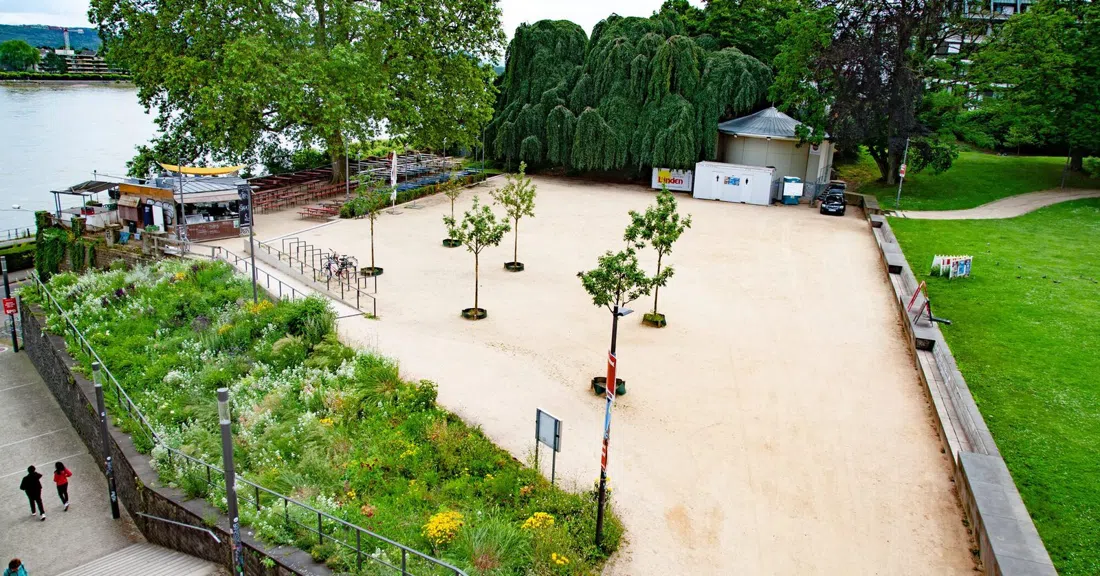
Alter Zoll (the bastion above the river at the eastern edge of the Altstadt) is where the city goes by default, and it deserves the habit. It is an old customs bastion, a wide stone terrace set above the water with nothing in the way, five minutes from the market square. It faces upstream rather than into the sunset, and that is exactly the point: you watch the last light work its way up the Siebengebirge while the river below turns the colour of weak tea. It is free, it is public, there is no door and no limit, so it takes any size of group without arrangement, and a dozen people can simply turn up. The beer garden on the slope below seats large parties at around €4–6 a beer, but it is a summer operation and has been through renovation work, so treat its hours as seasonal and have a second plan if it is shuttered.
ABOVE Rooftop Bar (on top of the Prize by Radisson, central Bonn) is the only genuine public rooftop in the middle of the city with a sightline to the river. It opens daily from 16:30 to 23:30, which is the number that matters: it is the one place here that covers sunset every single day of the year, midwinter included. Reach it through the hotel lobby and up the lift; there is no sign from the street, and people walk past it constantly. Cocktails run about €11–15. It takes no reservations at all, which makes it excellent for two and genuinely risky for eight: on the first warm evening of the year the outdoor seats are gone by six, and a large group will end up split across the room or standing.
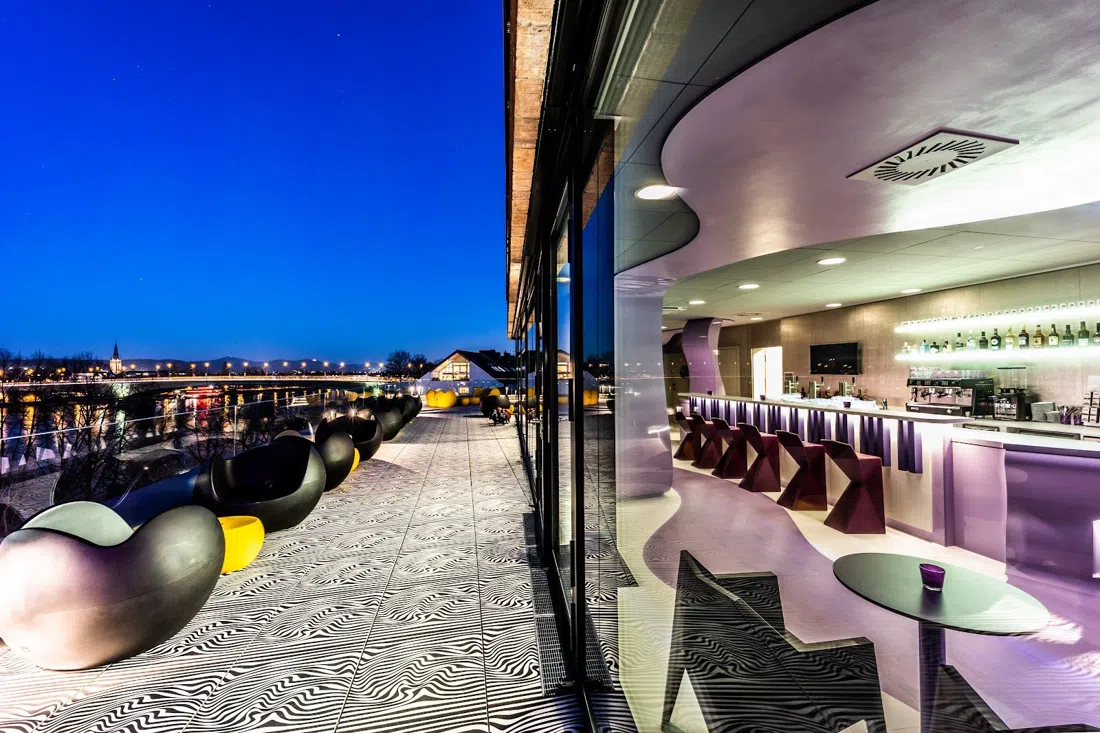
Bundeskunsthalle roof garden (Museumsmeile, south of the centre) is the city's only scheduled rooftop sunset. On Wednesdays the museum stays open until 21:00 and runs a bar up on the roof through the evening; those sundowner sessions are free to enter and get busy, while ordinary daytime access sits inside a museum ticket of roughly €10–15. Because groups come in on admission, they are straightforward to organise. The caveat is absolute: the roof closes in wind, in rain, and whenever an exhibition is being installed up there. It is never a guarantee, so make it the plan you check on the day rather than the plan you build the week around.
Room to spread out
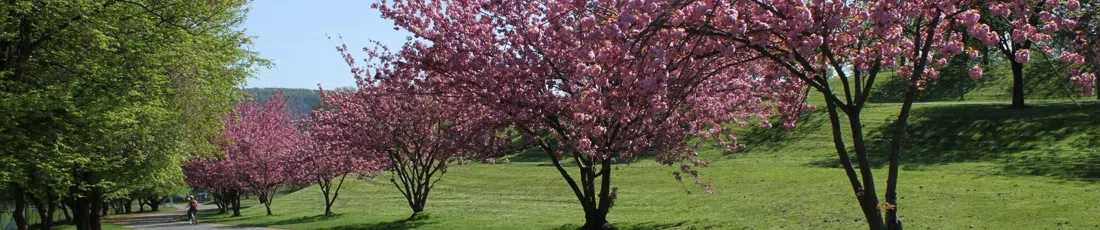
Freizeitpark Rheinaue (the river park south of the government quarter) gives you the biggest uninterrupted sky in Bonn. This is the choice when you want space rather than a table: lawns, a lake that doubles the light, and no sense of being in anyone's way. The park is free and unlimited, the restaurant runs year-round, and the beer garden with its live music most summer evenings serves drinks at around €4–8 and will happily absorb a large party. In winter the concerts stop and the beer garden closes, but the sky does not, and the low December light across the water is arguably better than the July version.
Two short climbs in the south of the city
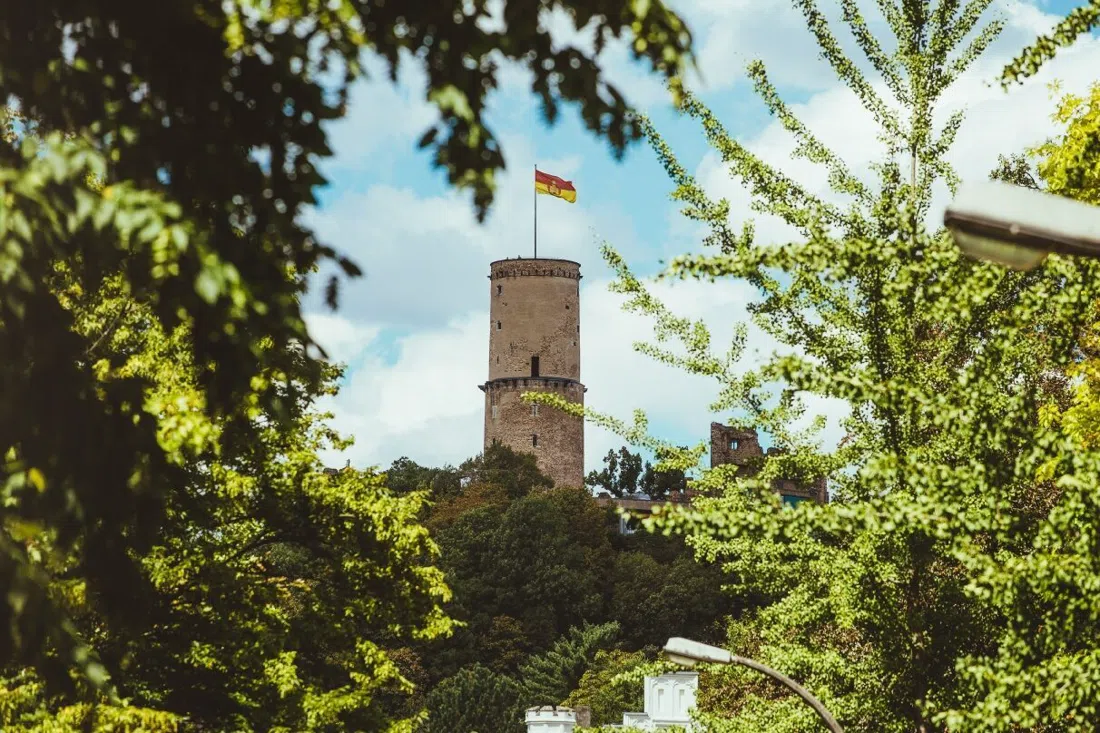
Godesburg (the castle ruin above Bad Godesberg) is the easiest elevated view in Bonn proper: ten minutes uphill from the tram and you have a full panorama, river on one side, hills opposite. The ruin and its grounds are free and open, which makes it a good, cheap, unfussy option for any number of people. The restaurant on the site runs Wednesday to Saturday until late and takes groups and private functions, with dinner roughly €28–50. One flag: the keep's own tower ascent has been closed for safety in the past, so do not build the evening around climbing it. The terrace and the walls are the reliable vantage.
Rodderberg — Heinrichsblick (above Mehlem, at the southern limit of the city) is the region's youngest volcano and, to my mind, the best true west-facing horizon anyone can reach from Bonn without a serious hike. The crater-rim path is 3.2km of easy walking with no steep sections, the reserve is open countryside, free and unrestricted, and on a clear evening you can pick out the cathedral spires far downstream. There is nothing up there at all: no shelter, no bench service, no water. Bring what you want to drink and plan to be walking back as the light goes.
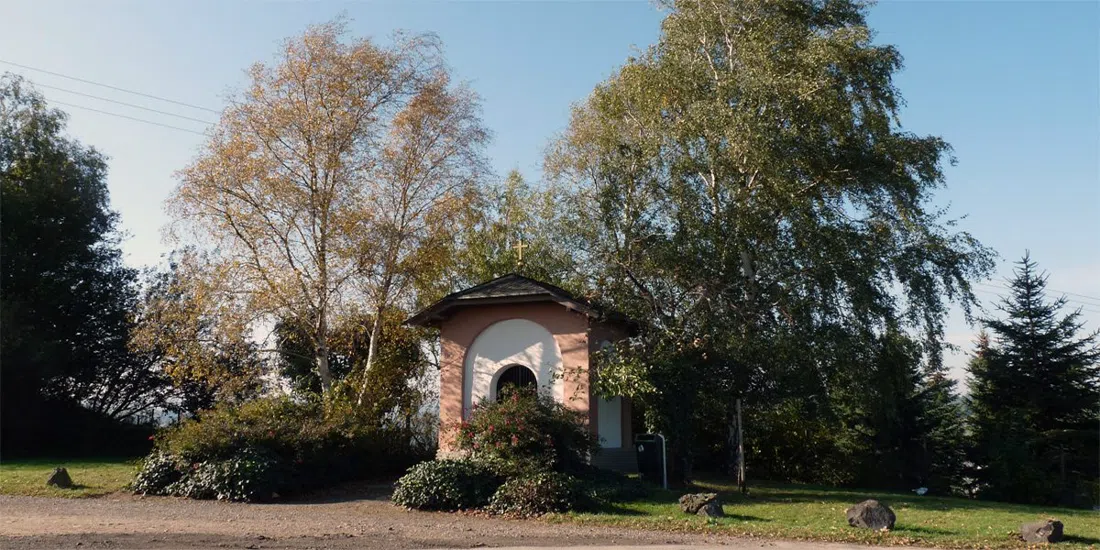
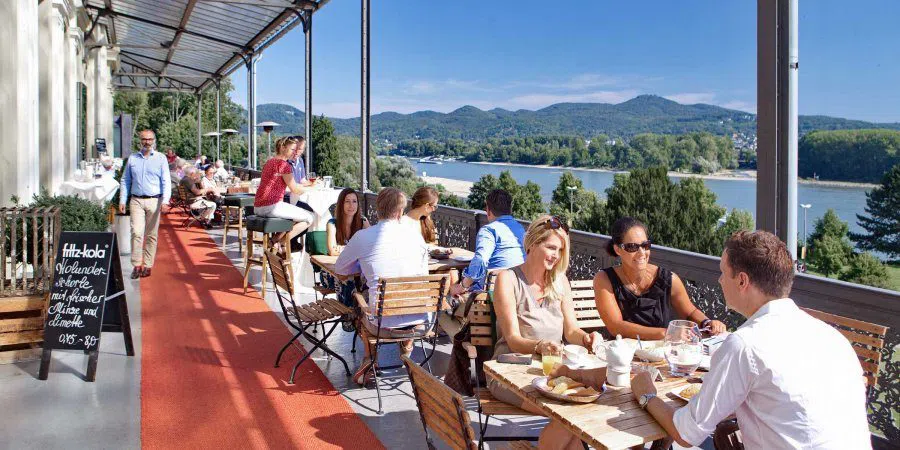
Rheinhotel Dreesen (Rüngsdorf, on the water) is the classic ground-level version, a long-established riverside hotel whose terrace and chestnut garden frame the Drachenfels square across the water. It is a function house by temperament and handles groups without drama; beer garden spend is €5–12, dinner €35–60. Terrace dining is seasonal, roughly April to September. Outside that window you are inside looking through glass, which is pleasant but is not the same evening.
The famous hill and its neighbours
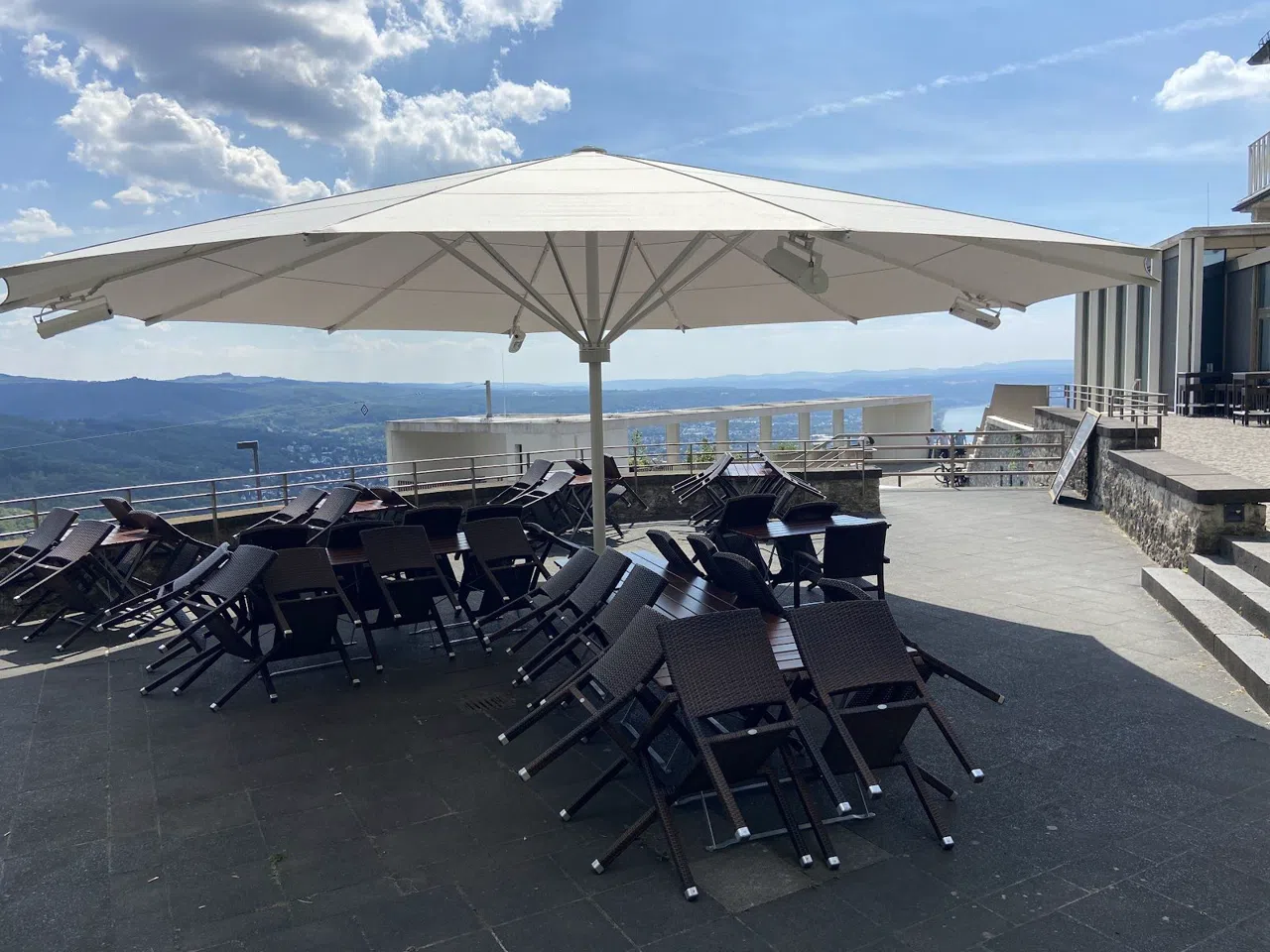
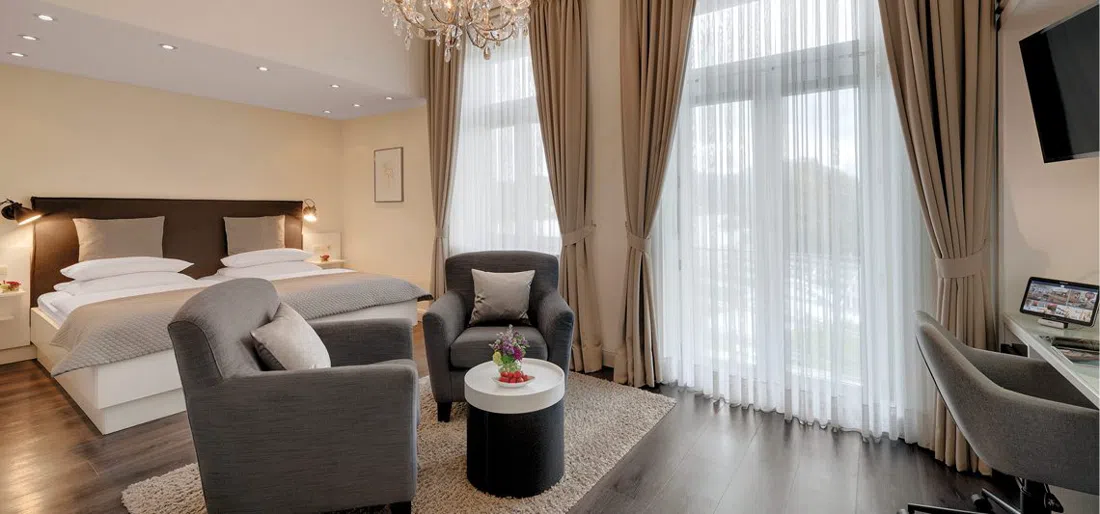
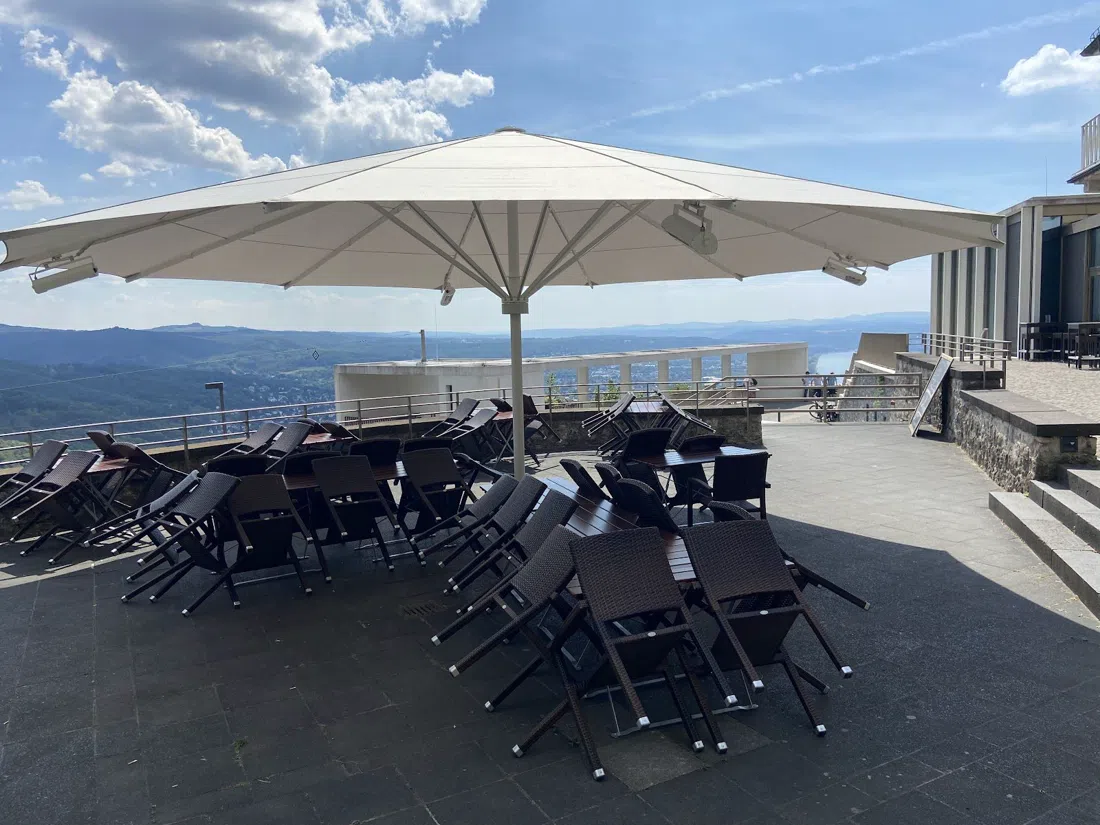
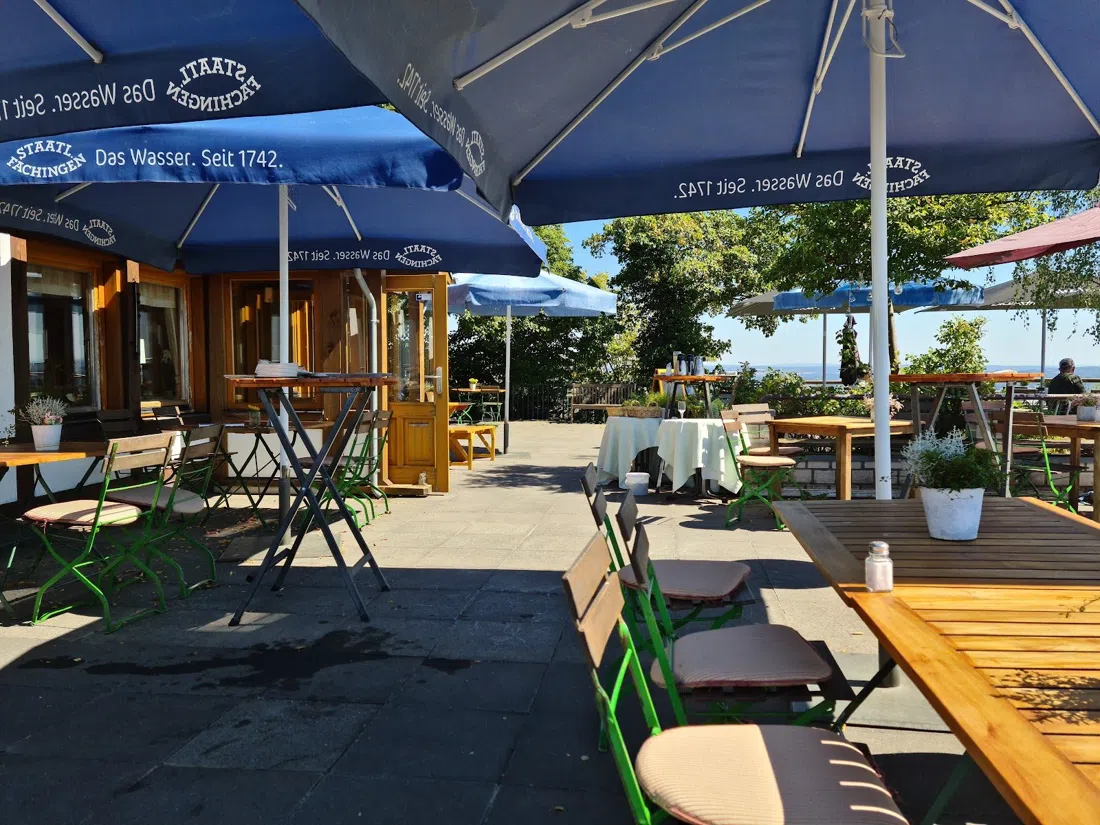
Drachenfels plateau (the summit above the river on the eastern bank) is the single most famous sightline in the Rhineland and the one most people mean when they say they want to see the sunset here. Standing on the plateau is free. The rack railway up costs roughly €12–14 return, and the panorama restaurant serves mains at €16–28 and takes groups readily; it is a working event location with function rooms and coach traffic, so book for a party and walk in for a terrace drink. The brochures skip the awkward part: the restaurant shuts around 18:30–19:00 and the railway stops running in the evening. In high summer, when the sun sets near ten, the actual sunset up there is a walk-down affair on a dark path. The plateau stays open and free, but you must be equipped to leave it on foot.
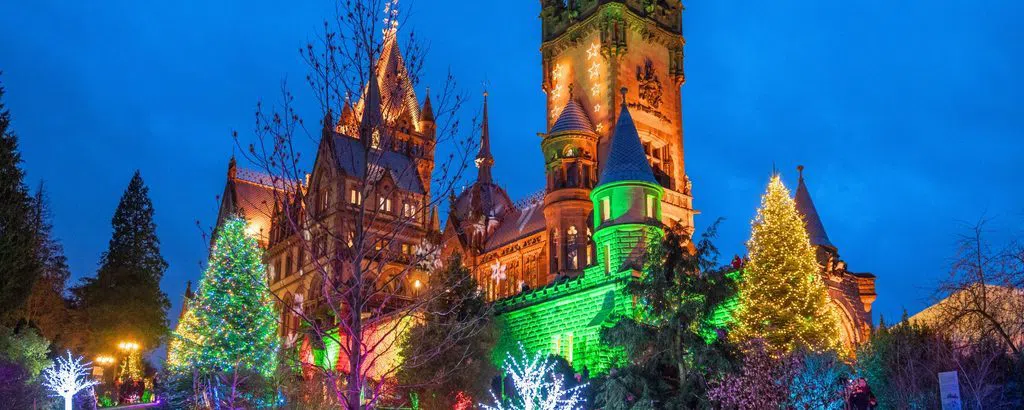
Schloss Drachenburg (on the same slope, below the summit) has the best-framed view in the seven hills: castle stone in the foreground, the river bending away behind it. Entry is around €8–11 and tickets are timed, so a group should book slots in advance; guided and private visits are available. Standard closing is 18:00 from March to November, which means it only catches a true sunset in late autumn and winter. In those months it is superb. In July it is a late-afternoon visit with a good view, and the illuminated evening events are the only real workaround.
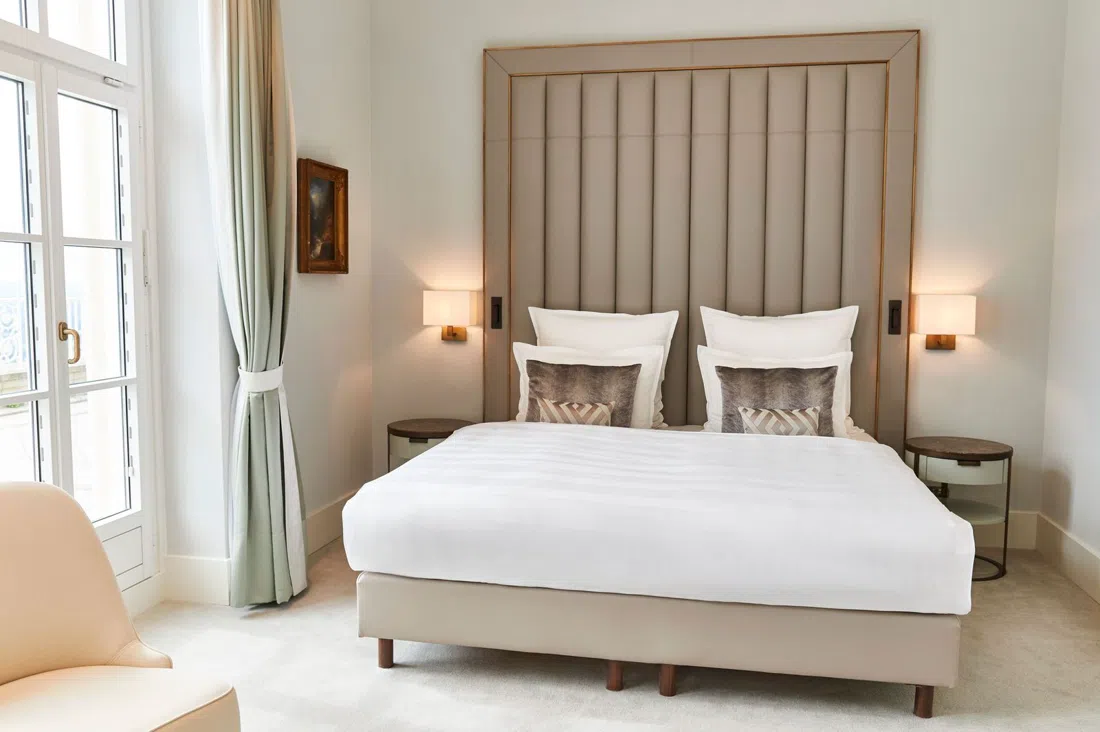
Steigenberger Icon Grandhotel & Spa Petersberg (the hill directly north of the Drachenfels) has a terrace that the hotel calls the most beautiful sunset over the Rhine, and for once the marketing is defensible: this is the west-facing balcony of the range, built for state guests and conferences, with seating for around 300. It is consequently the easiest place in the whole region to take a large group. Reserve for anything more than a handful and it is simply handled. Beer garden drinks and snacks run €8–18; a restaurant dinner is €40–70. The beer garden operates Thursday to Sunday only, so check the day before you go up, or you will arrive to a magnificent view and a locked hatch.
Two summits that ask for a torch
Großer Ölberg — Gasthaus auf dem Oelberg (the highest of the seven hills) has the widest view of the lot, clear west over the uplands. No private cars reach it; everyone arrives on foot, and walking clubs are the inn's core trade, so ring ahead for a larger party. Mains are €12–22. It is closed Monday and Tuesday, the kitchen stops around 20:00, and the approach from the road at the foot of the hill is a proper walk in both directions. Eat early, and plan the descent in daylight rather than hoping.
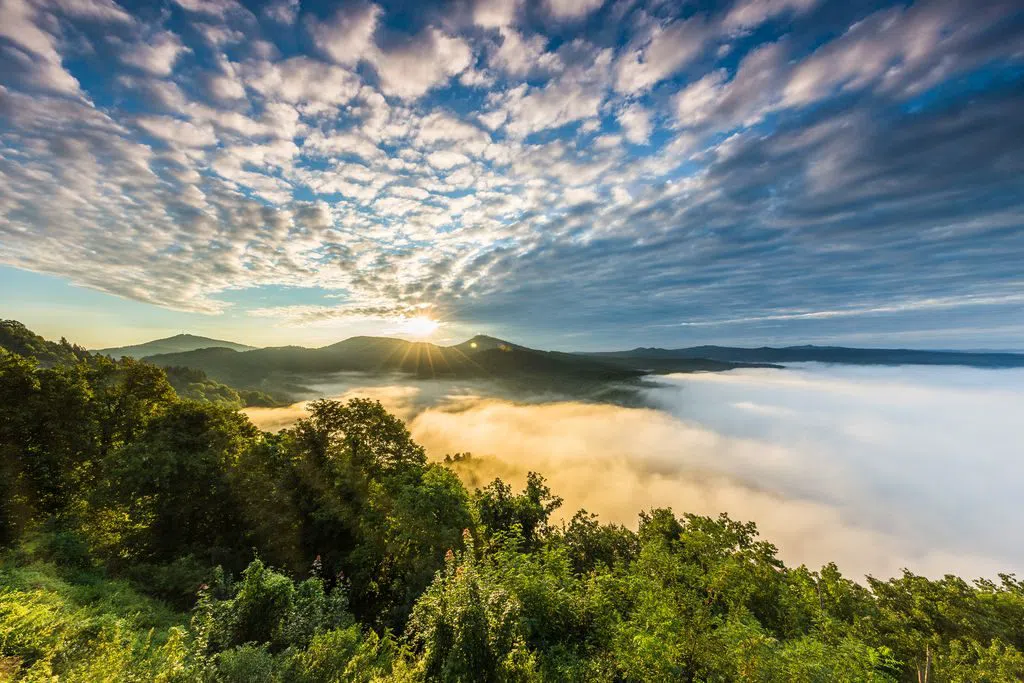
Löwenburg (the ruined castle on the neighbouring summit) is the connoisseur's pick, unstaffed and free and open to anyone, and the place where the Rhine shows through three separate gaps at once. There is nothing up there: no lights, no railings, no shelter, no one to help. The descent afterwards is a real walk on a dark wooded path, so carry a torch, wear boots rather than trainers, and do not take a group that includes anyone who will struggle on uneven ground in the dark.
Downstream, where an arch frames the hills
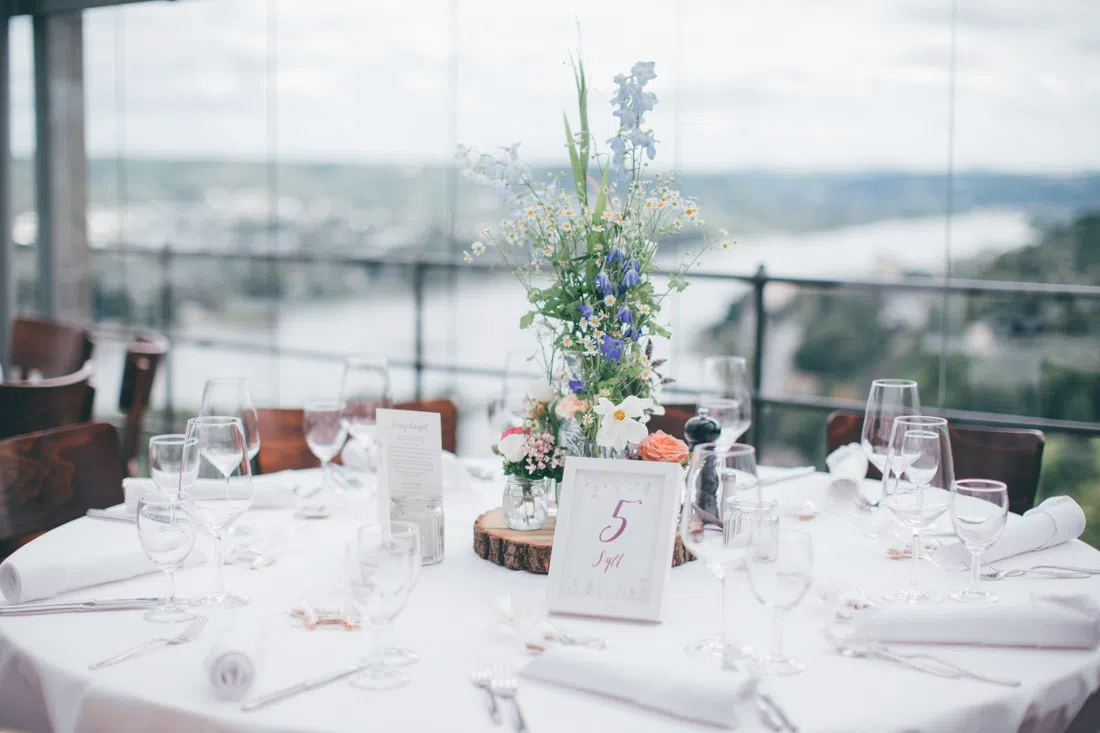
Restaurant am Rolandsbogen (beneath the surviving arch on the ridge above the west bank, south of the city) puts a ruined stone arch, an island in the river and both famous hills into one frame, the most composed picture on this list. Dinner is roughly €35–65 a head. It closes Mondays and Tuesdays, and it does heavy private-event trade, which means whole dates disappear for weddings with no warning to the public. Phone and check the date, not just the day of the week.
Arp Museum Bahnhof Rolandseck — Interieur No. 253 terrace (in the old railway station on the same stretch of bank) is one of very few Rhine terraces where the kitchen runs to 23:00 from Friday to Sunday, so the evening does not end when the sun does. Museum entry is around €12, dinner €35–65. It looks across and downstream rather than into the sun, so what you get is the Siebengebirge lit up rather than the disc itself. The terrace is compact, so reserve, and reserve properly if there are more than four of you.
Watching it from the water
Bonner Personen Schiffahrt runs a sundowner cruise that boards at Jetty 8 beside the Alter Zoll around 18:30, sails at 19:00 and is back by 21:45. At roughly €20–30 a head it is the only way to see the whole sequence (city bank, hills, the light moving up the slopes) in one continuous evening, and the boat is built for groups: large open deck, saloon below, wheelchair accessible, whole-boat charters available. It comes with a DJ and chart music. If you want a quiet contemplative hour on the water, this is not it; if you want an evening out with fifteen people, nothing else on this list is easier.
Practical notes
Trams and local trains cover almost everything here: the city viewpoints are walkable from the Markt, the southern district is a short tram ride, and the eastern bank is reached by rail along the river. A regional day ticket is far cheaper than separate fares once you make two hops. The single logistical trap is the return: evening service thins out, and the rack railway does not run late, so decide before you climb how you are getting down.
Carry cash. Beer gardens, kiosks and the smaller summit inns are frequently cash-only or grudging about cards, and there is no machine on a hilltop. Budget roughly: nothing at all for Alter Zoll, the Rheinaue, Löwenburg, the Rodderberg and the Godesburg ruin; €10–15 for a museum roof or a castle terrace; €25–35 for rooftop drinks; €40–70 a head for a proper dinner with a view.
On timing, arrive an hour before sunset rather than fifteen minutes before it. The colour on the hills starts well before the sun touches the horizon, and the best of it is often in the twenty minutes afterwards. Check three things the day before: whether the Petersberg beer garden is in its Thursday-to-Sunday window, whether the Bundeskunsthalle roof is open, and whether the Rolandsbogen has been booked out. For where to base yourself, the Bonn hotel search covers both the old town and the riverside south, and the rest of the city is in the Bonn guide.