Especial Bonn
Schwarzrheindorf and Vilich on foot in Bonn
Two Romanesque churches, a drained moat, a burial ground from 1623 and the mouth of the Sieg all sit on one walk along Bonn's right bank, and none of them charges admission.

Por Camille LefèvreBonn on foot, one neighbourhood at a time
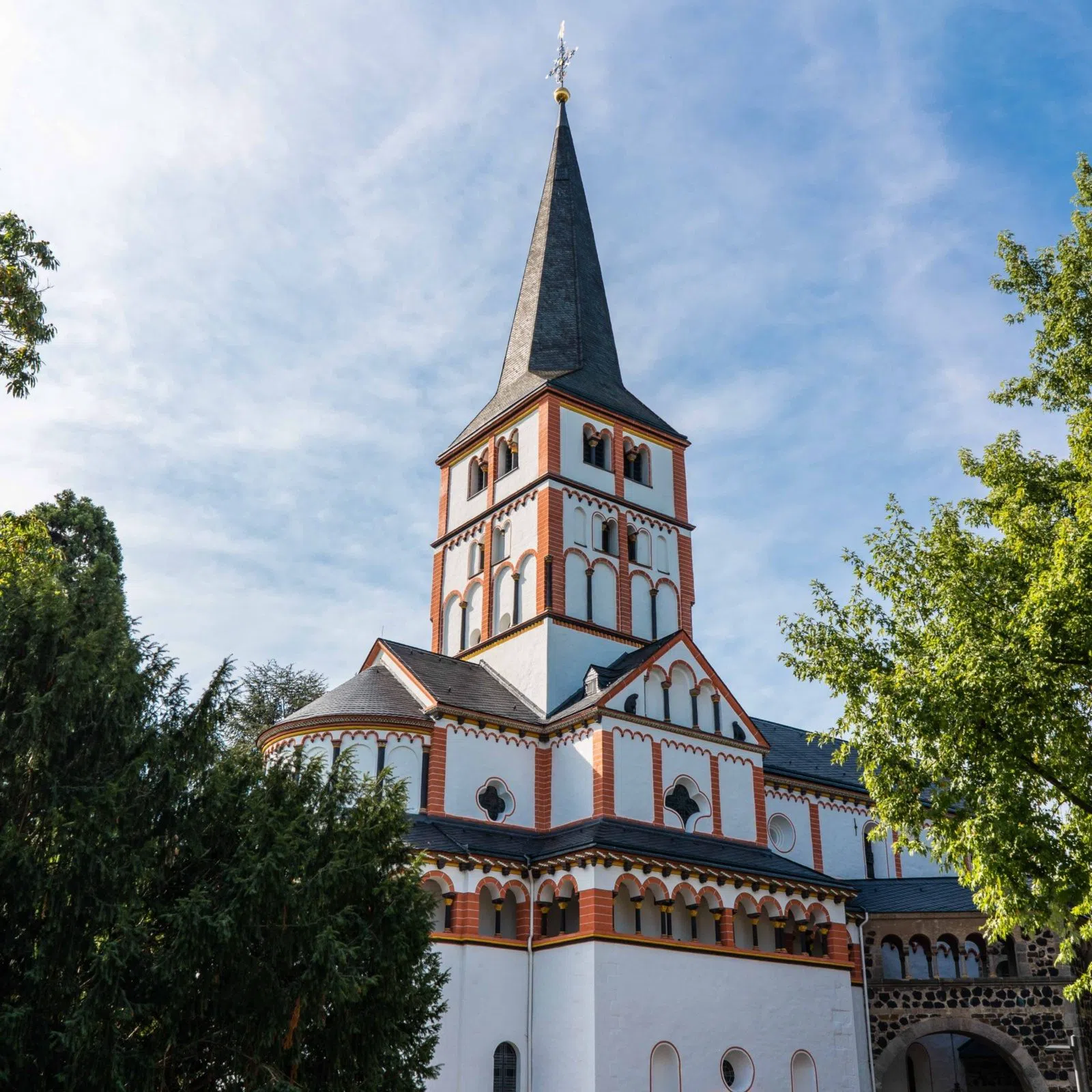
A stone Julius Caesar stands on the Rhine flood dike at Schwarzrheindorf, bridge plans in his hand, carved in the 1890s for a Bonn bridge that no longer exists. Inland behind him rises the tower of Arnold von Wied's double church of 1151, which holds the most complete Romanesque mural cycle in the Rhineland. Both are free to visit.
The dike at the Römerdenkmal
The Römerdenkmal (Rheindeich, Schwarzrheindorf) was cut for the Bonn-Beuel bridge in the 1890s, went missing when that bridge was lost in 1945, and was found and re-erected on the grassy dike in 1989. Caesar stands in a military cloak looking east across the water, with barge traffic moving behind him. There is no proof he ever bridged the Rhine here.

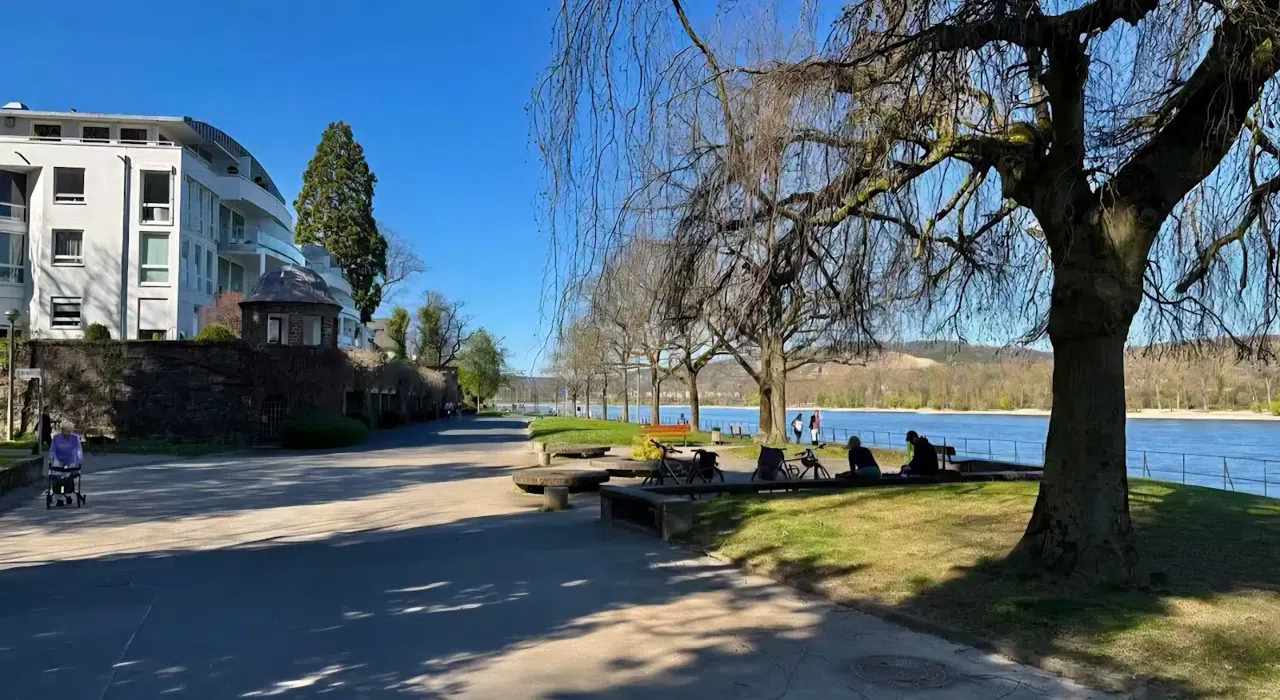
The dike path is open and unrestricted, with room for any number of walkers. The Rhine cycle route runs along the same surface, so expect cyclists. From the dike you can see the double church tower inland.
Planifica tu viaje a Bonn
Precios en directo de nuestros socios de reservas.
Cancelación gratuita en muchas habitaciones. Podemos recibir una comisión cuando reservas.
Doppelkirche Schwarzrheindorf
The Doppelkirche St. Maria und St. Clemens (Schwarzrheindorf) is a cross-shaped village church under a squat Romanesque crossing tower, with a dwarf gallery of carved capitals running round the outside. Inside, the building is arranged on two storeys. An opening in the floor links the lower Clemens church to the upper Marian church, and the upper level carries 12th-century Old Testament frescoes.

Come at a weekend if you want that upper church. It is usually unlocked then, and otherwise only for booked tours. Guided visits for groups, school parties and individuals are arranged by phone on 0228 461609, and the church is closed on Mondays. Entry is free, with a donation box.
Wolfsburg, 600 m south
Wolfsburg (Gymnicher Haus, Schwarzrheindorf) is a five-minute detour down a lane 600 m south of the double church. The almost square residential tower dates from the 13th century and is built of dark Drachenfels trachyte, with an iron weathervane shaped as a dragon and dated 1597 on the roof. The 9.5-metre moat was drained long ago and is lawn now.
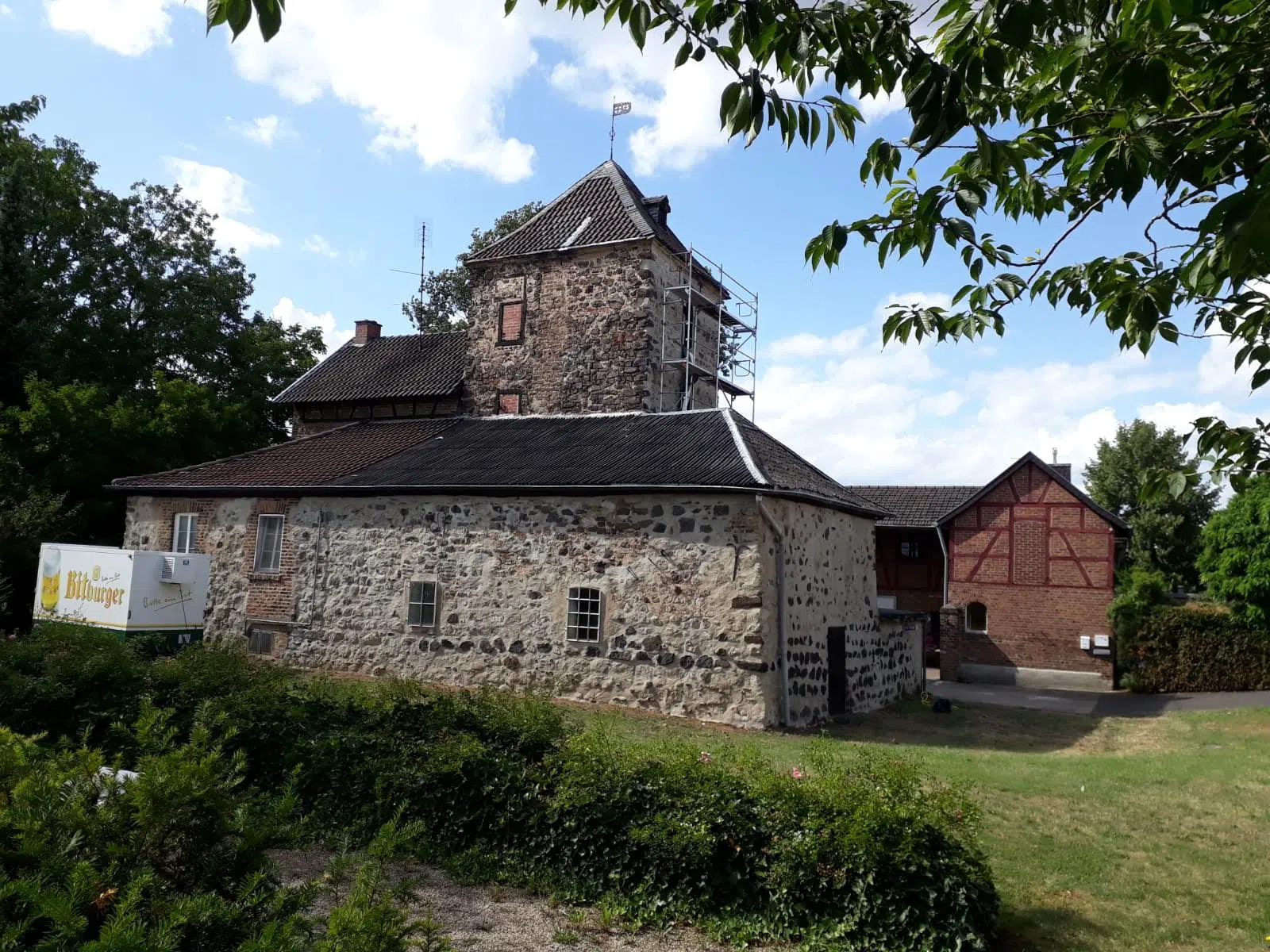
This was the seat of the knights Wolff von Rheindorf, and it survived the ice flood of 1784. The house is a private residence, so look from the lane rather than knocking at the door. There is no interior access and no tour.
The Jewish cemetery on Gensemerstraße
The Jüdischer Friedhof Schwarzrheindorf (Gensemerstraße) holds 445 weathered sandstone stelae with Hebrew lettering, leaning under tall mature trees behind a mesh fence, with the Rhine dike beyond and an information board at the gate. The oldest stones date from 1623. Flak emplacements damaged the ground badly in 1939, and it was restored after the war.
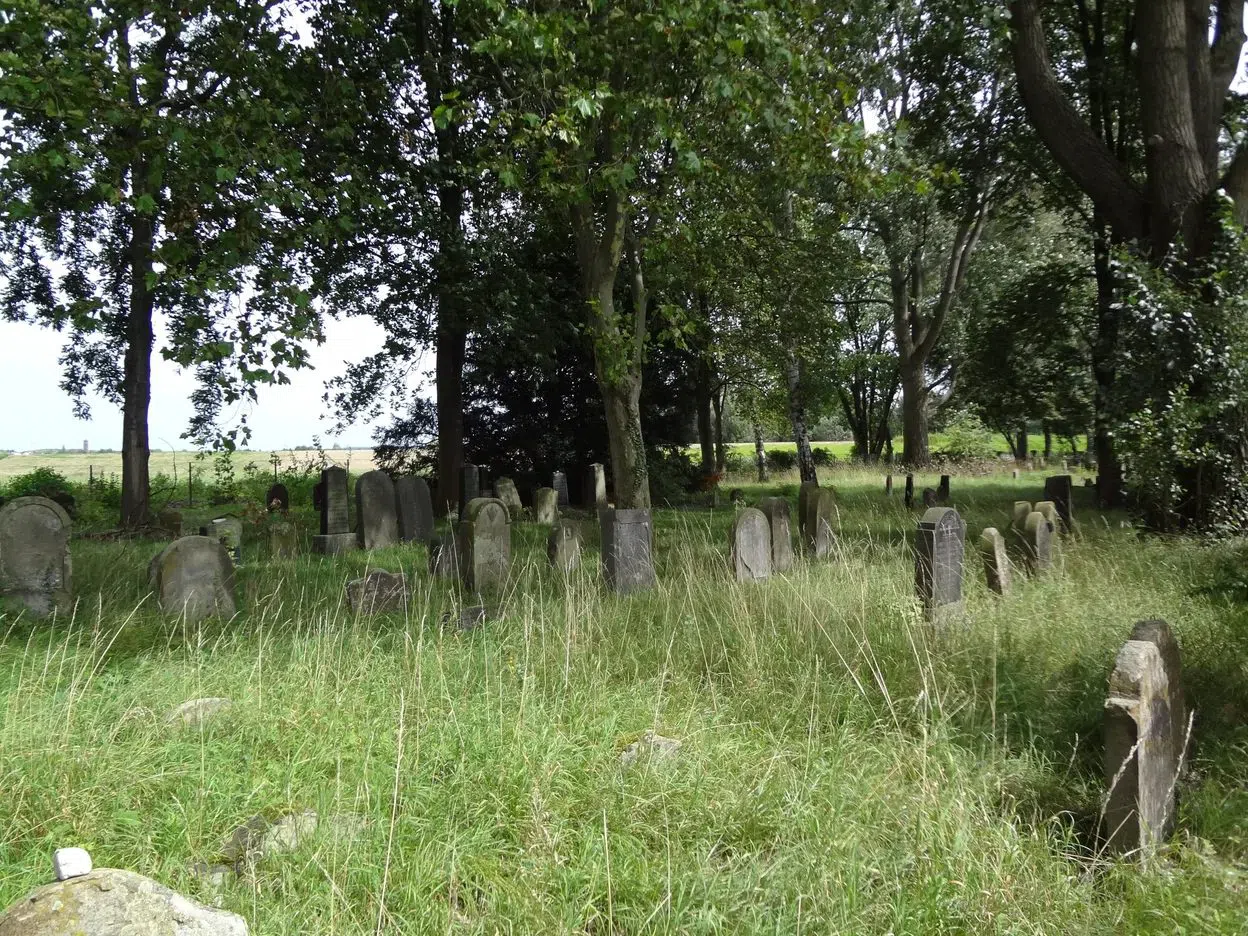
This is a quiet memorial site. Visit in small groups, behave respectfully, men should cover their heads, and the cemetery is closed on Saturdays and Jewish holidays.
Where the Sieg meets the Rhine
The Naturschutzgebiet Siegaue und Siegmündung (Kemper Werth) is a 20-minute walk from the double church, and one of the last near-natural river confluences on the Rhine. Pale gravel and sand banks mark the point where the green Sieg slides into the wide grey Rhine. Willow scrub and riparian woodland back the banks, cattle graze the meadows, and herons and cormorants work the bars.
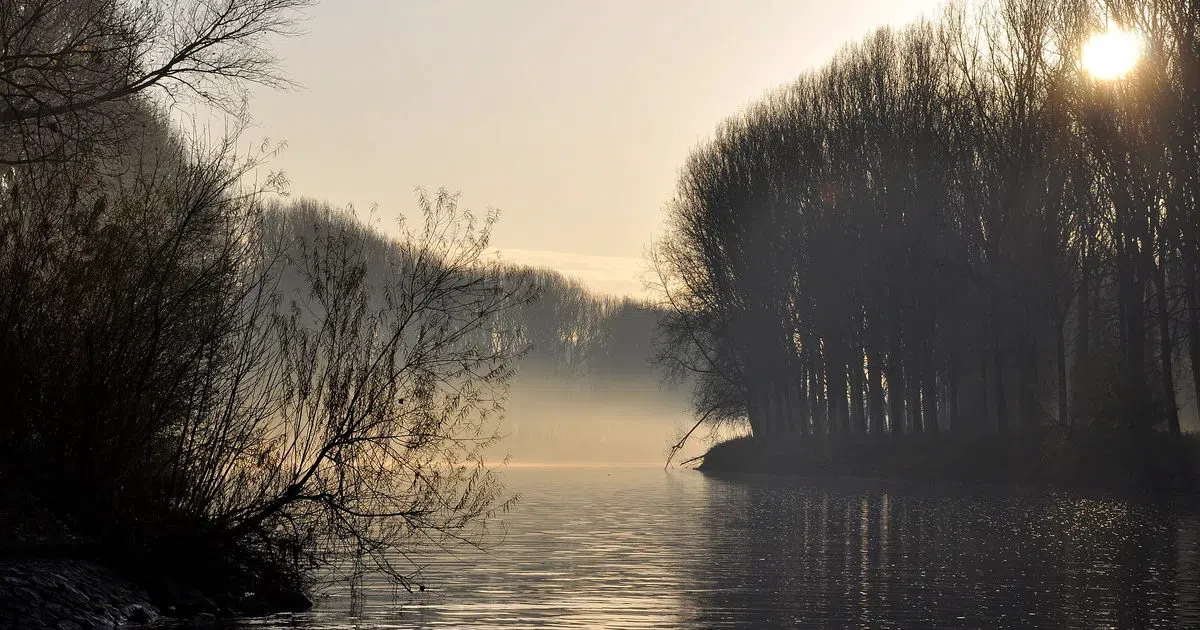
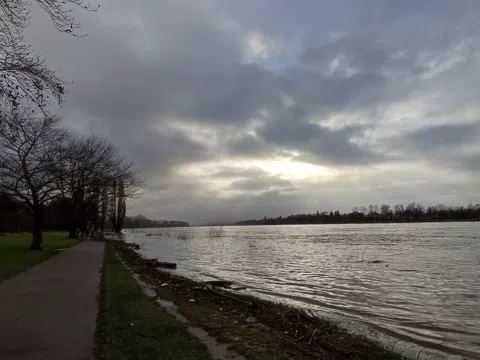
The Kemper Werth spit is reached along a dam. Paths are free to use and suit both walking and cycling. The reserve has been protected since the 1980s, and the rules follow from that: stay on the marked trails, because this is a breeding area, and keep dogs on the lead. Go between spring and early autumn, and stay away when the Rhine is in flood.
St. Peter and the Vilich abbey street
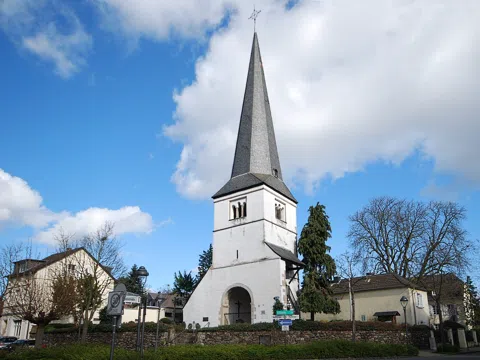
The Stiftskirche St. Peter Vilich (Vilich) is what remains of a women's abbey founded in 978, whose first abbess, Adelheid, became Bonn's patron saint. A tall Romanesque west tower rises over low village roofs, with a tiny south chapel attached, the Adelheidis-Chörchen, built between 1208 and 1222. The saint's tomb slab and a gilded 17th-century reliquary bust are inside, and three medieval stone gate arches survive on the street outside.
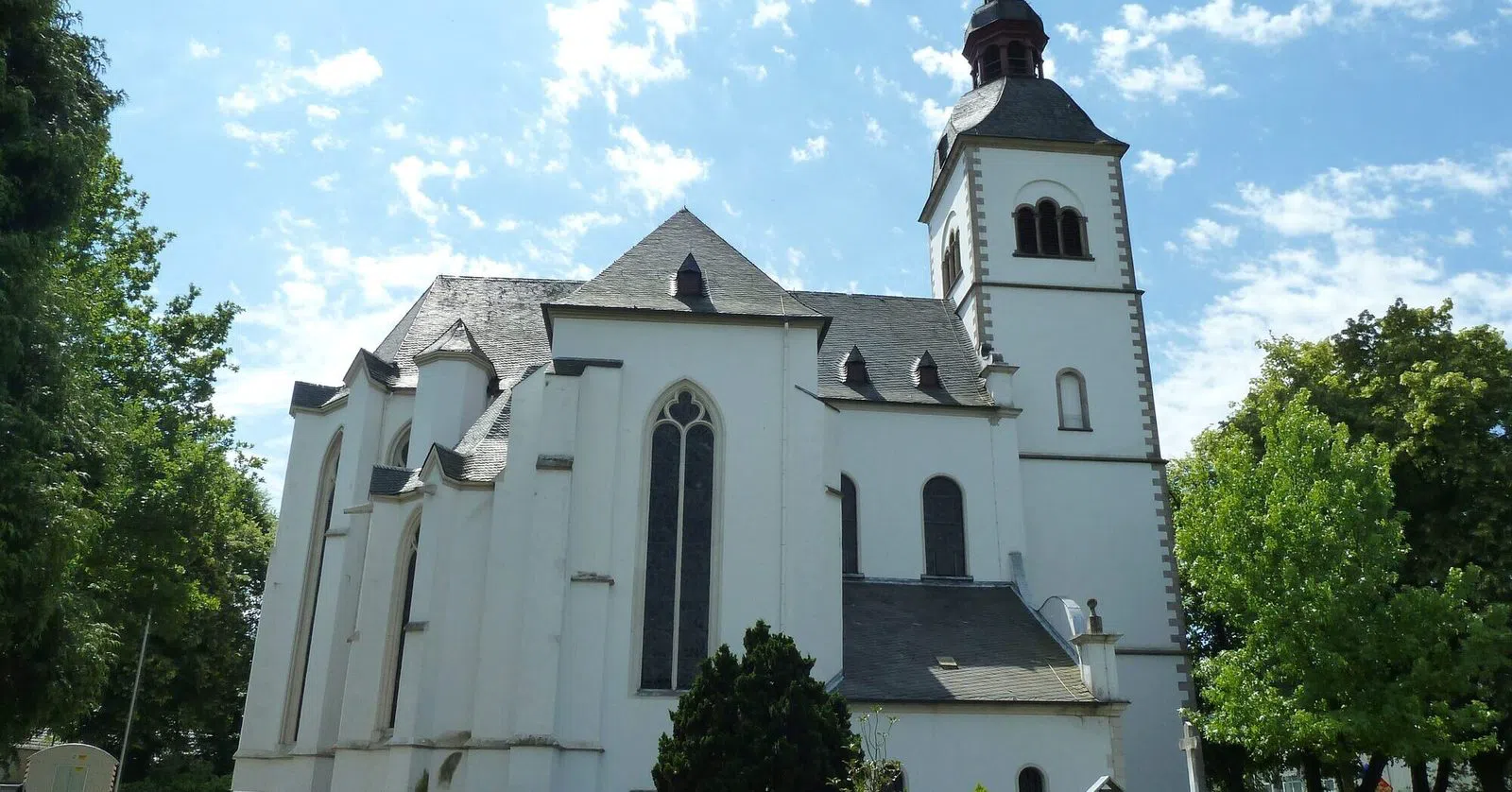
The shrine, the Parler Madonna and the archways sit within a hundred metres of each other. Entry is free. Access outside Mass times is not guaranteed without a booking, which the parish arranges.
Museum Bürgermeister-Stroof-Haus
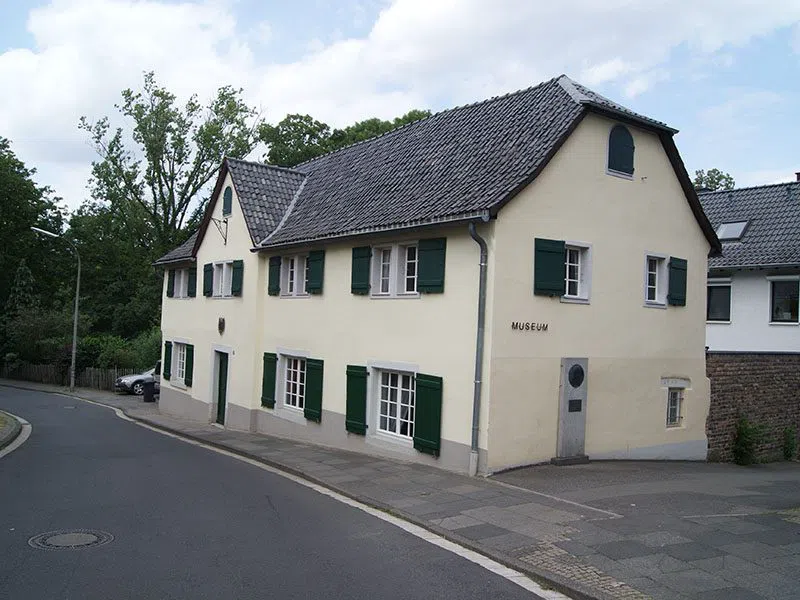
The Museum Bürgermeister-Stroof-Haus (Vilich) opens to walk-ins on Friday and Sunday afternoons only, 15:00 to 18:00. Plan the rest of the day around that window. Volunteers run the house, entry is free and tours go by donation, with special guided tours arranged on request.
The building is a rescued 18th-century half-timbered mayor's house on the village street, whitewashed between the beams, with medieval stonework in its base and rare geometric stencil-painted patterns on the upstairs walls. It is the local history museum for right-bank Bonn, and the only place that covers Vilich's abbey, its villages and its floods in a single visit.
Burg Lede's park
Burg Lede is a 13th-century lowland water castle, Gothic brick with stepped Rhenish gables reflected in still water, and it is still privately lived in. The reason to come is the 4.3-hectare park Walter von Engelhardt laid out in 1907, where a clipped formal parterre near the house loosens into landscape planting and old trees. Plant sales and a summer open-air cinema run in the grounds. The interiors stay closed to visitors.
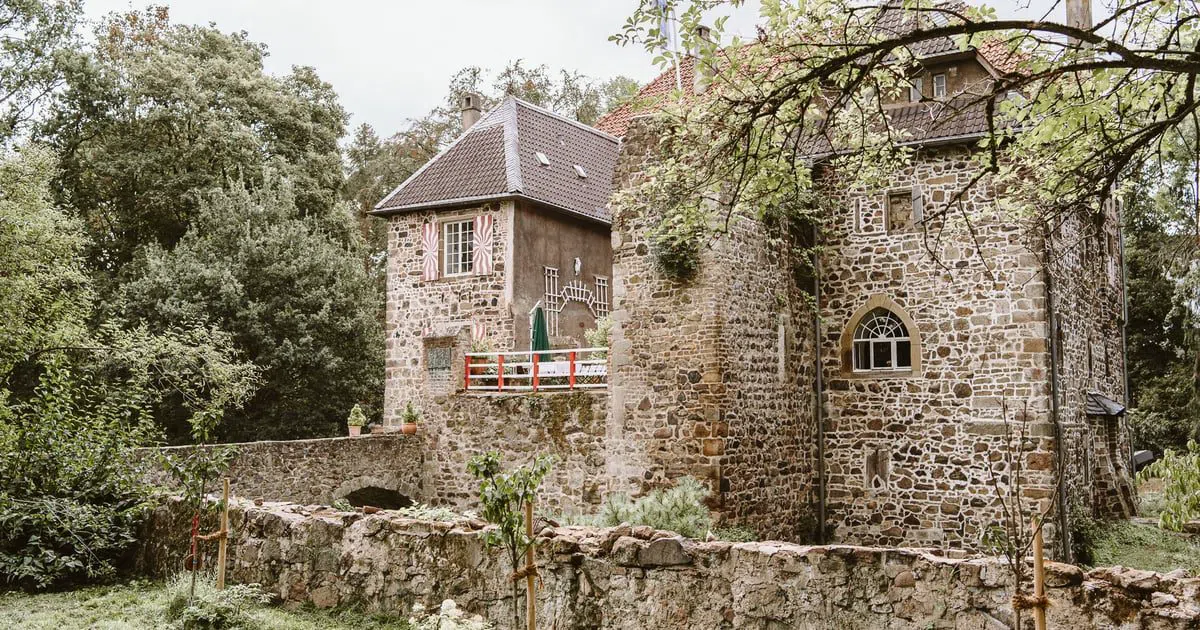
Garden hours are Tuesday and Thursday 15:00 to 18:00 and Saturday 10:00 to 14:00. Walking the park is free, and events and open days cost €5 to €8. Guided tours for adults and children run on open-garden and heritage days, and the site is wheelchair-accessible.
Uphill to the Adelheid spring at Pützchen

The Adelheidis-Kapelle und Adelheidisbrunnen (Pützchen) stands 2 km uphill from Vilich. Adelheid is said to have struck the spring from the ground during a drought, and people still come to it for eye complaints. The chapel dates from 1769, a small late-Baroque box of plastered rubble stone under a six-sided wooden tower and a bulbous onion dome, with the stone well-head of the Brünnchen beside it.
Inside, a lead-glass window shows the healing miracles, and a statue gives Adelheid a princess crown and ermine. Visiting is free. Opening follows the parish, so ring ahead if you want to get into the chapel itself. Pilgrim groups come through regularly in pilgrimage season, and the fair at Pützchen grew directly out of this spring.
Pützchens Markt and Green Juice Festival
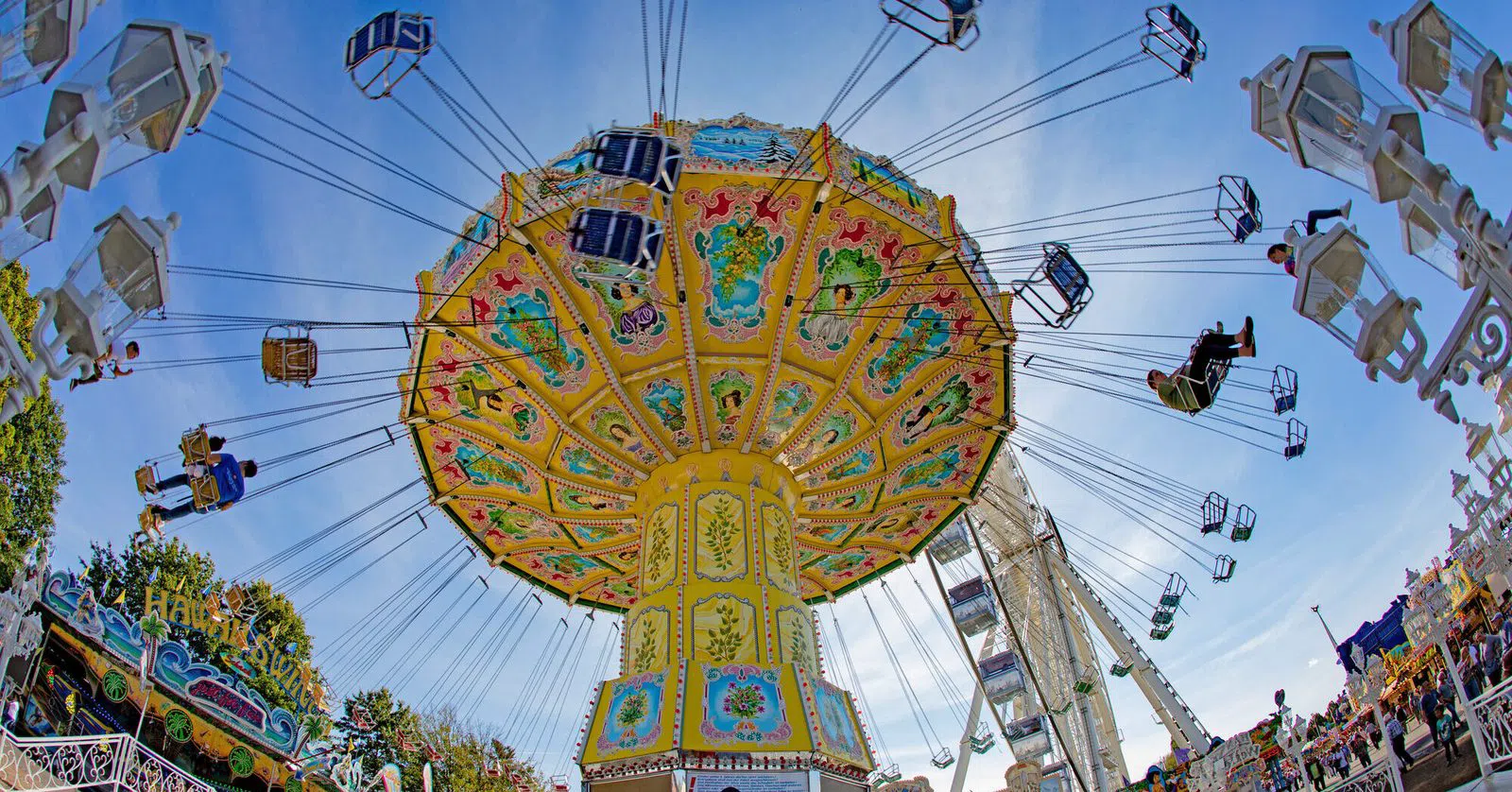
Pützchens Markt (Pützchen) runs from 11 to 15 September 2026, its 657th year. Five hundred stalls and rides fill open fields on the edge of the village, with a big wheel and swing carousels above the low Rhineland houses. A costumed procession goes through on the Friday afternoon, and fireworks go up over the showground. Entry is free and rides cost €3 to €10. Over the five days, 1.2 million people come. Take the shuttle buses and leave the car behind.
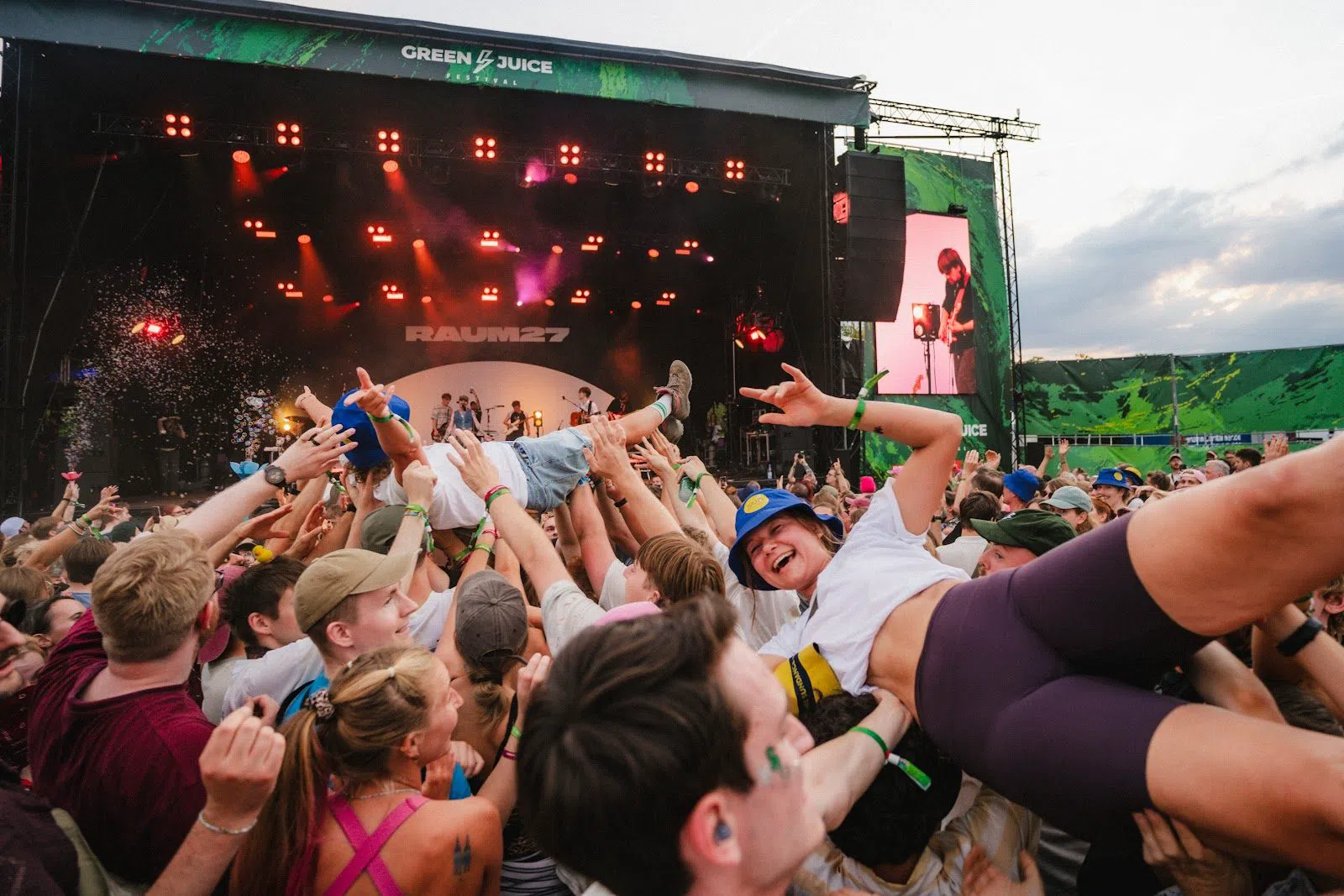
The Green Juice Festival (Park Neu-Vilich) has put indie, rock and hip-hop on three stages in Vilich's own park every summer since 2008, and in 2026 it runs on 31 July and 1 August. The park is flat and green, ringed by trees, with up to 7,500 people a day on the grass, a camping field alongside and Bonn's wooded Ennert ridge on the horizon. A day ticket is €54, two days €109 and camping €49, plus fees. It stays family friendly and small by the standards of the big German festivals. It is also the loudest weekend of the year in this corner, so check the dates before you book a room nearby.
Eating and drinking
Wirtshaus Assenmacher (Schwarzrheindorf) puts its beer garden tables under mature trees in the shadow of the Doppelkirche's tower, and keeps dark-panelled Rhineland rooms inside. Guests have been served here since the 14th century, which is reckoned to make it the oldest inn in Bonn. The kitchen cooks regional food in a lighter style, with seasonal plates such as porcini. Expect €€, €25 a head.
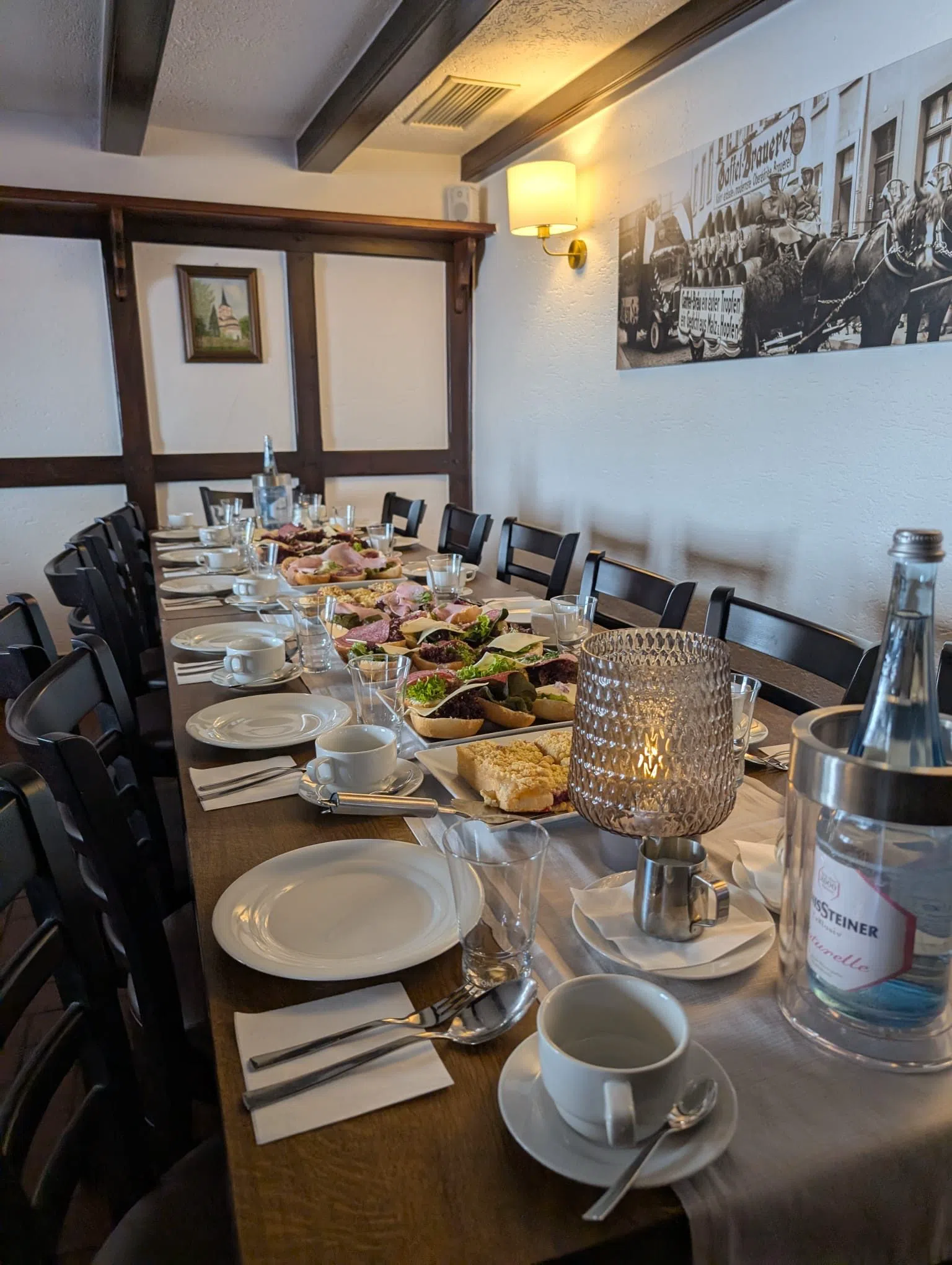
It closes Monday and Tuesday. Sunday lunch is the easy slot to get. Book the garden in summer; the inside rooms get loud when full. The entrance is step-free and accessible seating is available.
Via Roma (Vilich) sits a minute from St. Peter, a long-standing village pizzeria with a walled garden terrace in use all summer and a pizza oven inside. New management took over in 2025 and added Indian dishes, so the curries now sit on the same menu as the pasta. Reckon on €, €15 a head. Reservations are taken, parking is free and dogs are allowed indoors. The place traded as Monte d'Oro, and older listings still carry that name.

Ennert-Bräu is the nearest place that brews its own beer, 3 km uphill from Vilich at the wooded foot of the Ennert ridge, on the edge of the Siebengebirge reserve. The copper brewing kit stands in the house, the beer garden seats 200 looking straight at the forest edge, and Ennert-Bräu and Beethoven Bier are on the taps. Mains run €15 to €25, and all-inclusive party packages with live-cooking buffets start at €59.90 per head for 10 or more. Weekday opening is from 17:00, Sunday from 12:00.

Eishandwerk Sommerwald at Bäckerei Elmar Klein (Clemensstraße, Schwarzrheindorf) is the daytime stop in a village where almost nothing else opens before evening. The ice cream counter inside the bakery runs eight fixed flavours plus two seasonal, in a cone or a cup, from 12:00 on weekdays and from 10:00 at weekends. A scoop is €1.80 to €2.50, and coffee with a pastry comes in under €6. Service is at the counter, with no real seating. The 2024 mural on the village square is a few doors along.

Where to stay
Hotel & Restaurant Portofino (Sankt Augustiner Straße) has seven individually decorated rooms above an Italian restaurant, with a summer terrace at the front and Bianchi and Rossi wine shelves in the dining room. Doubles run €90 to €130 and mains €14 to €24. The kitchen splits its day, 11:30 to 14:00 and 18:00 to 22:00, daily, and takes group tables and business lunches. With only seven rooms in the house, a party travelling together should book early.
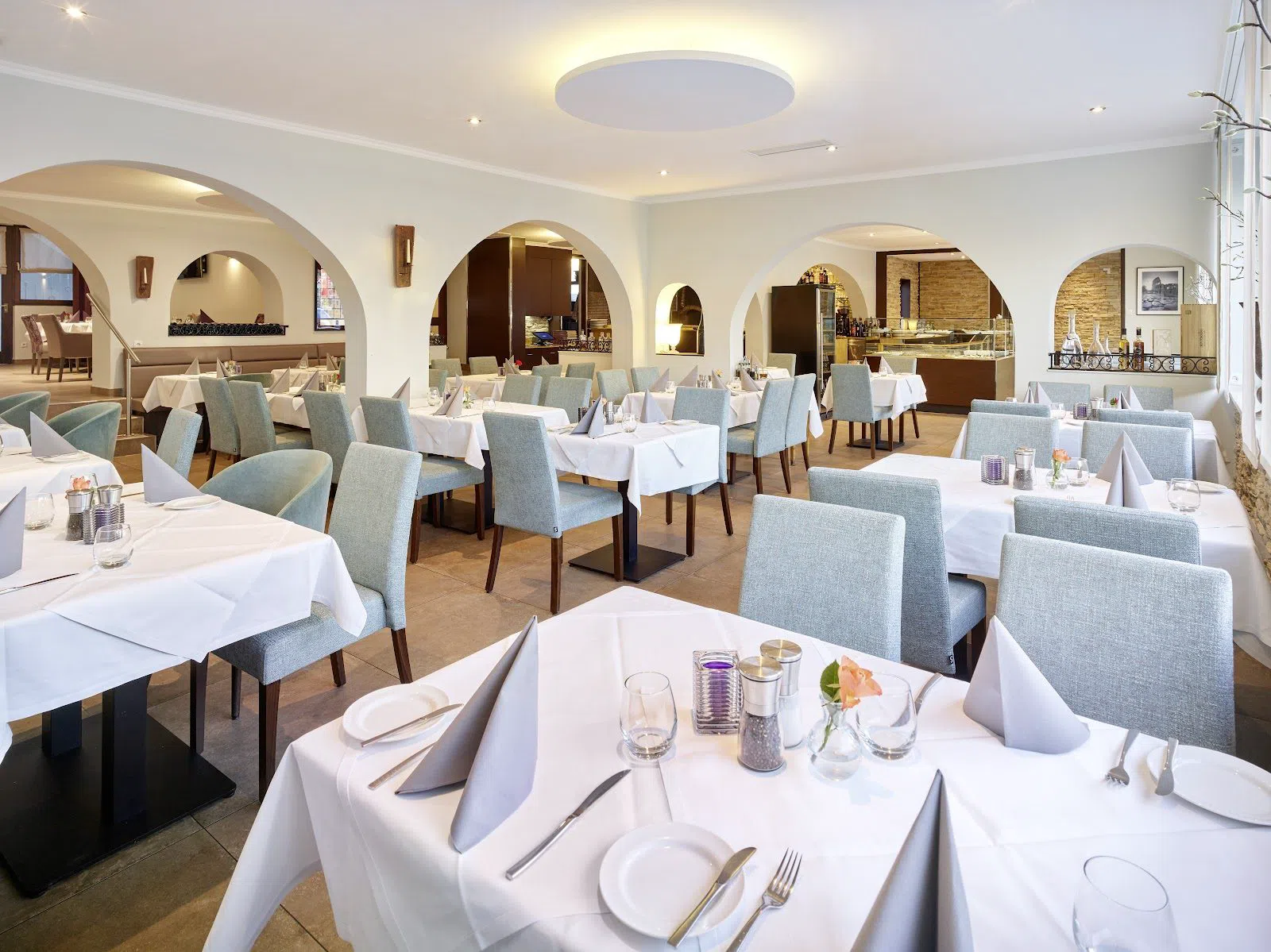
Beyond it, Vilich and Schwarzrheindorf have essentially no accommodation. Central Bonn is across the Rhine, 15 minutes away by bus or tram.
Practical notes
The Doppelkirche is shut on Mondays and Wirtshaus Assenmacher on Monday and Tuesday, the museum opens on Friday and Sunday afternoons, and the Burg Lede garden on Tuesday, Thursday and Saturday. Phone ahead for the upper church, for St. Peter outside Mass times and for the chapel interior at Pützchen.
See the Bonn guide and the Bonn hotel search.
Antes de ir
When can I see the upper church of the Doppelkirche Schwarzrheindorf?
The upper Marian church holds 12th-century Old Testament frescoes and is usually unlocked at weekends. At other times you need a booked tour. It closes on Mondays, entry is free, and you can book a guided visit on 0228 461609.
What do I need to book before visiting Vilich and Schwarzrheindorf?
Book guided visits to the Doppelkirche on 0228 461609. The Stiftskirche St. Peter opens outside Mass times only if the parish lets you in, and the Adelheidis-Kapelle at Pützchen works the same way, so ring ahead if you want to see the interior.
When is Pützchens Markt in 2026 and how should I get there?
It runs from 11 to 15 September 2026, the 657th year. Entry is free and rides cost €3 to €10. Around 1.2 million people come over the five days, so take a shuttle bus instead of driving.
Can I visit the Jewish cemetery on Gensemerstraße on any day?
No. There are no visits on Saturdays or Jewish holidays. It is a quiet memorial site that takes small groups only. Behave respectfully, and men should cover their heads.
Where can I stay in Schwarzrheindorf or Vilich?
Hotel & Restaurant Portofino on the Sankt Augustiner Straße has seven rooms, with doubles at €90 to €130. The two villages have hardly any other beds, and central Bonn is across the Rhine, 15 minutes away by bus or tram.