Spécial Bonn
Muffendorf, the half-timbered village inside Bonn
The village has a hall church from 1100, the Rhineland's largest run of half-timbered houses and a red wine pressed on the slope behind them. A castle ruin is within walking distance of all three.

Par Camille LefèvreBonn on foot, one neighbourhood at a time
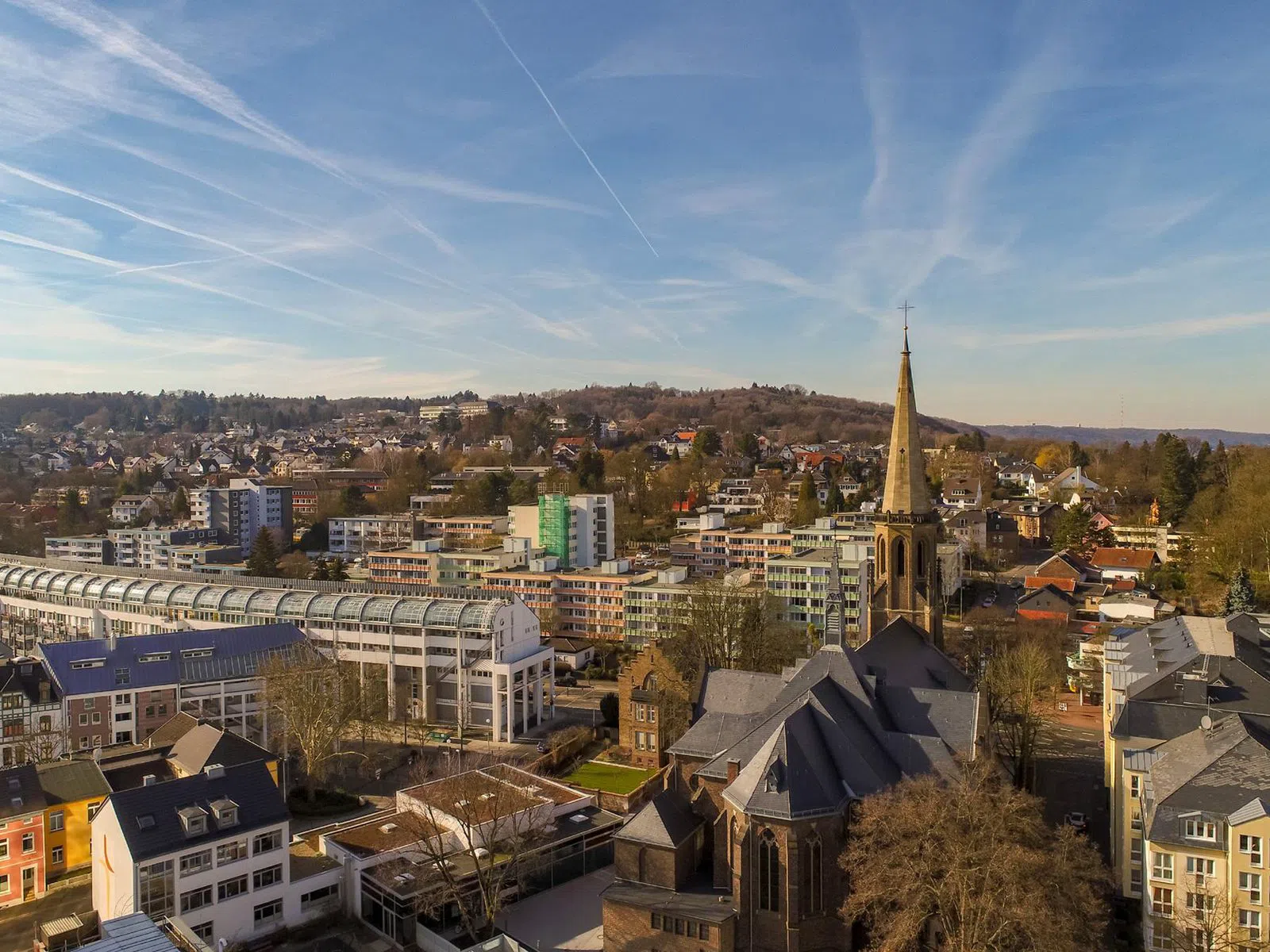
Alt St. Martin has stood on this hill since 1100, and a second-century Diana altar stone was found under one of its side altars. A cable fire closed the interior in 2017, and the restoration was still running through 2026. The churchyard around it, the lane of half-timbered houses below and the vineyard slope behind are open daily and free.
Alt St. Martin and the walled churchyard

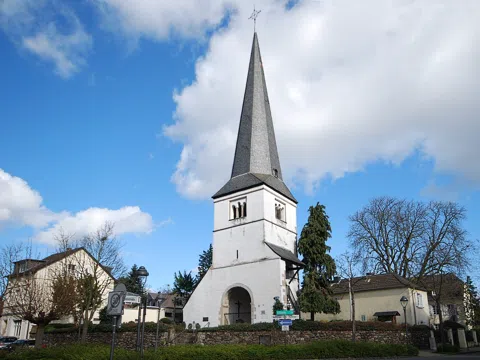
Start inside the low rubble-stone wall that rings Alt St. Martin & the walled Muffendorf churchyard, in the centre of the old village. The nave is squat, whitewashed and Romanesque, the west tower carries a stone pyramid roof, and the ground inside the wall is a working graveyard of leaning 17th-century slabs. The hall church dates from 1100 and is the oldest still in use in Bonn after the Minster.
The interior has been shut since the fire, so treat this as an exterior and graveyard visit. The churchyard is public and free, open 07:30 to 20:00 from March to October and 08:00 to 17:00 from November to February. The parish arranges guided visits on request.
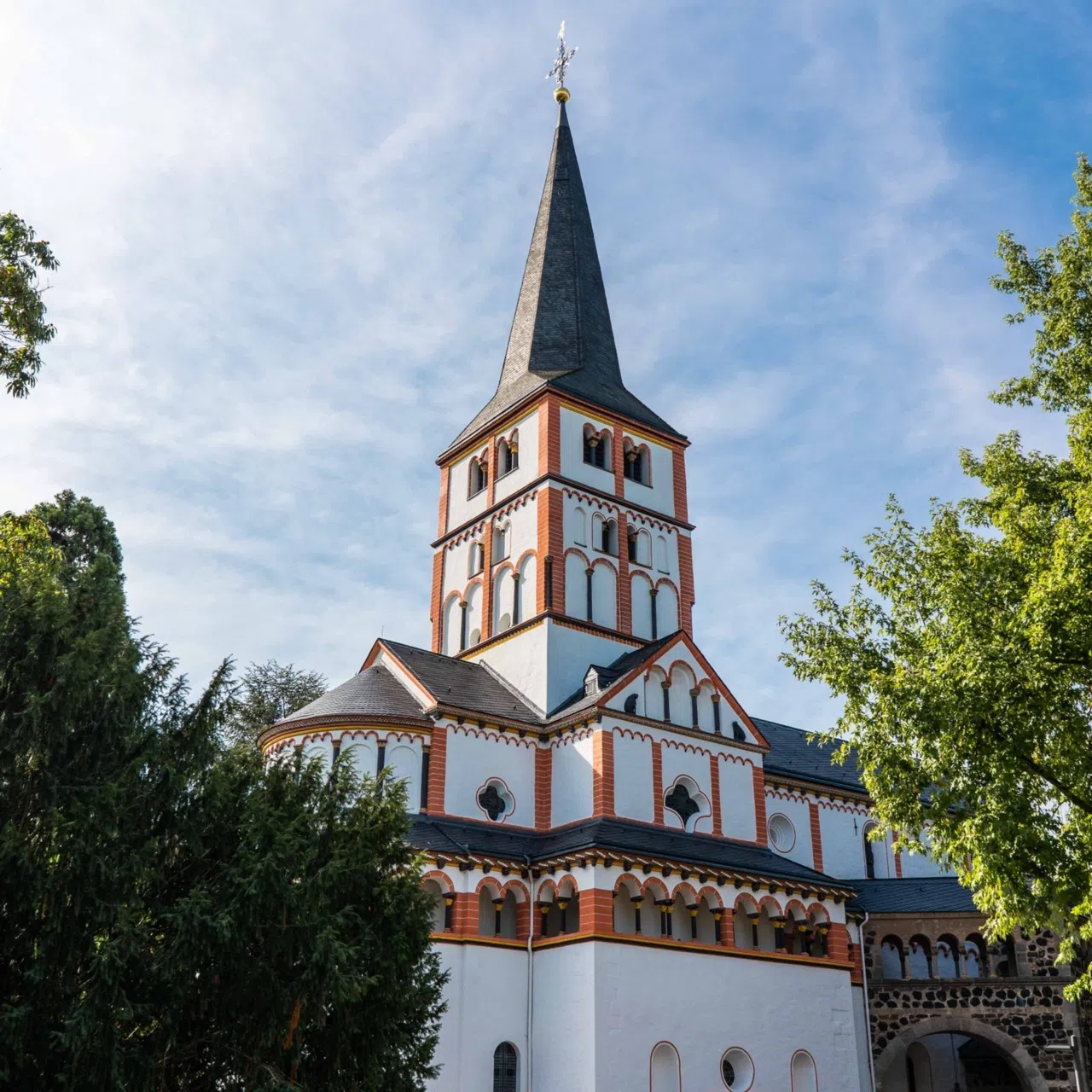
For an interior, walk up to Pfarrkirche St. Martin (Klosterbergstraße). The Bonn architect Anton Becker built it in 1894 and 1895, and it was consecrated that December. The parish moved here from the Romanesque church, which is why this is the one you can get inside while the restoration runs. The slim spire of the three-aisle neo-Gothic nave rises straight out of the village roofline, and two small stained-glass panels by Charles Crodel sit inside. Entry is free outside services, and the parish office will arrange a guided look.
Préparez votre voyage à Bonn
Prix en temps réel de nos partenaires de réservation.
Annulation gratuite sur de nombreuses chambres. Nous pouvons percevoir une commission lorsque vous réservez.
Walking Muffendorfer Hauptstraße
Historischer Ortskern Muffendorf (Muffendorfer Hauptstraße) is the reason to come up the hill: a narrow hillside lane of Franconian half-timbered houses of the 17th and 18th centuries, black beams on white infill, with timber courtyard gates, cobbles and walls under vines. Bad Godesberg's own marketing calls it the largest contiguous half-timbered settlement in the Rhineland. Since June 2024 it has been protected as a formal Denkmalbereich.
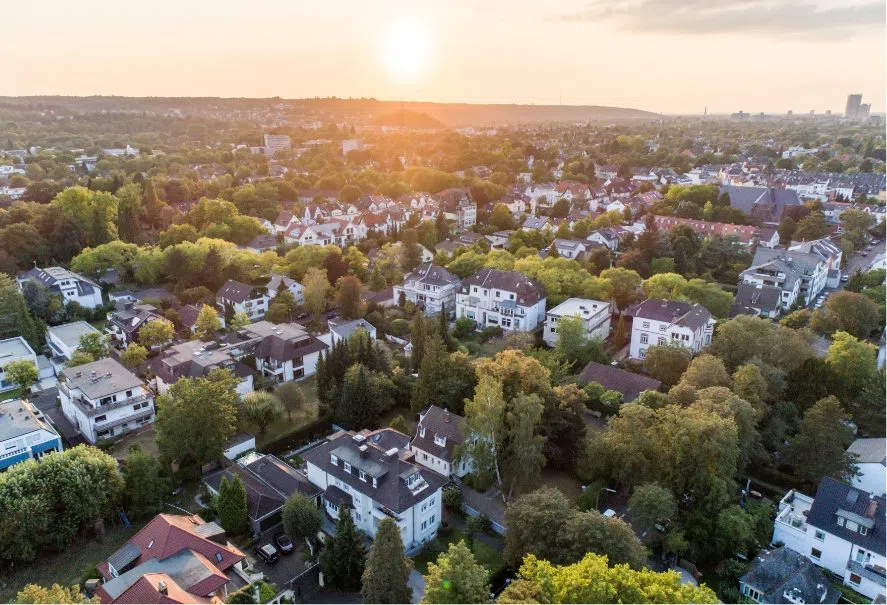
The street costs nothing and has no opening hours. People live behind those gates and the lanes are tight, so walking parties should keep the noise down. The courtyards themselves open one day a year, at the Muffenale on the first Sunday in September.
Kommende Muffendorf and the Siegburger Hof
Kommende Muffendorf (Remi-Baert-Platz) closes one end of the village with a long whitewashed baroque wing, grey-shuttered windows and a walled forecourt giving onto a small square. The Teutonic Knights founded the commandery in 1254, and the present buildings date from 1761. From 1953 to 1992 the Belgian ambassador lived here. Those 750 years are how a village of this kind ended up inside a city. The buildings are private property. View them from the square.
Siegburger Hof & the Muffendorfer Klosterberg vineyard faces the old church across the lane, a Franconian timber-frame courtyard farm with a 19th-century stone press house beside it and a small terraced slope of Regent vines dropping away below. The estate enters the record in 979 as royal land, and it later ran the abbey's holdings on the left bank of the river. Wine has been grown and pressed here again since 1972, a red sold as Muffendorfer Klosterberg. That is the argument for coming in autumn. The farm is private; the lanes and the footpath past the slope are public and free.
Dinner in the village
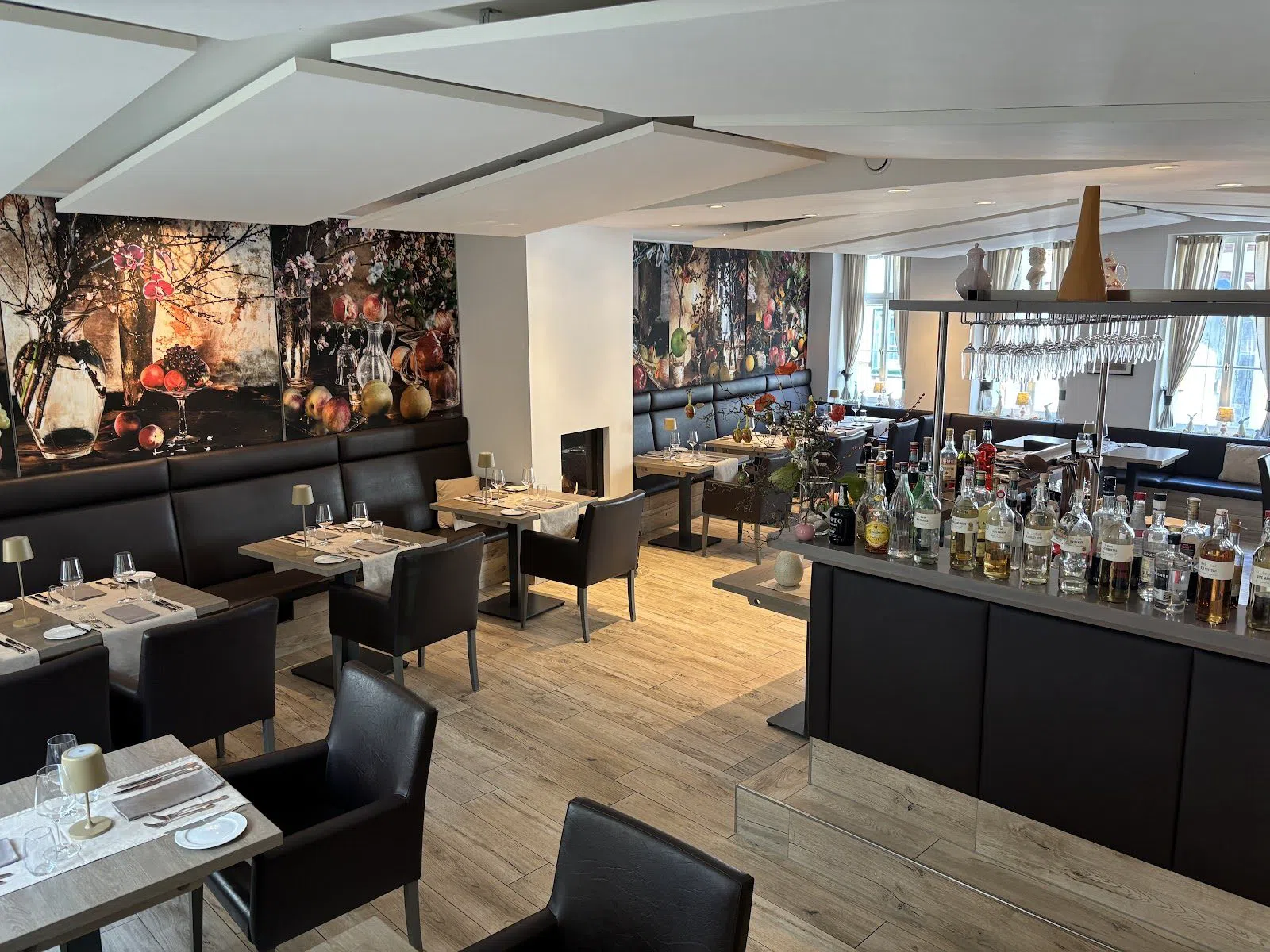
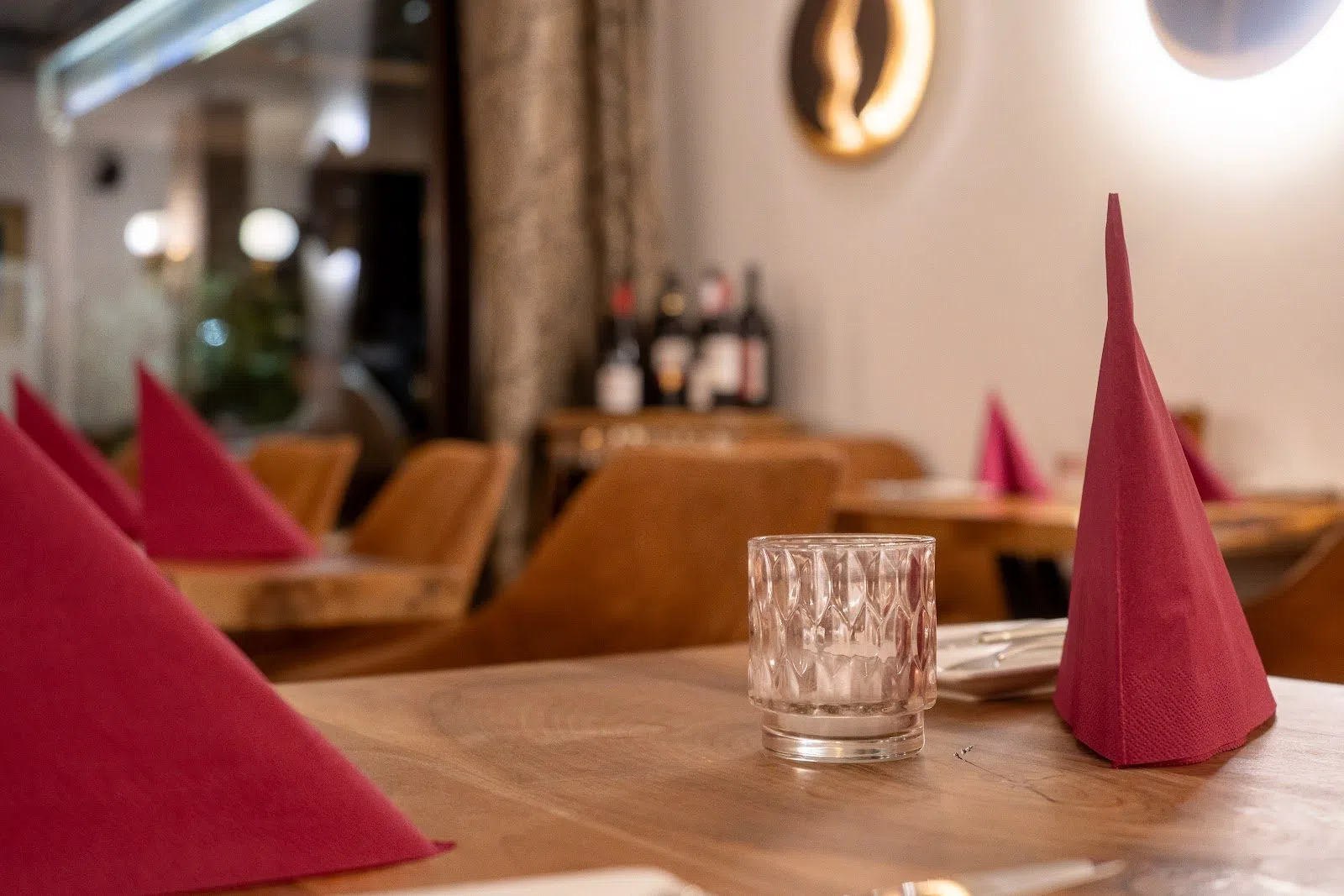
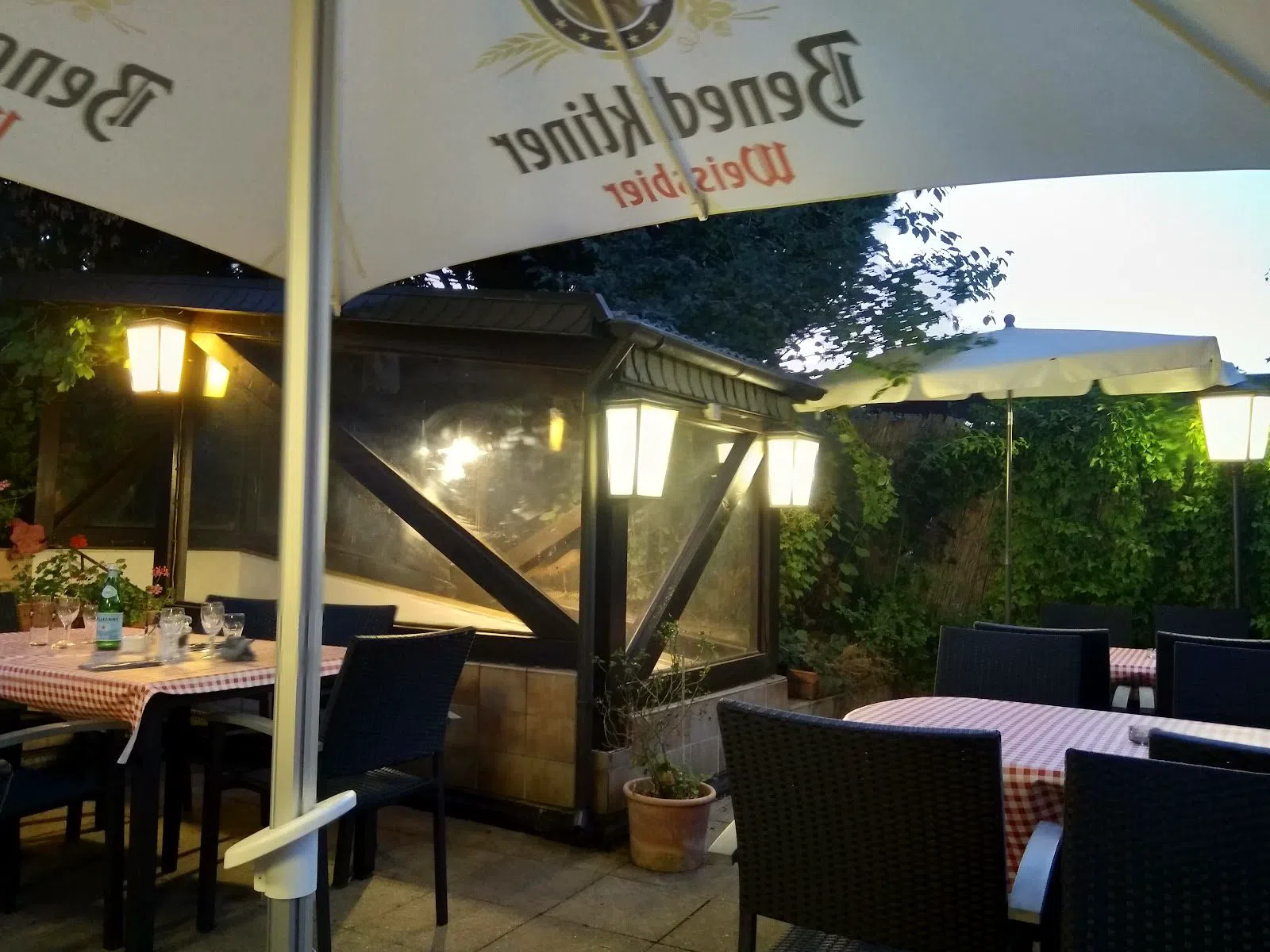
Restaurant 1718 (Muffendorfer Hauptstraße 37) is the best table in Muffendorf, a French brasserie and wine bar set in a glass-roofed courtyard under old grapevines, inside a half-timbered house of 1718. Behind the courtyard the rooms run to an open fireplace and antique-furnished nooks, and the Siebengebirge hills show over the rooftops. Julius Landré and Greta Ersfeld-Liethen gutted and restored the former Weinhaus Muffendorf at this address and reopened it under the new name in 2024.

Prices are €€€. The kitchen works evenings only on Monday, Thursday and Friday, and adds lunch on Saturday and Sunday. Groups and private dining are by arrangement, with seminar rooms in the same courtyard; call ahead, because this is not a walk-in-with-twelve kind of room.
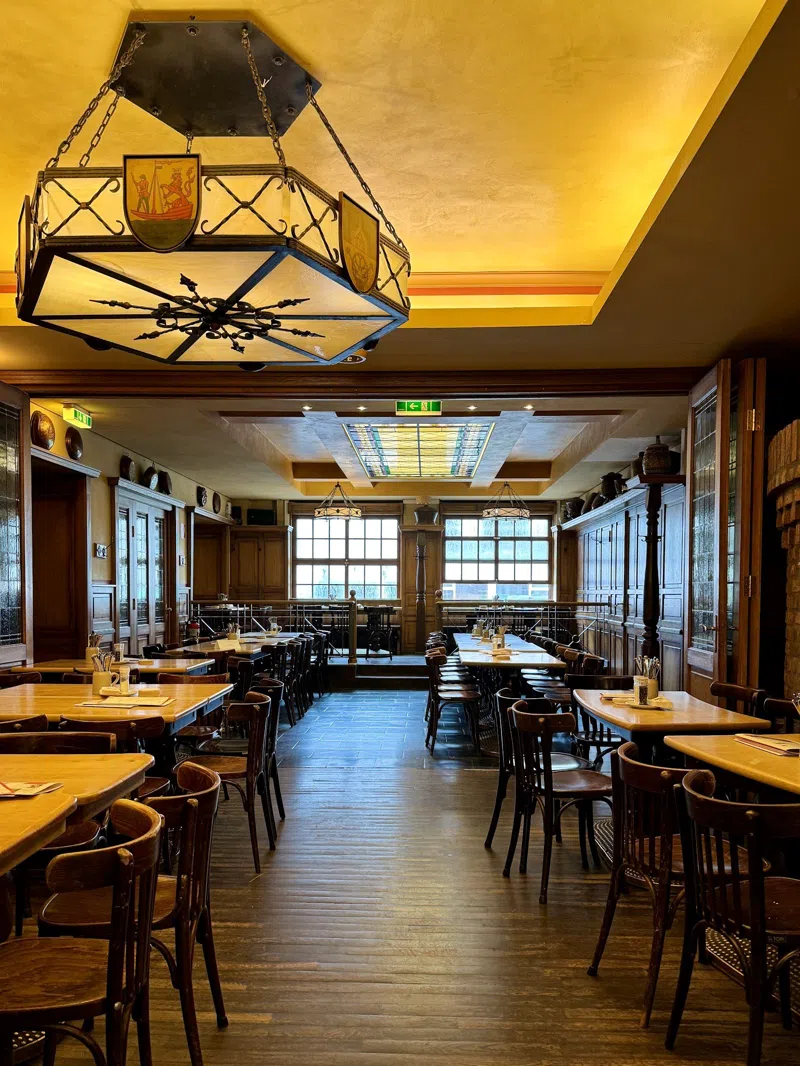
Kleine Beethovenhalle, in the village, keeps an 1896 ballroom behind an unremarkable façade, with a timber gallery, tall arched windows, white-linen tables and a terrace out on the street. Wilhelm Weinreis built it; the hall is listed, and it is billed as the last surviving Imperial-era event hall in the Bonn area. The kitchen working there now is good, and charges €€€.
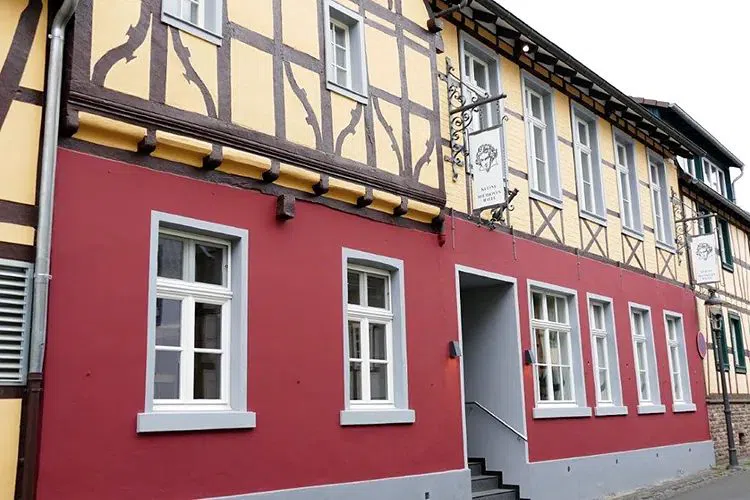
The hours need checking before you set out. The restaurant serves evenings only, Thursday to Sunday, and Wednesday to Sunday in November and December. Monday and Tuesday it is closed. The hall runs year-round and separately from the restaurant, holds up to 300 people and takes group bookings from 20.
Da Nando e Francesco (Klosterbergstraße 39) is the everyday address, a small white-fronted trattoria with a vine-shaded terrazza of a dozen tables and a pizza counter in view of the door. Pizza, pasta and a changing à-la-carte board come in at €€. Wednesday is the rest day, and Sunday lunch is the only daytime service. Phone before you walk up the hill.
Music and the press house
Villa Leistikow (Muffendorfer Hauptstraße 47a) is one of the few ways a visitor gets inside a Muffendorf villa. Ana-Maria Leistikow runs a series called Jazz für Ohr und Gaumen there, trading as Astatine: flamenco, Latin jazz and gypsy swing, with food matched to the music. The salon has an open kitchen and a terrace facing the Petersberg, and the trio plays a few feet from tables laid with tapas. Evenings are ticketed and seated at €€€, the capacity is one private villa's worth, and the dates are irregular. Check the listings page and book early.

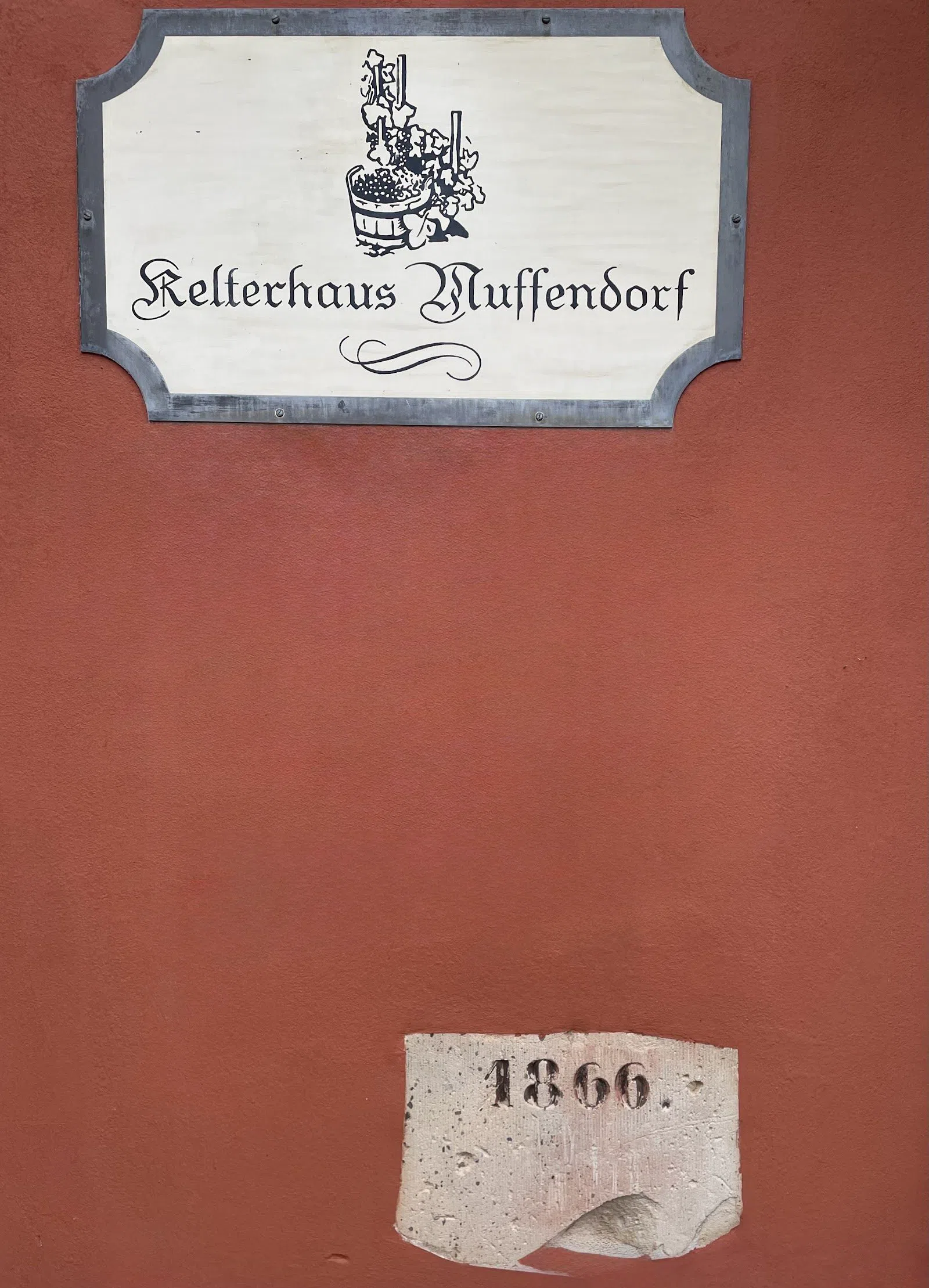
Kelterhaus Muffendorf (Gringsstraße 5) is the half-timbered press house the Klosterberg grapes go into, the old press still standing under its heavy beamed roof, barn doors opening straight onto the vineyard slope. It is hired at €€ for parties, concerts and exhibitions, and it is not a restaurant. Time a visit with an exhibition, a quadrille evening or the Muffenale, when it opens to everyone. Contact the Diederichs family direct.
Walks north of the village
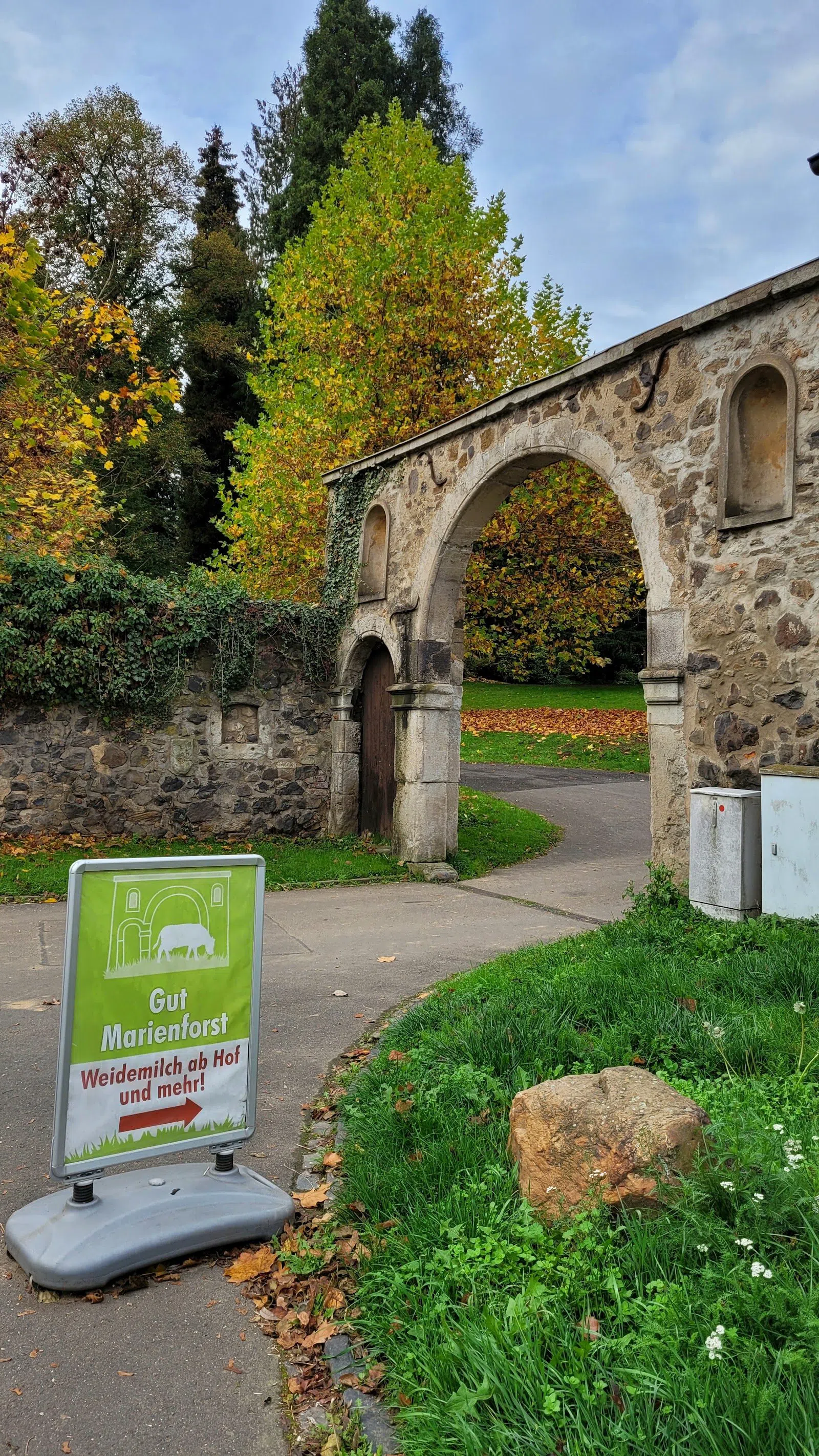
Marienforster Tal & Gut Marienforst begins 1 km north of Muffendorf and is the nearest proper green walk, a straight tree promenade laid out by Lenné beside the narrow Godesberger Bach. Beethoven used it to reach the monastery organ. The church was demolished after secularisation, so what is left to see is the 1652 gateway, the bakehouse and the monastery walls of a still-working farm. The long whitewashed abbess's house of 1752 stands at the end, with columnar basalt on display nearby. The path is public and free.
Godesburg is 1.5 km north, a 20-minute walk, and the one big view in the neighbourhood. A circular 13th-century basalt keep sits on a volcanic cone with the Rhine and the Siebengebirge laid out below. Building began in 1210 under the archbishop. Gottfried Böhm slotted a concrete-and-glass restaurant into the ruined curtain walls in 1959 and 1960; it charges €€€ and serves brunch only on Sunday. The hill and the ruins are free to walk up. The Bergfried climb is suspended while faulty lighting is fixed, so check before you build a day around it.

Where to stay
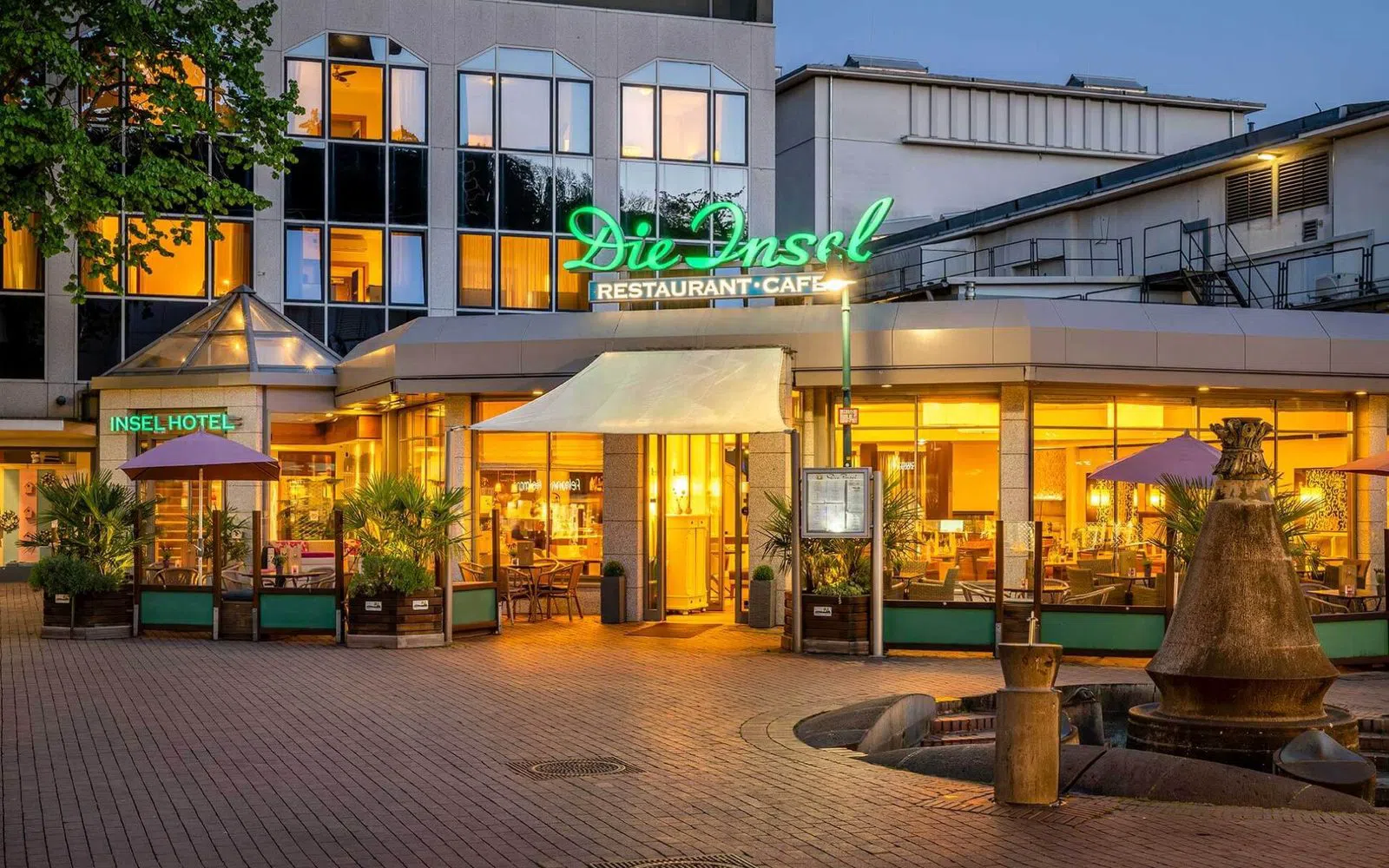
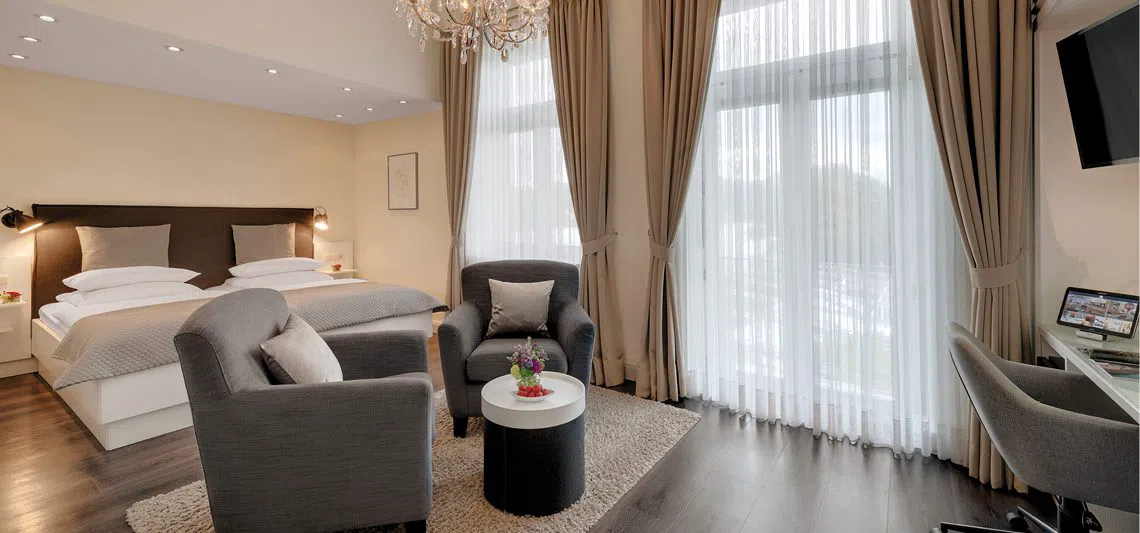
Insel Hotel Bonn (Theaterplatz 5–7) is the closest full-service hotel to the village, 1.5 km downhill in the pedestrian zone beside the theatre and the park. It is owner-run and four-star, at €€, with 62 rooms and a suite from €105 a night. Kurpark trees stand at the windows, and a small sauna floor called the Insel Oase is downstairs. The in-house restaurant DIE INSEL seats up to 100 for functions, and the hotel hires out bikes.
Rheinhotel Dreesen (Rheinstraße 45–49) stands 2.5 km from Muffendorf in Rüngsdorf, directly on the Rhine bank: a white hotel block of the 1890s with a chestnut-shaded garden terrace at the water's edge and barges sliding past in front of the Siebengebirge. It has been family-run since 1894 and is known as the white house on the Rhine. Six event rooms of different sizes handle weddings, conferences and coach groups. Rates are €€€.
Hours and booking
Two things here are closed for works, the interior of Alt St. Martin and the Bergfried climb at Godesburg, which makes this an outdoor walk for now. Book Restaurant 1718 and a Villa Leistikow evening in advance, arrange the Kelterhaus and the Kleine Beethovenhalle hall direct with their owners, and check Da Nando e Francesco's rest day before climbing the hill.
See the Bonn guide and the Bonn hotel search.
Avant de partir
Can you go inside Alt St. Martin?
No. A cable fire in 2017 closed the interior and restoration was still running through 2026, so you see the outside and the graveyard only. The churchyard is free and open daily, 07:30 to 20:00 from March to October and 08:00 to 17:00 from November to February. To get inside a church, Pfarrkirche St. Martin on Klosterbergstraße is free outside services.
When can you see inside the half-timbered courtyards?
On the first Sunday in September, during the Muffenale, when owners along Muffendorfer Hauptstraße open their private courtyards. The rest of the year the houses are lived in and you see only the lane. Kelterhaus Muffendorf on Gringsstraße opens for the Muffenale too.
Where can you eat in Muffendorf early in the week?
Restaurant 1718 at Muffendorfer Hauptstraße 37 serves evenings on Monday, Thursday and Friday, and lunch as well on Saturday and Sunday. Kleine Beethovenhalle closes Monday and Tuesday and serves evenings Thursday to Sunday, or Wednesday to Sunday in November and December. Da Nando e Francesco closes on Wednesday.
Is there wine from the Muffendorfer Klosterberg vineyard?
Growers have planted and pressed the slope again since 1972, and the red goes out as Muffendorfer Klosterberg. The Siegburger Hof farm is private, so the public view is from the lane and the footpath past the terraced Regent vines. Kelterhaus Muffendorf is the press house, hired out for events rather than run as a restaurant.
Where should you stay for Muffendorf?
Insel Hotel Bonn on Theaterplatz is the closest full-service hotel, 1.5 km downhill. The owners run it themselves and keep 62 rooms, with a suite from €105 a night. Rheinhotel Dreesen on Rheinstraße in Rüngsdorf is 2.5 km away, in the same family since 1894 and right on the Rhine bank, at €€€.