The Bonn issue
Two Days in Bonn, from the Museumsmeile to the Altstadt Bars
Two days in Bonn on foot, taking in the capital-scale museums and the Rhine promenade, and ending in the small old-town bars that stay open until the trams start again.

By Camille LefèvreBonn on foot, one neighbourhood at a time
Bonn was the capital of West Germany for four decades and never entirely grew into the job. The ministries went into a low green strip beside the Rhine instead of a skyline, and the old town behind them stayed the size of a market town. That is how a city this small ended up with a museum row built to capital scale and a centre you can cross on foot in fifteen minutes. Two days is enough to walk nearly all of it, with the river as the spine and the Altstadt as the place the evening lands.
Start where the republic started
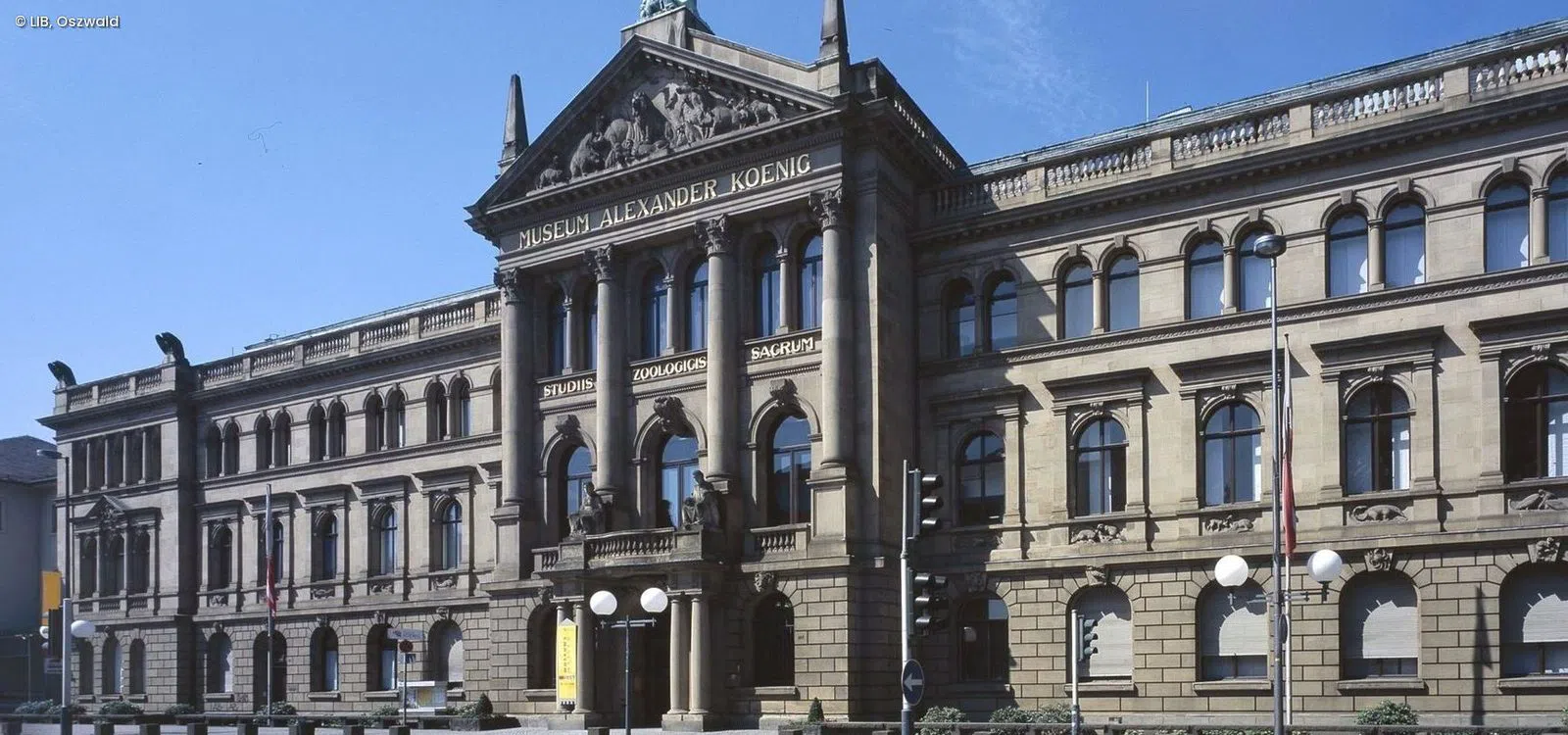
The museum row runs south from the centre along Adenauerallee, a straight avenue of plane trees with a tram line under it, and the walk from the old town to the far end takes about twenty-five minutes. Begin at Museum Koenig Bonn (Adenauerallee, at the northern end of the row), the natural history collection of the Leibniz Institute for the Analysis of Biodiversity Change. It is a good building to start in for a reason that has nothing to do with taxidermy: modern Germany's constitution was written here, which sets up everything you will see for the rest of the morning. Entry is €6 adult, €3 reduced and €15 for a family, the cheapest hour in the city, and the displays are well made for children. It closes on Mondays except on North Rhine-Westphalia holidays, and it has no air conditioning, so a large party in July will get warm.
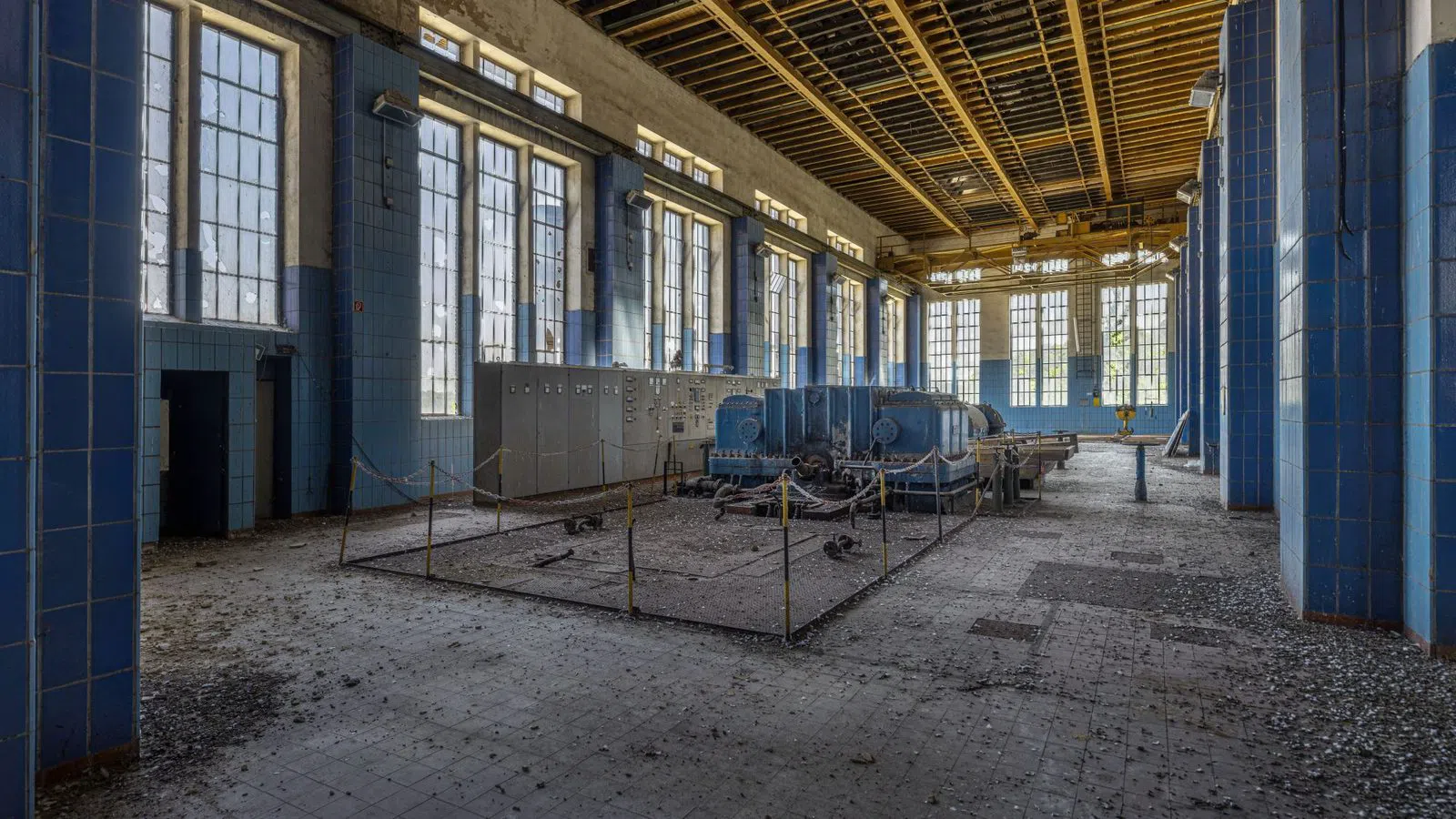
Carry on south to the Haus der Geschichte der Bundesrepublik Deutschland (Museumsmeile), the single best two hours in Bonn for anyone arriving from outside Germany. Entry is free, the labelling is in English throughout, and it takes walk-ins, so group size is not a problem: a party of thirty can simply turn up, and guided tours can be booked in advance if you want structure. It tells the postwar story in objects instead of wall text, and it explains the city's odd career as a capital better than any walking tour will. This one is also closed on Mondays.
That Monday closure is the one piece of planning that matters here: the history museum, the two art houses and Museum Koenig all shut on Mondays. If one of your two days is a Monday, spend it on the river, the minster, the gardens and the park, and put every museum on the other day.
Plan your Bonn trip
Live prices from our booking partners.
Free cancellation on many rooms. We may earn a commission when you book.
Two art houses on one plaza
A few minutes further south, two buildings share a raised plaza. Bundeskunsthalle (Museumsmeile) is an exhibition hall, not a permanent collection: big touring shows, three or four at a time, so check what is actually on before you commit €14 (€7 reduced, under-18s free). Groups of ten or more pay €11.20 a head, and the ticket office takes advance bookings on +49 228 9171-200, worth doing for anything larger than a family. Two things are useful to know whatever the programme. It stays open until 9pm on Wednesdays, the easiest slot for anyone whose day is otherwise committed, and the roof garden is free. The lift ride up to it is a reasonable use of ten minutes even if you never buy a ticket.

Next door, Kunstmuseum Bonn (Museumsmeile) is the better bet if you want art that belongs to this city instead of art passing through it. It holds the world's principal collection of August Macke, who worked in Bonn, and that gives the museum a local argument the touring shows cannot make. Entry is €10 adult, €5 reduced. It is step-free throughout, with wheelchairs available at the cloakroom, and guided tours can be booked for groups.

Do not try to do all four museums in a day. Two is a full morning and an early afternoon; three is a slog, and the fourth will be wasted. For a first visit, pair Haus der Geschichte with Kunstmuseum Bonn, and swap Museum Koenig in for the art if there are children in the party.
Down to the water at the Alter Zoll
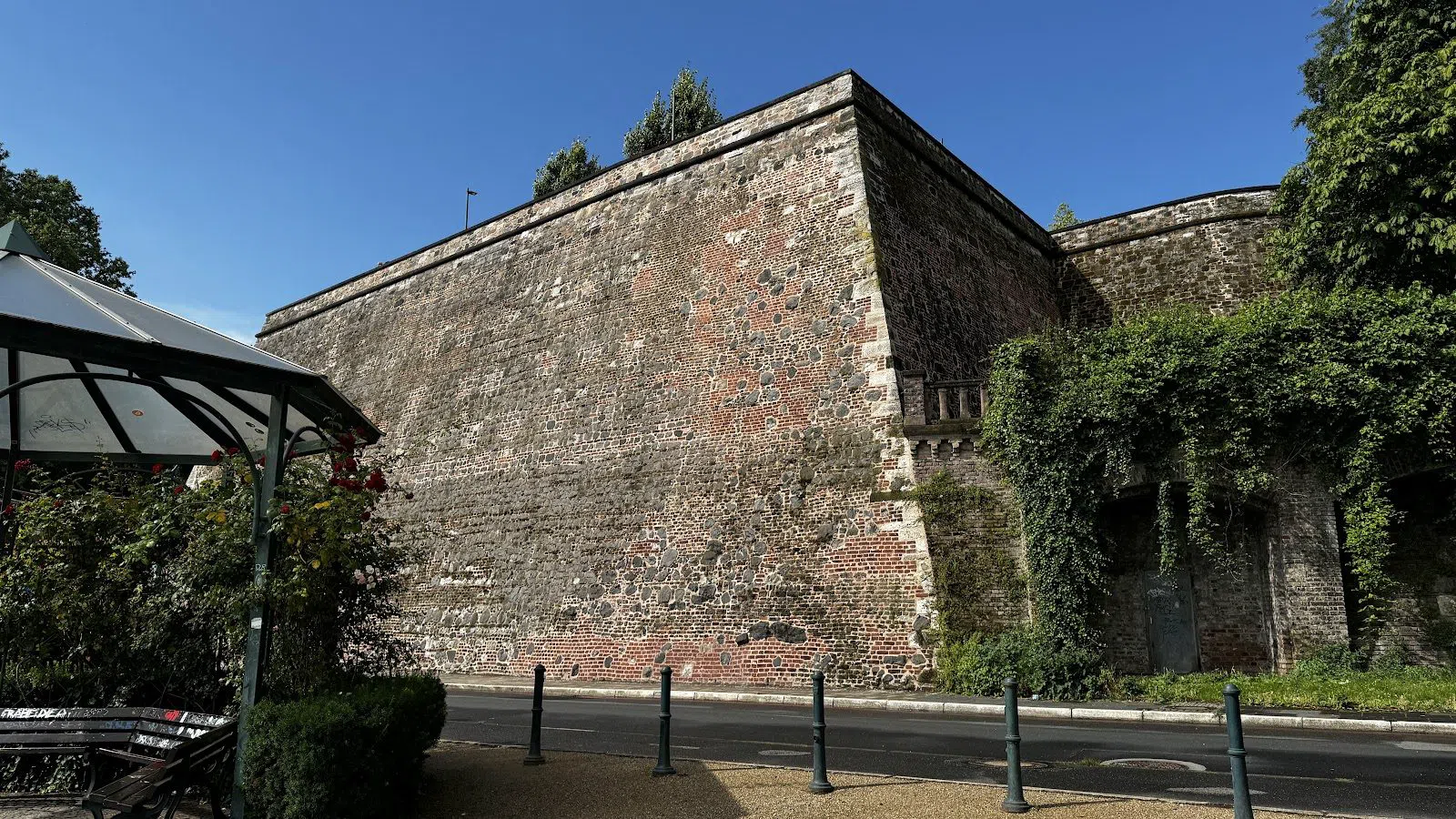
Walk back north and cut east to the river. Alter Zoll and the Rheinpromenade (edge of the old town, past the opera house) is a bastion set above the water, ten minutes from the centre, and it anchors any Rhine walk in Bonn as well as giving the best free view in the city. The Rhine here is a working river, not a scenic one: long low barges running gravel and containers, riding deep, one every few minutes. The wooded hills that close the view downstream are where the second day goes. Bring a jacket whatever the forecast, because the terrace is exposed and in wind or rain there is nothing to shelter behind.
From the bastion the promenade runs south along the water, level and paved the whole way, past the government quarter. You can walk it as far as your legs allow and pick up a tram back at any point.
The old town in an afternoon
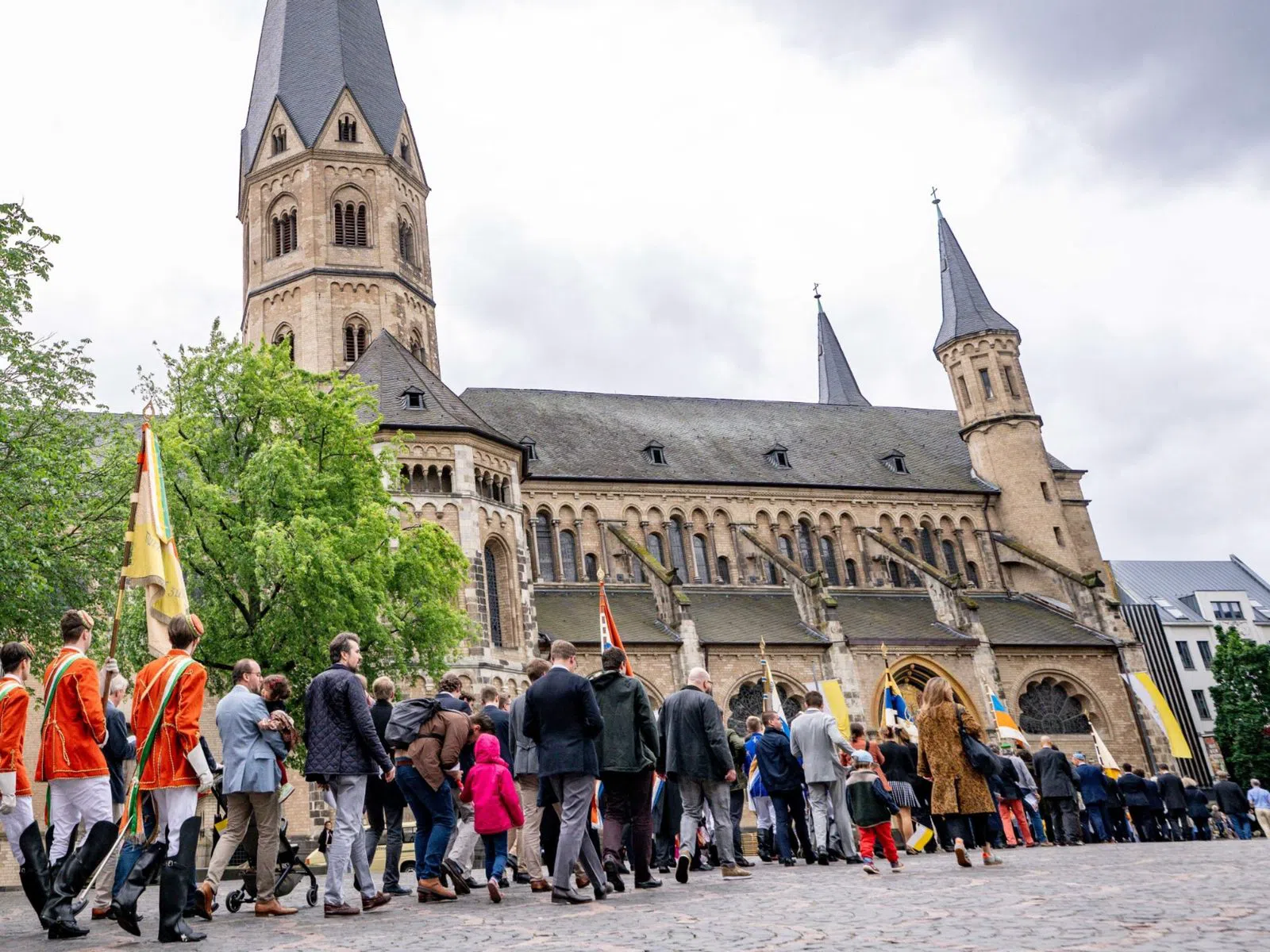
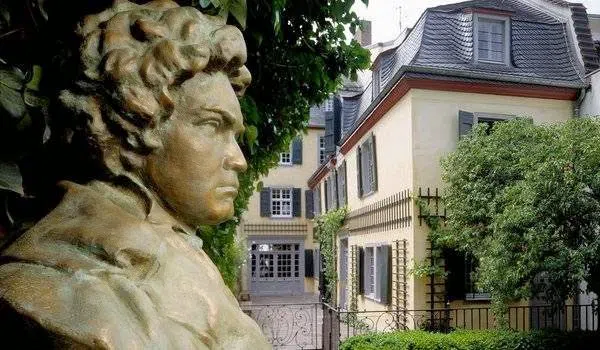
The centre is compact enough that the two things worth seeing in it sit five minutes apart. Bonner Münster (Münsterplatz) reopened in 2021 after a four-year restoration, so the Romanesque stonework and the cloister are in unusually good condition and you are not inspecting them through scaffolding. Entry is free and groups walk straight in, though Sundays are largely given over to services and are best avoided. Half an hour is enough inside. Outside, the two giant bronze heads on the square are the most photographed object in Bonn and worth the two minutes it takes to work out what they are doing there.
North of the market square, Beethoven-Haus Bonn (Bonngasse) is the house he was born in, and the manuscripts on display are the real documents, not facsimiles. Tickets are €15 adult and €10 child, timed, so booking ahead is not optional in high season; during the 'Beethoven by Warhol' exhibition, running 9 September 2026 to 5 April 2027, they rise to €17 and €12. The rooms are small and the house can feel crowded when a tour group lands. It also closes to individual visitors on Tuesdays, although pre-booked groups can still get in that day, so a group of twelve has an option a couple does not.
The first evening around the Markt
Eat on the market square. Em Höttche (Markt) has been on the same corner for six centuries and serves the real version of Rhineland cooking, not a softened tourist approximation, with mains at roughly €15-25. It takes reservations and handles groups well, and in summer the terrace absorbs larger parties that would be awkward indoors. It runs daily from 11am to 1am, so a late dinner after a museum day is straightforward.
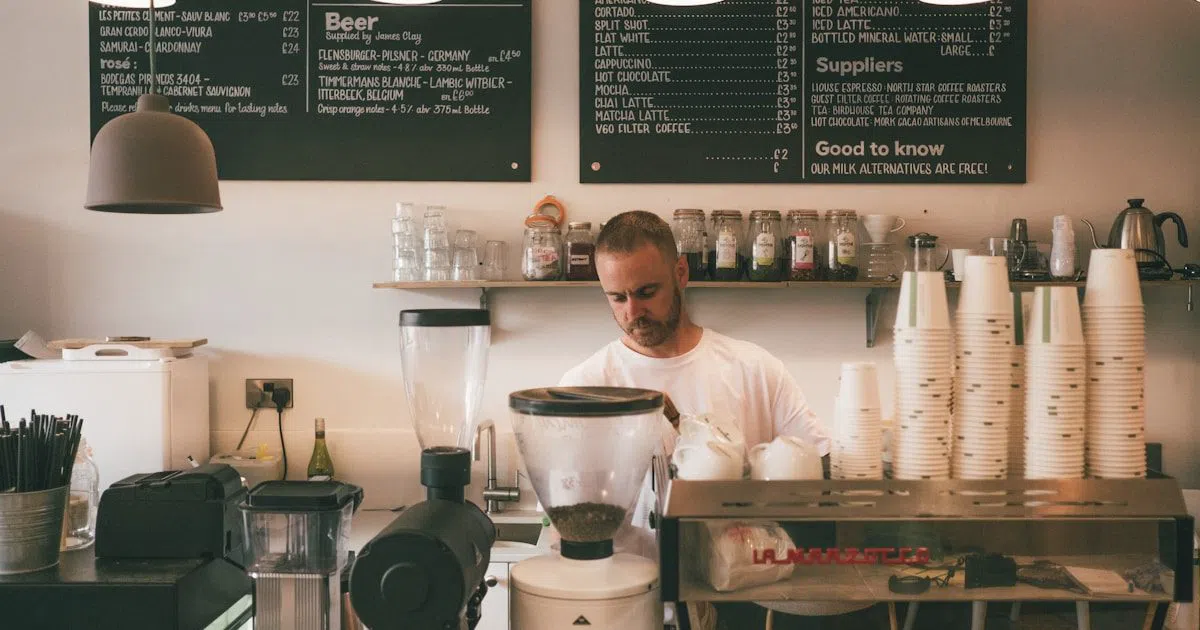
The Altstadt bar strip starts a short walk away. Café Pawlow (Altstadt) is its long-running heart, a café by day and a DJ bar until 5am at weekends, with beer around €3-4 and cocktails around €8. There is no door policy and no attitude; the room is unpretentious rather than polished, which is the point. It fills quickly on Friday and Saturday nights, and a group of eight arriving at eleven should expect to stand.
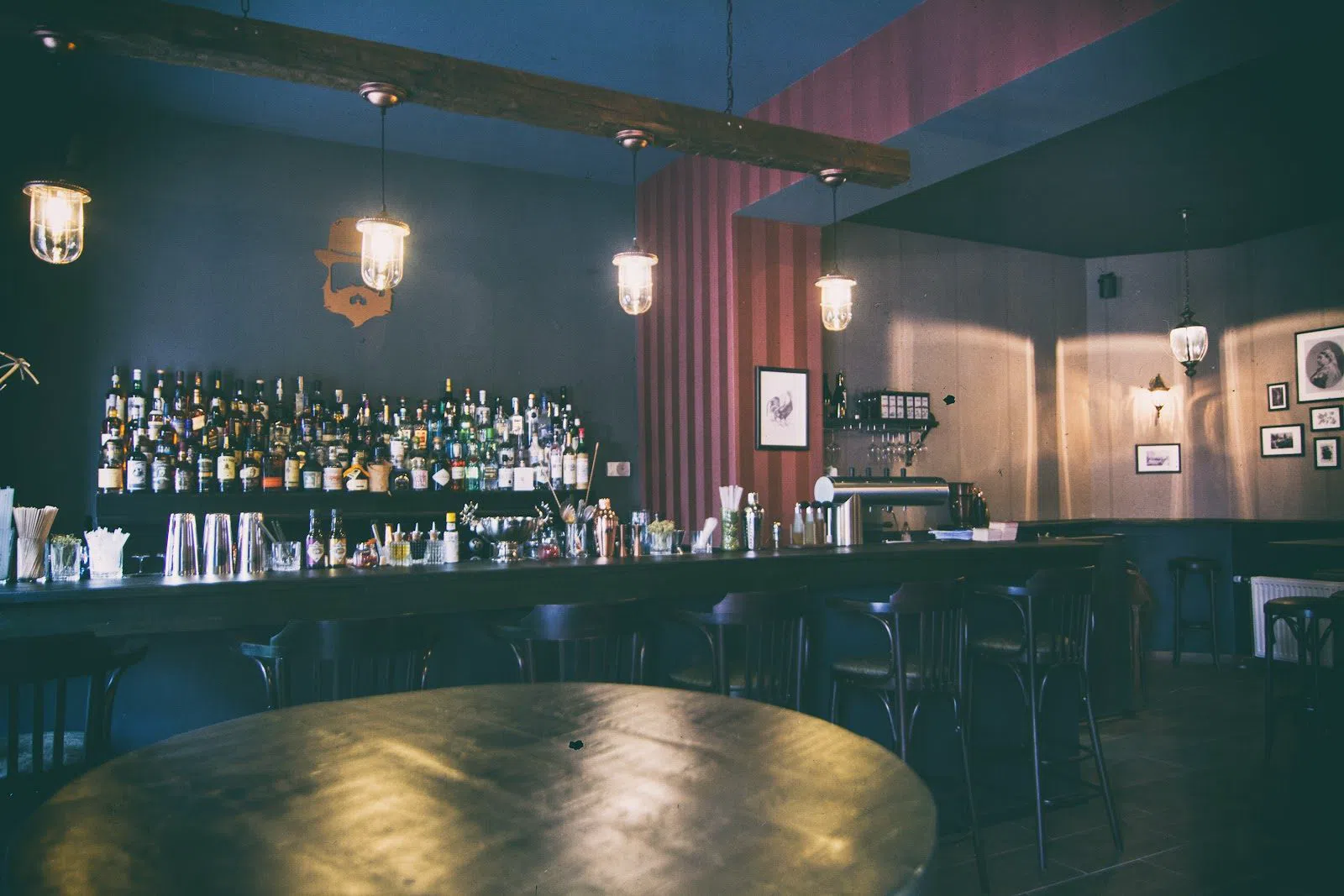
For something more considered, The Old Jacob (old town) is the serious drinks address in Bonn, mixing classics and house creations to a standard nothing else in the city attempts, at €12-16 a cocktail. It is a small room and works best for pairs and fours. You ring the bell to be admitted, a matter of space and not exclusivity, though the practical consequence is the same: a large group that turns up unannounced will not get in, so call ahead. It opens at 6pm and closes Sunday and Monday.
Day two on the water
The second morning belongs to the river, and there are two ways to take it. Bonner Personen Schiffahrt (landing stage below the old town) is the only way to see Bonn from the water. A short round trip runs roughly €15-25, with whole-boat charters and themed sailings priced separately, and the operation is built for groups, which is rare here. Two constraints matter: sailings run daily from April to the end of October and stop entirely in winter, and you should book direct by phone or email instead of through a reseller.
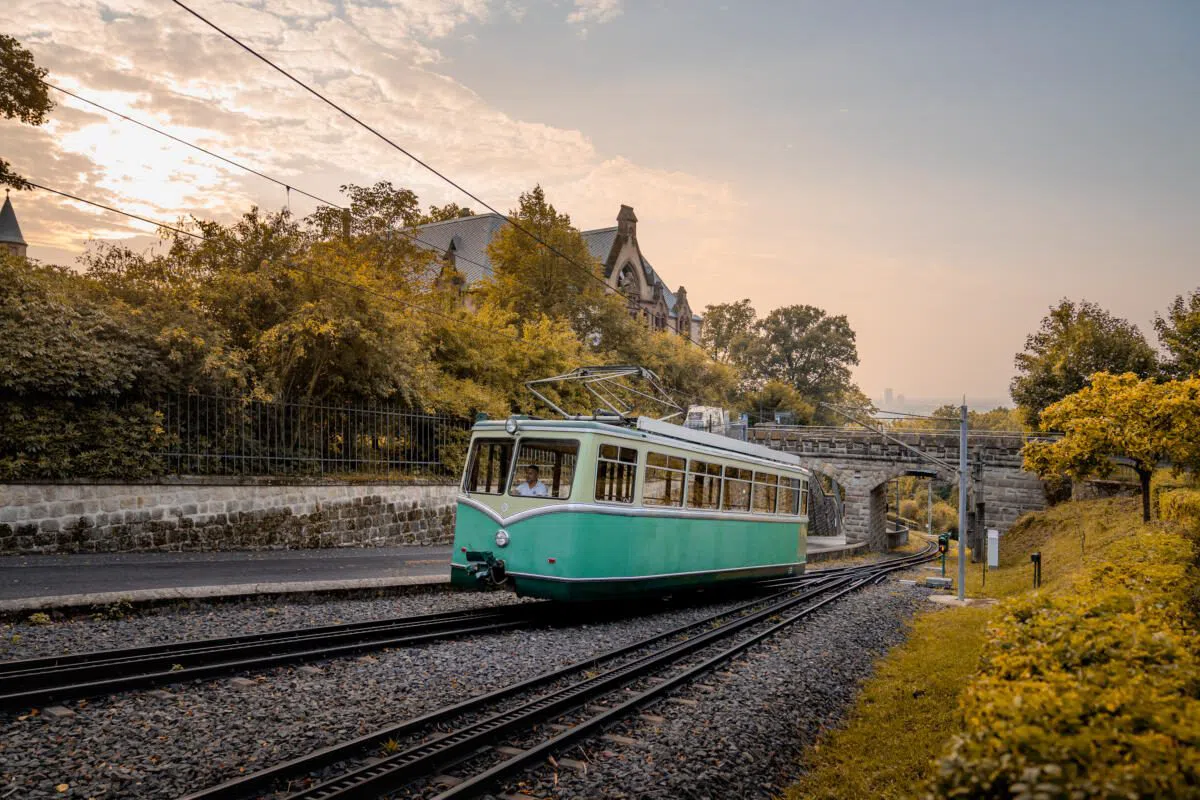
Either by boat or by train, half an hour along the river brings you to the Drachenfelsbahn / Drachenfels (rack railway to a hilltop ruin), the obvious half-day escape from the city and the one moment on this itinerary with a view worth the word. The return fare is €12 adult and €6 for children aged 4-13, group fares are available, and the railway takes coach parties as a matter of routine, so book ahead in summer. It runs from 1 January to 15 November, so unlike the boats it survives the shoulder season, but check the time of the last descent before you start climbing. Walking down instead of riding takes about an hour on a made path.
The long green half of the walk
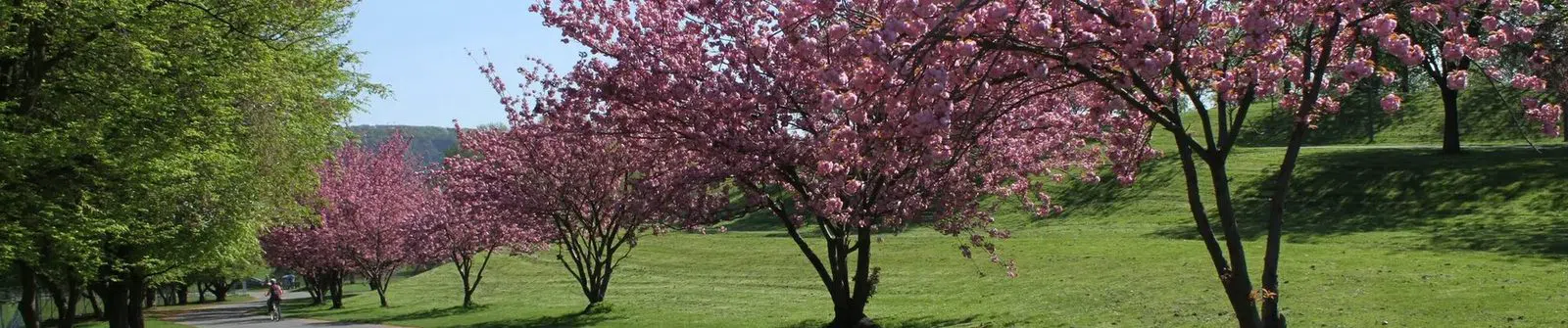
If you would rather stay in Bonn, Freizeitpark Rheinaue (south of the government quarter) is the green half of a Rhine walk: open parkland with no restrictions on group size, free, and easy to reach by tram if you do not want to walk the promenade all the way down. Boat and bike hire operate in season. Most of it is jogging territory and you can skip it in good conscience; the Japanese Garden is the part to aim for, and it repays a slow half-hour.
Poppelsdorf and the university gardens
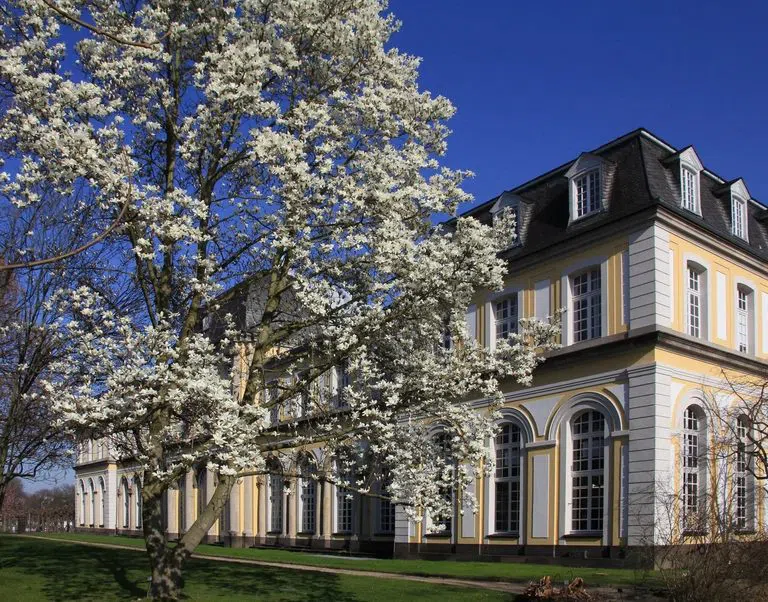
Back in the centre, the Poppelsdorfer Allee runs dead straight from the main station to a baroque palace, a ten-minute walk. At the end, Botanische Gärten der Universität Bonn (Poppelsdorf, in the grounds of Poppelsdorfer Schloss) is free on weekdays and €5, or €3 reduced, on Saturdays, Sundays and holidays, with under-12s free. It is one of very few university gardens with a working titan arum, and the glasshouses, not the borders, are the reason to come. From April to October it opens daily 10am to 6pm, until 8pm on Thursdays, and the glasshouses shut half an hour before the gates. Guided tours can be arranged for groups through the gardens' office.
The second evening in the student quarter
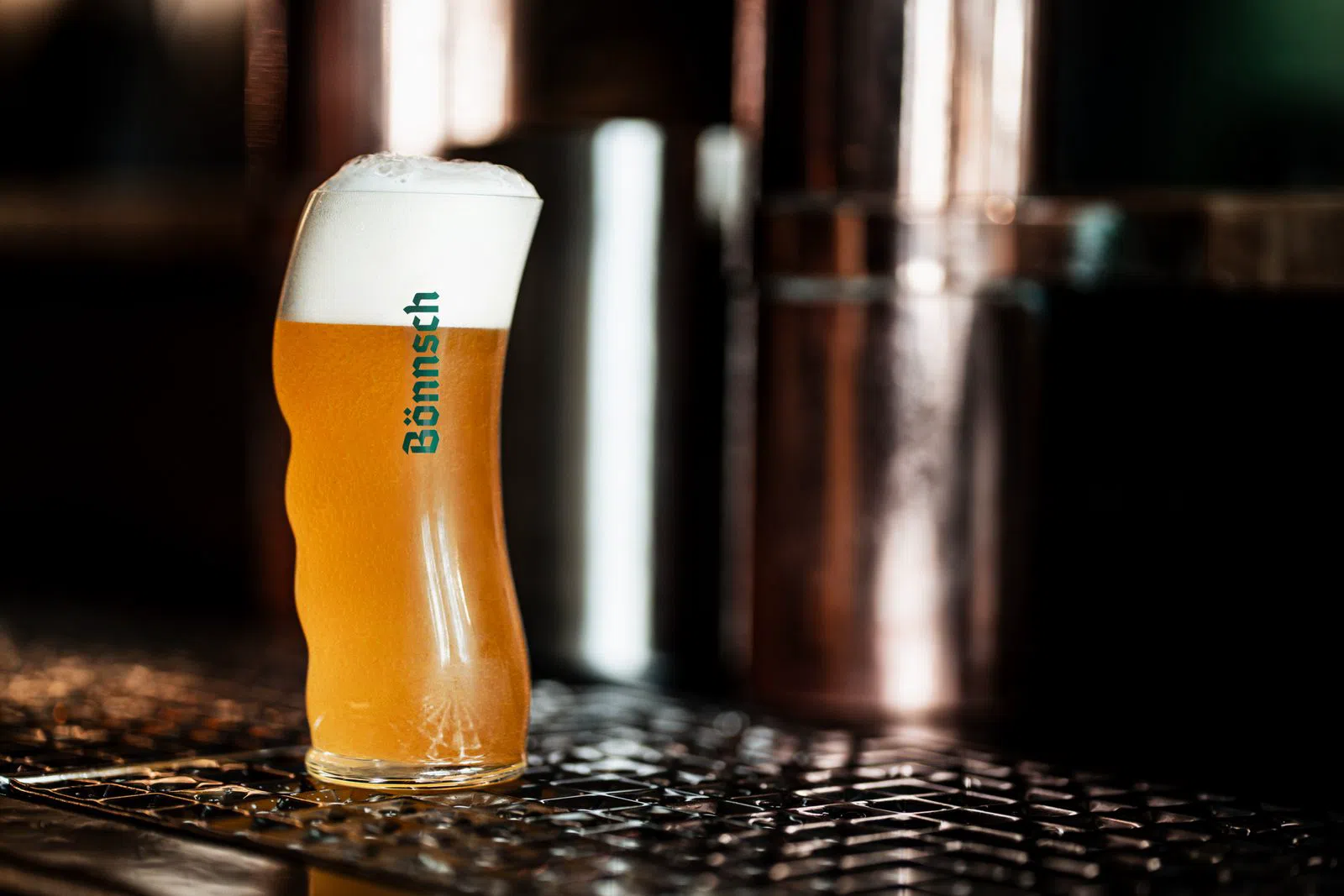
Bonn brews its own style of beer, and Brauhaus Bönnsch (city centre) is where you drink it: unfiltered, poured from the kettles behind the bar, at about €3.50 a glass with mains €12-20. There are separate function rooms and catering for company dinners, which makes it the default for a working group; reserve if you are more than six. It runs to 1am, and to 3am on Fridays and Saturdays.
The alternative is worth the tram ride. Bierhaus Machold (Endenich, the student quarter) occupies a working brick brewery building with long tables across multiple floors, a beer garden and a football bar upstairs, and it is the easiest place in Bonn for a big group to land without warning. Beer is around €3.50, mains €12-20, and the kitchen runs until 11pm. It opens at 5pm on weekdays and 10am on Sundays. Take the last tram back or budget for a taxi; the walk into the centre is longer than it looks on the map.
Practical notes
Bonn is a walking city with a tram network for the edges. The old town, the minster, Beethoven-Haus and the Altstadt bars are all within ten minutes of each other on foot; the museum row, the Rheinaue and Endenich are each a short ride on the Stadtbahn, and a day ticket for the city zone costs less than three single fares. Buy it from the platform machine or the transport app before boarding. Nothing in this itinerary requires a car, and parking near the Markt is not worth the argument.
Carry euros. Card acceptance in the museums and the larger restaurants is reliable, but small bars, the gardens' weekend admission and the kiosks along the promenade are all easier with cash, and some of the Altstadt places still prefer it outright. Budget roughly €60-90 a person for a full day with two museums, a proper dinner and a couple of drinks; a day built around the free museum, the minster, the promenade and the park costs almost nothing beyond food.
On timing: Mondays close the museums, Tuesdays close Beethoven-Haus to individuals, Sundays hand the minster over to services, the boats run April to the end of October, and the Drachenfels railway stops on 15 November. Late May through September gives you the gardens, the boats and light until nine; late autumn gives you the museums with room to move and the hill without the queue. For where to sleep, the centre and the station end of the Poppelsdorfer Allee put everything above within walking distance. Compare rates and locations on Bonn hotel search, and read the wider Bonn guide for neighbourhoods, seasons and the rest of the city's museums.
Before you go
Is two days enough to see Bonn?
Yes, comfortably. The old town, the minster and Beethoven-Haus sit within ten minutes of each other on foot, the museum row is a straight twenty-five-minute walk or a short tram ride south, and the Rhine promenade links the two. Two days covers the museums, a river walk and the Drachenfels trip without rushing, and what limits you is museum opening days rather than distance.
Which Bonn museums are closed on Mondays?
Haus der Geschichte, the Bundeskunsthalle and Kunstmuseum Bonn all close on Mondays, and Museum Koenig closes too except on North Rhine-Westphalia holidays. Beethoven-Haus is the other trap: it is shut to individual visitors on Tuesdays, though pre-booked groups can still get in that day. If a Monday falls in your two days, use it for the Rhine promenade, the Bonner Münster, the botanical gardens and the Rheinaue.
How much do Bonn's museums cost, and is anything free?
Haus der Geschichte der Bundesrepublik Deutschland is free and needs no ticket, so two hours there cost nothing. The rest charge: Museum Koenig €6 (€3 reduced, €15 family), Kunstmuseum Bonn €10 (€5 reduced), and the Bundeskunsthalle €14 (€7 reduced, under-18s free, €11.20 per person for groups of ten or more). Bonner Münster is free too, as is the Bundeskunsthalle roof garden, which you can walk up to without a ticket.
Can you visit Drachenfels from Bonn in a day, and does it run in winter?
It is a half-day trip, about half an hour from Bonn by train or by boat in season. The Drachenfelsbahn rack railway costs €12 adult return and €6 for children aged 4 to 13, runs from 1 January to 15 November, and takes group bookings; check the time of the last descent before you climb. The Rhine boats only sail April to the end of October, so in winter you go by train.
Do Bonn's bars have door policies, and where can a large group drink?
Most do not. Café Pawlow in the Altstadt has no door policy and takes groups happily, though it fills fast on Friday and Saturday nights, and runs to 5am at weekends. The Old Jacob is the exception: you ring the bell, the room is small, and a large group will not get in without calling ahead, so treat it as a place for pairs and fours. For eight or more, Bierhaus Machold in Endenich, with its long tables and several floors, has the space.