The Bonn issue
Bonn to Drachenfels by Ferry, Rack Railway and Foot
A full day out of Bonn built around one short river crossing, Germany's oldest rack railway and a ruin you can stand under for nothing.

By Camille LefèvreBonn on foot, one neighbourhood at a time
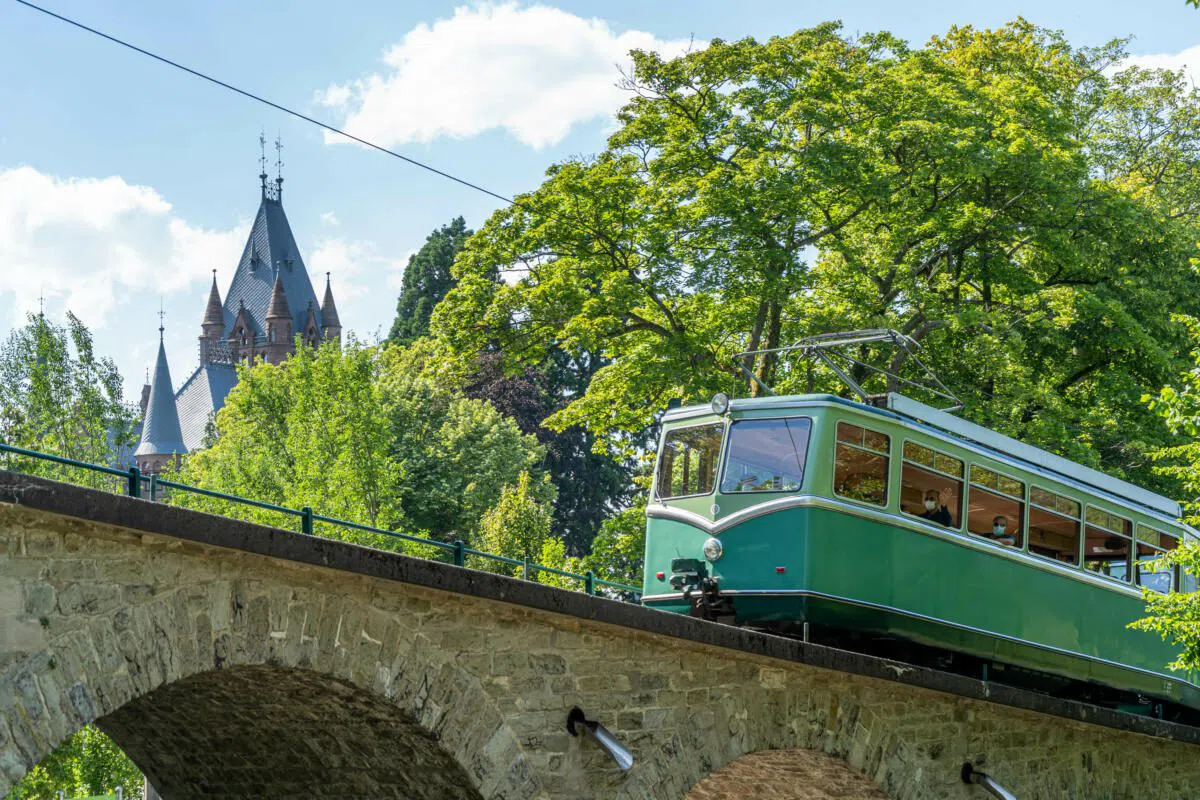
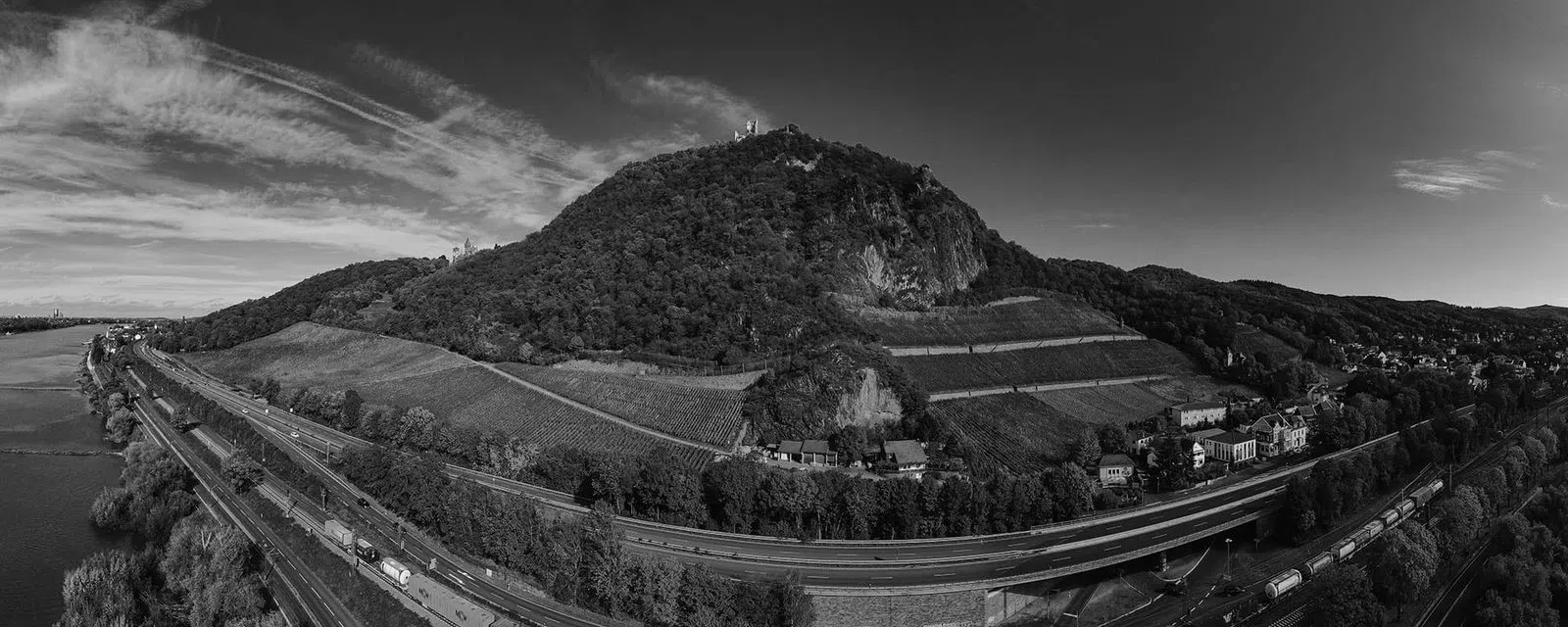
The Drachenfels rises barely more than three hundred metres above the Rhine, which is why the nineteenth century fell for it: a ruin you could reach in walking shoes, with the river bending away beneath. From the southern edge of Bonn the ridge is already in view across the water, and the crossing, the climb and the first look down the valley take under an hour if you time them properly. What follows depends on which side of the mountain you decide to spend the day on.
Crossing the water
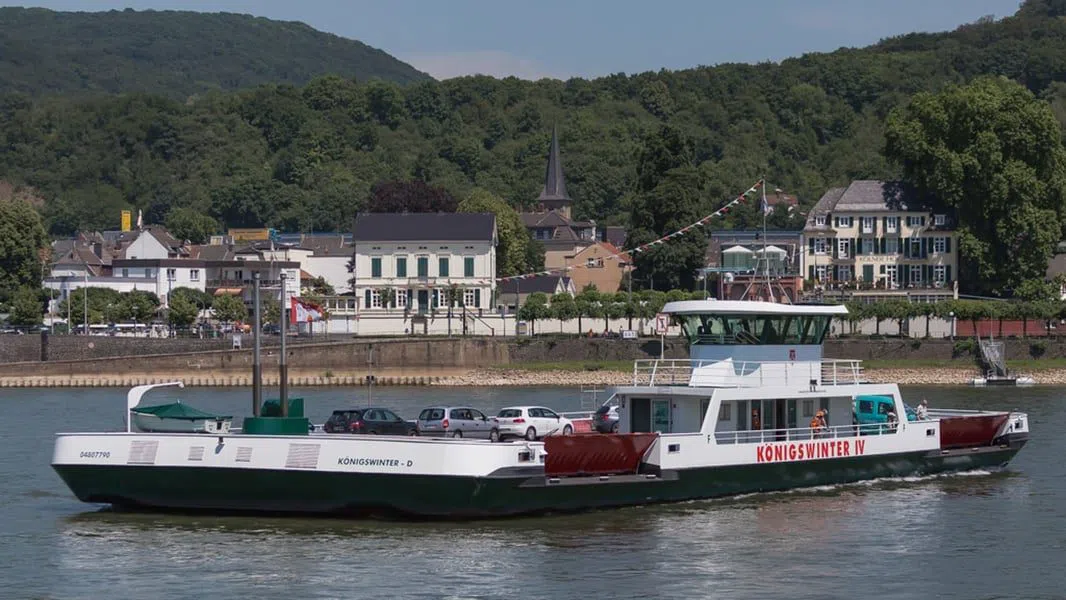
The shortest way over is still the oldest. The Rheinfähre Königswinter – Bonn-Mehlem (Mehlem, at the southern end of Bonn) is an open-deck car-and-foot ferry that shuttles roughly every eight minutes from early morning until about 21:45, so there is no timetable to memorise and nothing to book. You walk on when it docks. Between 10 July and 11 December 2026 foot passengers holding a valid public-transport ticket cross free; bicycles are €3, cars €4.50 and a coach €20, with parties of twenty-five and over carried at that fixed coach fare. For a group this is the least fussy option in the whole day: no reservation, no fixed departure, and if half the party is late they simply take the next boat.

The slower and more considered approach is to arrive by river. Bonner Personen Schiffahrt (Bonn riverfront) runs scheduled line services and round trips on the stretch below the Siebengebirge from 3 April to 17 October 2026, with the leg from Bonn across to the foot of the Drachenfels costing somewhere in the low-to-mid teens in euro. The classic shape of the day is boat out and train back: you get the approach from the water, which is the view the Rhine Romantics were painting, and you avoid spending the tired end of the afternoon waiting on a landing stage. Larger parties are well served here, with extra ships laid on for groups of fifty and above, themed charters as part of the business, and a weekday discount for seniors that is new for 2026.
Plan your Bonn trip
Live prices from our booking partners.
Free cancellation on many rooms. We may earn a commission when you book.
Ten minutes up the mountain
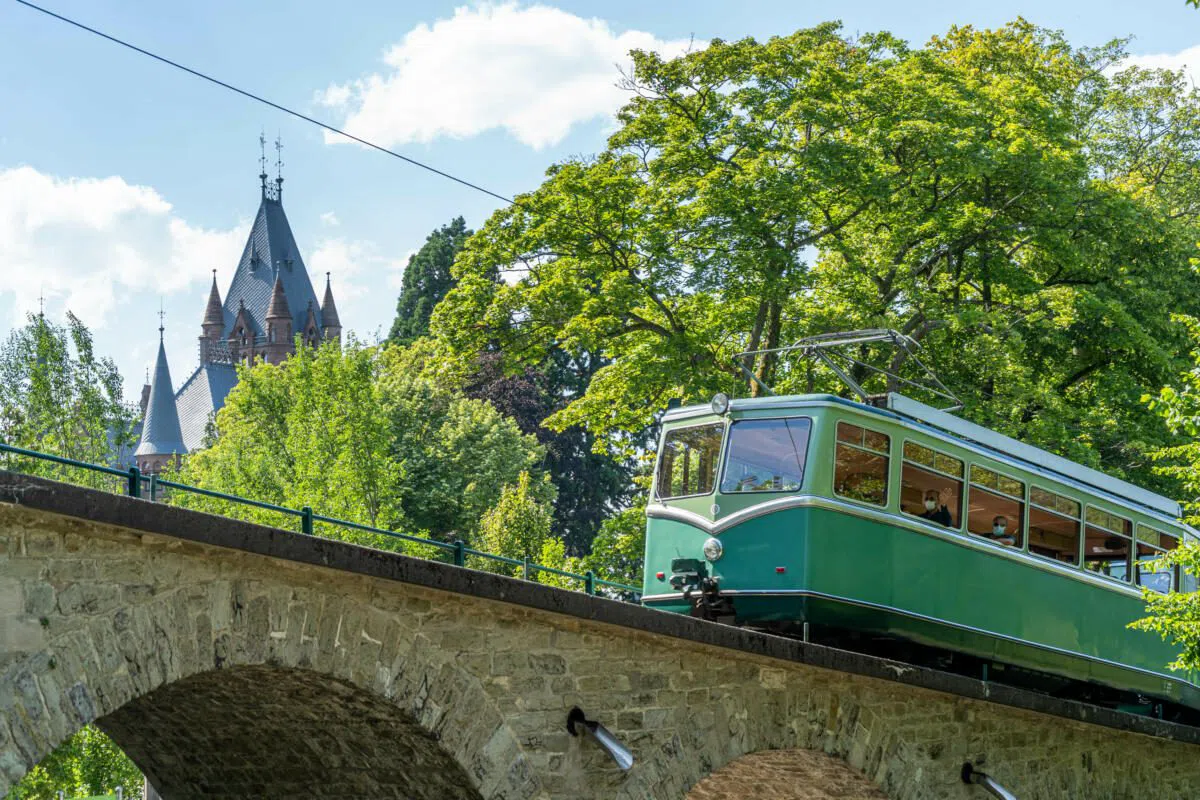
From the landing it is a few minutes on foot to the valley station of the Drachenfelsbahn (Königswinter, at the bottom of the ascent), which opened in 1883 and is the oldest rack railway in Germany. It lifts you to the summit in under ten minutes, which is why this trip works for everyone in a mixed party: grandparents, pushchairs, people who came in the wrong shoes. A return is €14 for adults, €7 for children aged four to thirteen and €35 for a family; groups of twenty-five and over register in advance for €12 per person, and there are listed school and kindergarten rates. On summer weekends the carriages fill quickly, so either take one of the first departures or leave it until late afternoon, and book a group in rather than turning up with twenty-eight people and hoping.
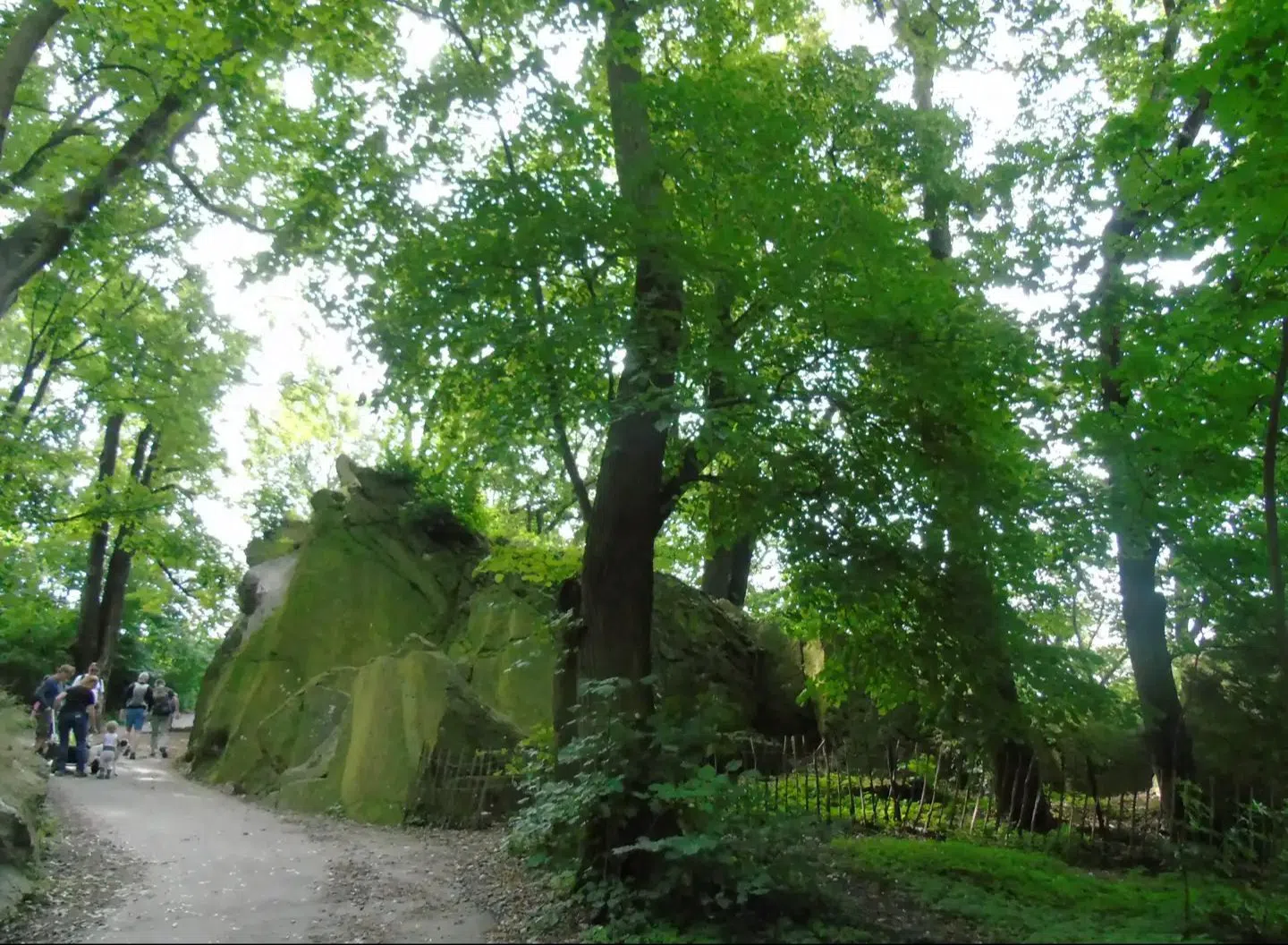
Walking up is the honest alternative and takes most people well under an hour on the metalled path that climbs the hill. Children can do part of it the traditional way: Eselsritt zum Drachenfels (Familie Muhr) (Königswinter, from the foot of the ascent) still runs donkeys up to the castle gate, a local custom old enough to appear in the same nineteenth-century accounts as the railway. It operates from the Easter holidays to 31 October at weekends and on public holidays, and daily during North Rhine-Westphalia school holidays. Small groups only, and strictly by prior arrangement: telephone Familie Muhr on 02223 24650. The cost is a few euros per child for the ascent.
The castle that was never a fortress
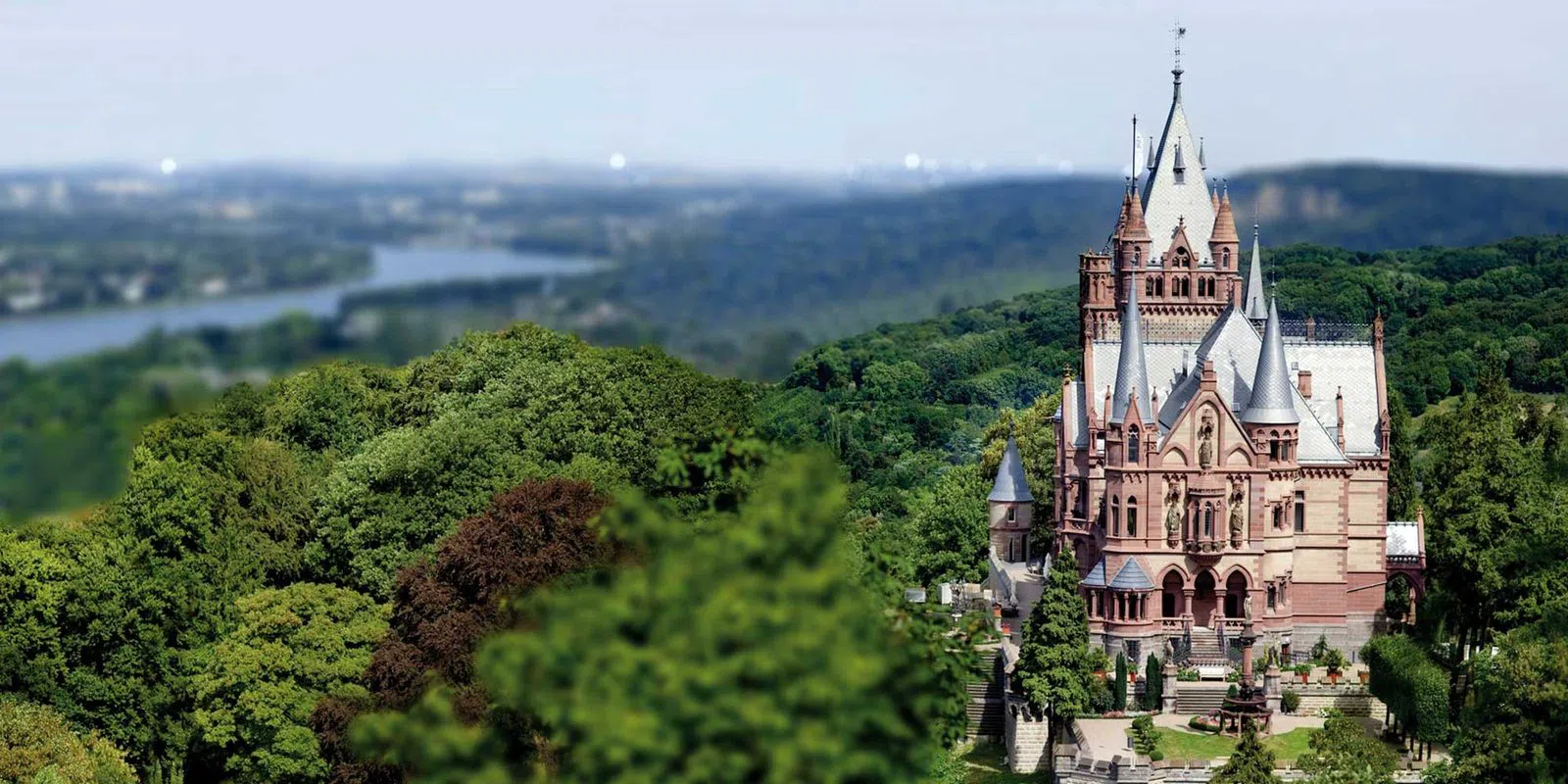
Halfway up, and worth breaking the journey for, is Schloss Drachenburg (mid-mountain, beside the railway's middle station). It looks like a medieval seat and is nothing of the kind. It was raised in the 1880s for a banker who wanted the silhouette without the siege history, and the result is the most photogenic thing between the valley station and the summit. Admission is €10 for adults, €8 reduced and €25 for a family. A group discount starts at twenty people, and private guided tours for a maximum of twenty-five run from forty-five minutes to two hours in several languages, booked in advance through [email protected]. An hour is enough to walk the interiors at your own pace; take the tour if you want the story of how the house was built, lost and put back together.
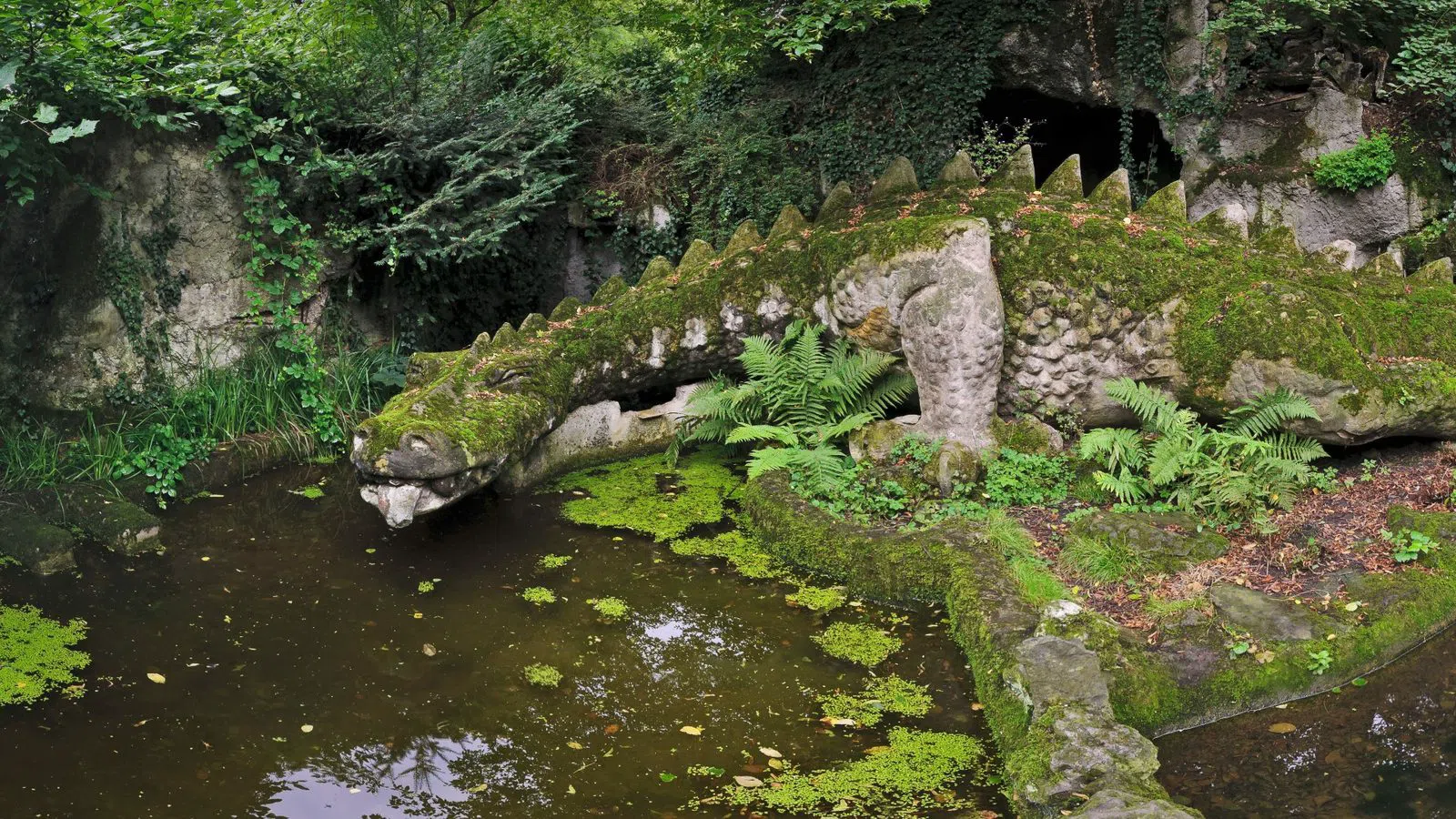
A little higher, and easy to fold into the same walk, is Nibelungenhalle, Drachenhöhle and Reptilienzoo (on the ascent, below the summit). It is odd and atmospheric in a way that has nothing to do with the view: a domed hall, a cave holding a restored stone dragon, and a terrarium of live reptiles. Admission is low, roughly €5 to €7 for an adult, or bundled into the €25.50 Drachenfels combination ticket if you are doing the railway and the castle as well. It takes walk-ins and groups without fuss, but the cave and terrarium rooms are genuinely tight, so a party of twenty should go through in two or three waves rather than as a block. With children who have started to flag on the hill, it is the stop that gets them moving again.
What you can see from the top
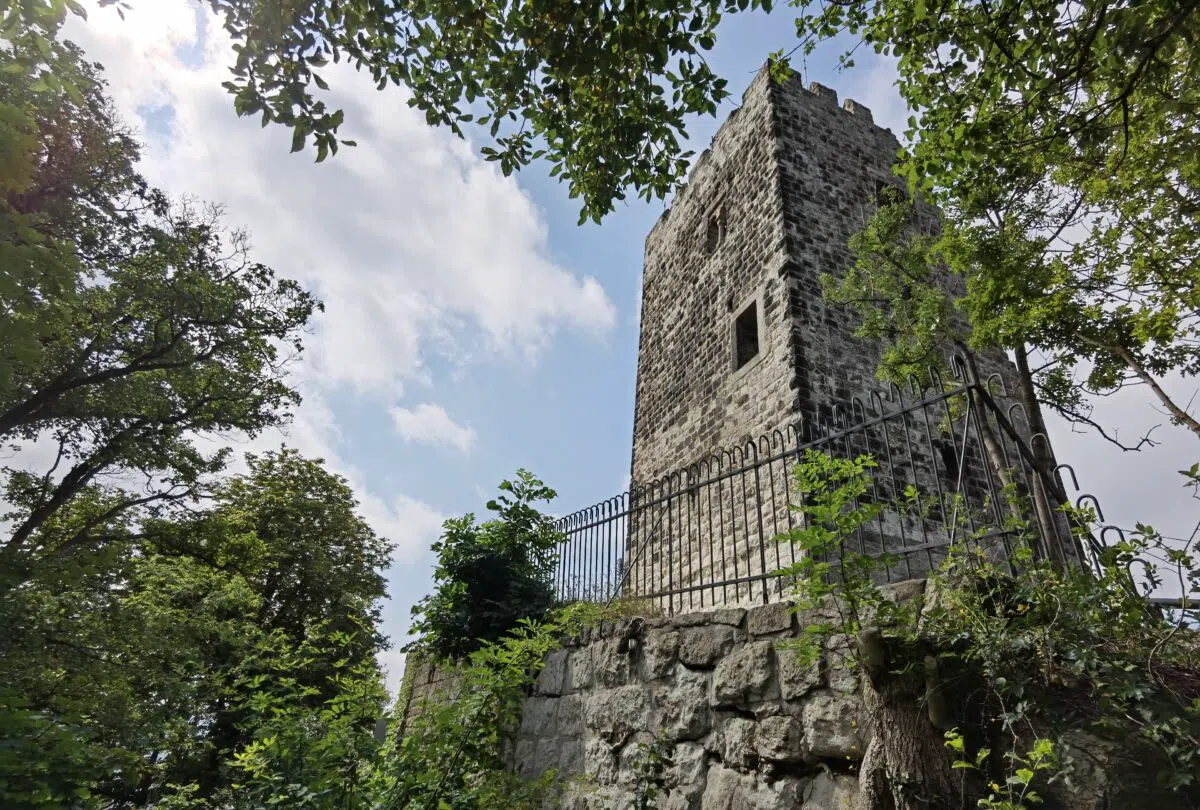
The Drachenfels Castle Ruin and Summit Plateau (summit) is free, unticketed and open around the clock, which is unusual for something this well known. There is no door policy because there is no door, but the plateau is narrow, and between about eleven and three on a fine weekend it is shoulder to shoulder. Bring a group early or late. What you get is the Rhine valley opening north and south, the Eifel hills behind you and the skyline of Bonn laid out downstream; on a clear day the view carries a long way past it. Because nothing closes, an evening ascent is possible, but the railway does stop running, so plan to walk down and carry a torch rather than discover the path in the dark.
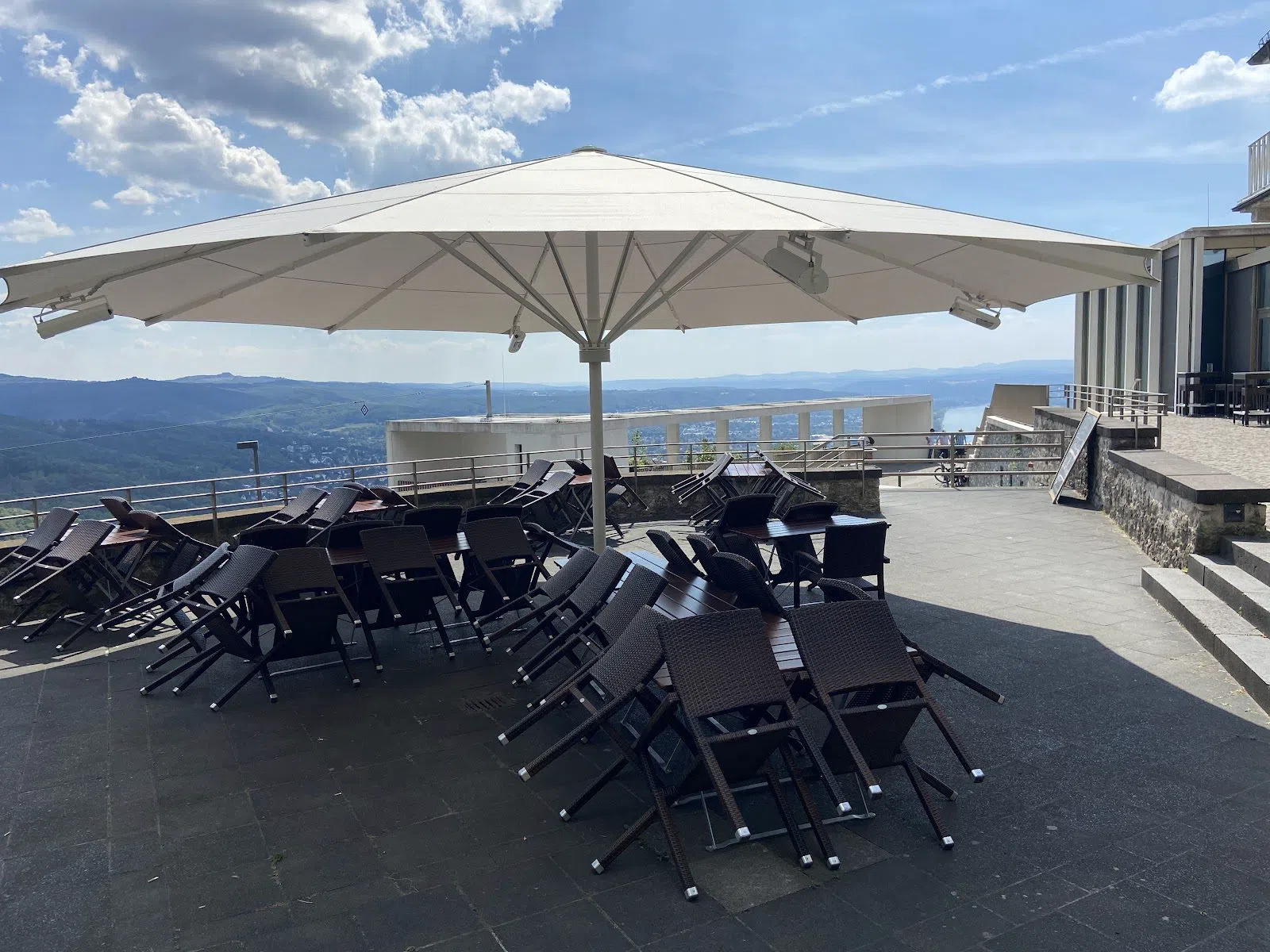
Eating at the top is a question of managing expectations. Drachenfels Restaurant & Eventlocation (summit plateau) opens daily from 10:00 to 19:00 in season, with the terrace in use on fine weekends only and closures when the weather turns, which on an exposed summit it does. There are no reservations for regular dining, so a group queues like everyone else; the separate event side does take booked functions, and that is the route to go down if you are bringing thirty people and want them seated together. Treat it as the coffee-and-cake stop with the best seat in the valley rather than as lunch you have travelled for.
Walking behind the ridge
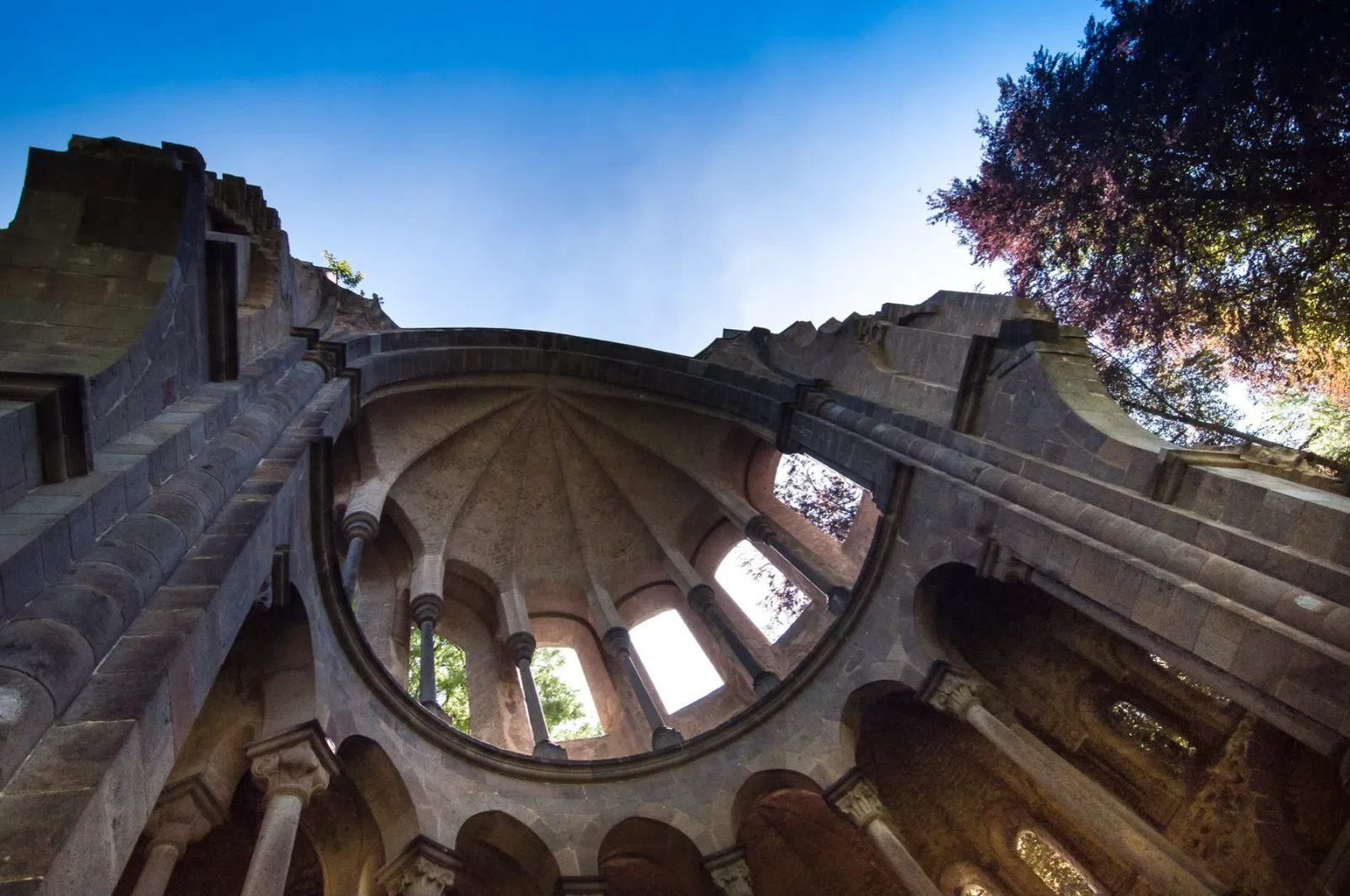
Most visitors go up and come straight back down, which leaves the better half of the Siebengebirge unwalked. Kloster Heisterbach (in the valley behind the Drachenfels) is about twenty minutes away on foot and is the quietest thing in this article: the grounds are freely accessible during the day, and the surviving choir of the abbey church stands in parkland with almost none of the summit's crowd. Guided tours, including the tithe barn, can be booked for groups. Be aware that the tithe-barn exhibition is currently closed for redesign; the ruin and the grounds are the reason to come, not the display.
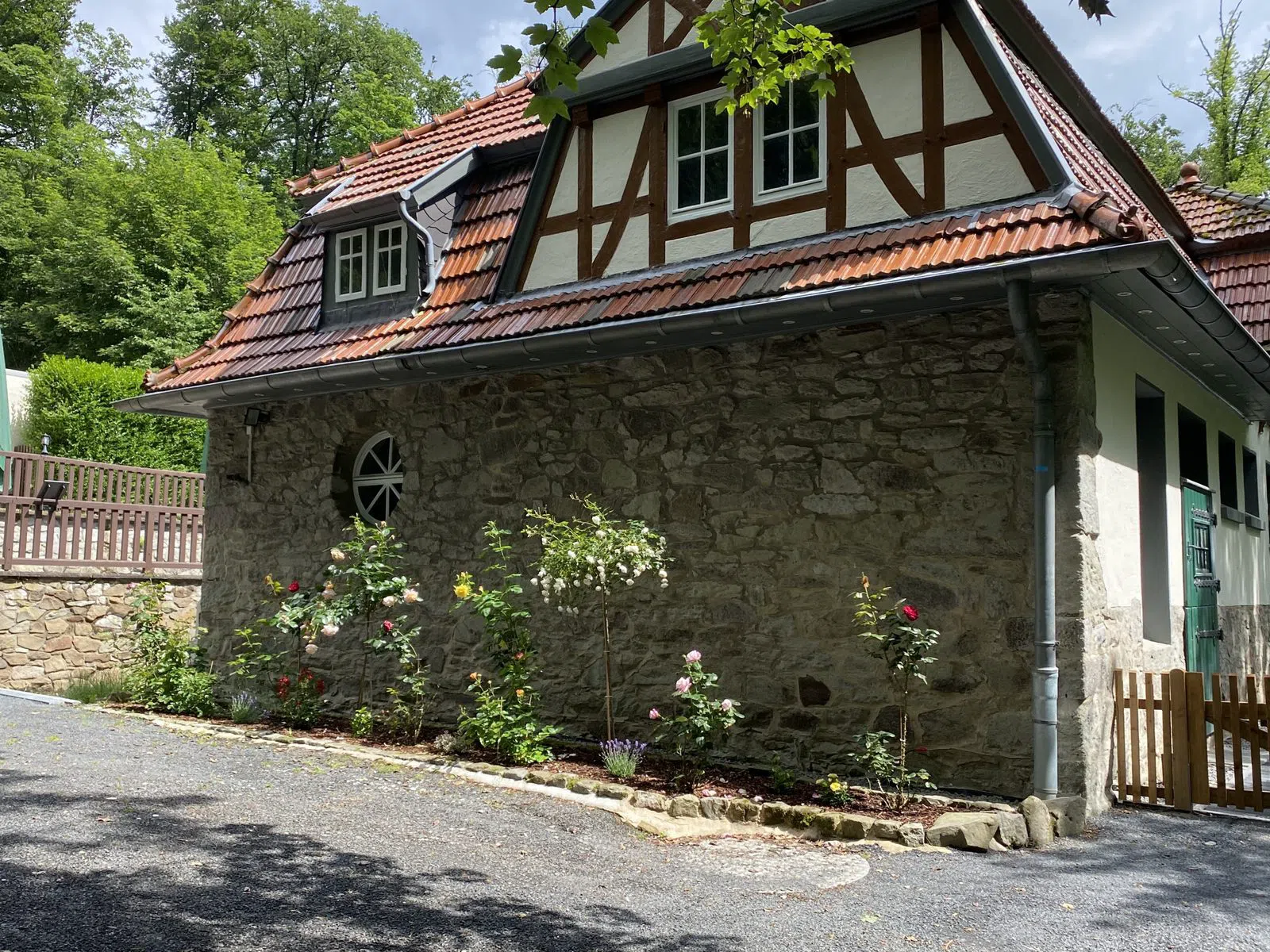
If you carry on into the hills towards the Ölberg, the one place to plan around is Milchhäuschen (Siebengebirge, on the Ölberg walking routes). It is a walkers' inn with a large outdoor terrace, serving cake, coffee, Kölsch and hearty plates, and it is reachable only on foot. It opens Thursday to Sunday and is closed Monday to Wednesday, so build the loop around those days or you will arrive sweaty at a locked door. Ring ahead if you are more than a handful of people.
Back at river level, Siebengebirgsmuseum der Stadt Königswinter (Königswinter Altstadt) supplies the context the mountain itself withholds: how quarrying stripped the hills, how Rhine Romanticism turned a working landscape into a view, and how mass tourism arrived and shaped what you have just walked through. Admission is a small single-digit sum, it is closed on Mondays, weekday opening starts at 14:00, and group tours are arranged in advance. It is the right stop for a wet afternoon or the hour before the ferry back.
Wine and a chancellor's garden
South along the same ridge, Rhöndorf is close enough to add without stretching the day. The Stiftung Bundeskanzler-Adenauer-Haus (Rhöndorf) is the house and garden from which a great deal of post-war Germany was actually run. It is free, with public and group tours given only by the foundation itself, so book a group slot ahead, and note it is closed on Mondays. Of everything here that is not a castle, it is the stop that stays with people longest.
A few minutes away, Weingut Pieper (Rhöndorf, with a second tasting room in Königswinter Altstadt) works ten hectares on the northernmost slopes of the Mittelrhein, which is a genuinely marginal place to grow wine and tastes like it. Group tastings are welcomed at the Rhöndorf vinothek by arrangement; the Kabinett 1695 room in the old town takes walk-ins on evenings and Sunday afternoons, which suits two people with no plan. Check the calendar before setting out, because both rooms close for a summer break: Rhöndorf from 13 August to 3 September 2026.
The hill next door and the far bank
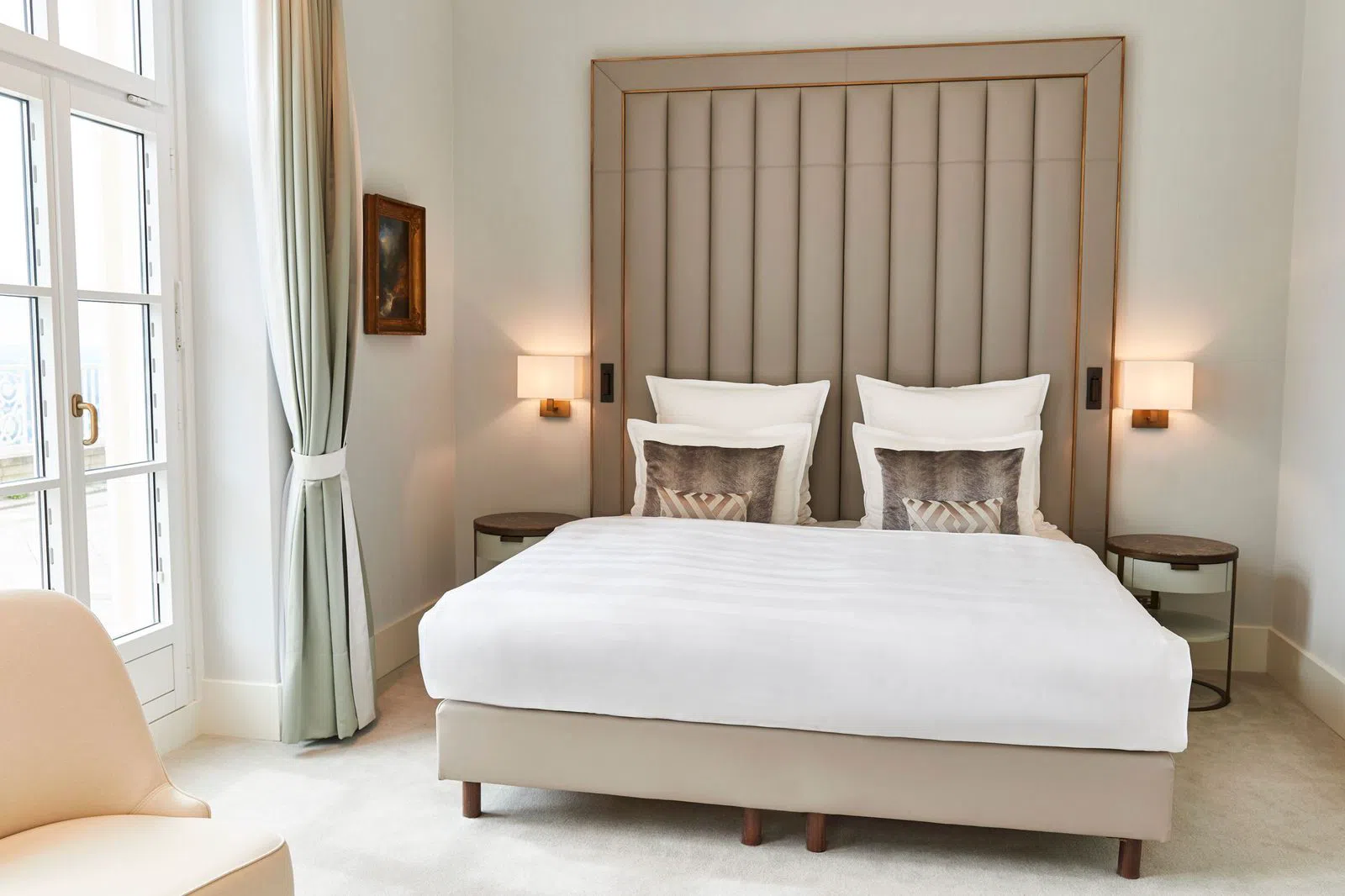
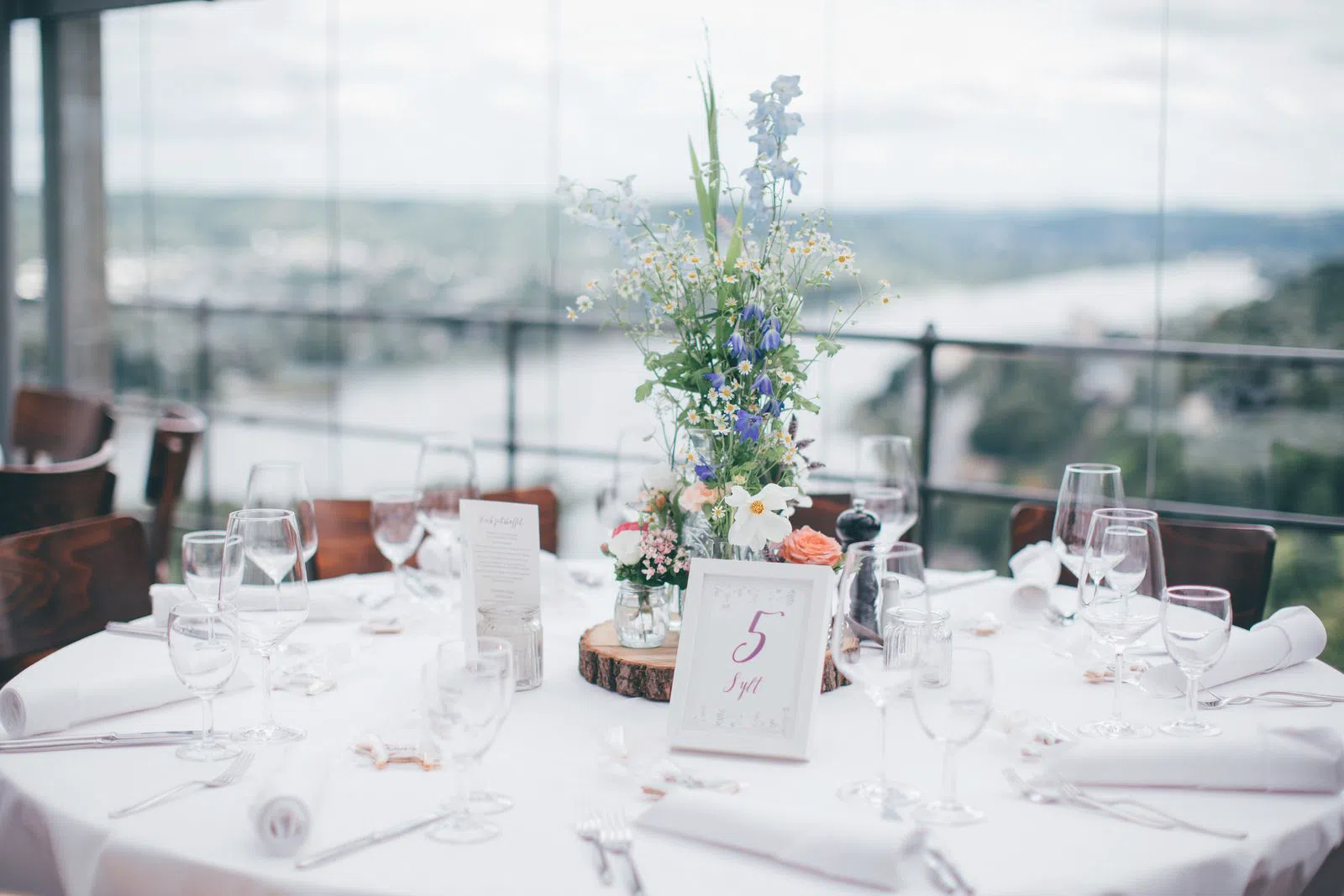
The Drachenfels has a neighbour that most day trippers never climb. Steigenberger Icon Grandhotel & Spa Petersberg (Petersberg) was the federal government's guest house, and it is open to non-residents for its restaurants, café and Biergarten. A coffee on that terrace costs very little, the view over the valley is the equal of the summit, and there is no queue for it. Events and larger parties are core business here, so reserve rather than arrive; dining runs from moderate to expensive and rooms firmly at the top end.
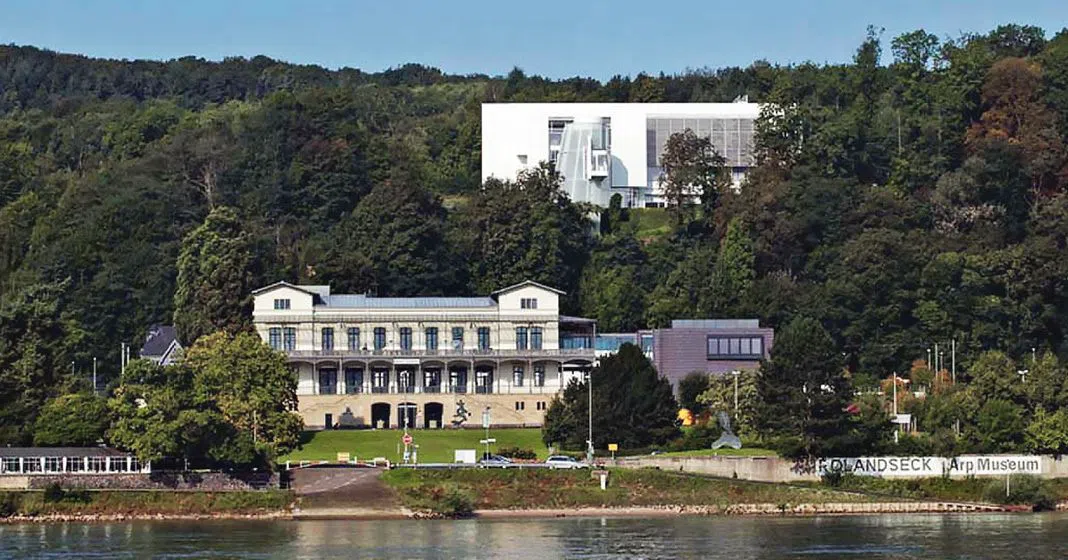
On the opposite bank, and on the same regional rail line as Bonn, Arp Museum Bahnhof Rolandseck (Rolandseck, west bank) puts Hans Arp and Sophie Taeuber-Arp alongside serious temporary exhibitions inside one of the finest museum buildings on the river, a restored 1850s station with a modern wing cut into the hillside behind it. It opens Tuesday to Sunday, 11:00 to 18:00, closed Mondays, at standard museum admission, and group visits and guided tours can be booked. Above it, Restaurant am Rolandsbogen (Rolandseck, at the ruined arch) gives you the last view of the day: back across at the Drachenfels, from a terrace under a single surviving Gothic arch. It is the better lunch of the two summits, it fills at weekends so reserve, groups are taken on the terrace by arrangement, and it is closed on Mondays and Tuesdays and shut over winter, reopening each year on 1 March.
Planning the day
Public transport is simply the better way to do this. The ferry from Mehlem and the west-bank regional line both run frequently, and the free foot-passenger crossing on a valid transport ticket through the second half of 2026 makes the whole trip cheap. Boat out with the scheduled service and train back is the version worth paying for. Nothing in this article needs a car, and the two nicest stops (Milchhäuschen and the summit ruin) could not be reached by one anyway.
Mondays are the day to avoid: the Adenauer house, the Arp Museum, the Rolandsbogen restaurant and the town museum are all shut, and Milchhäuschen is closed Monday to Wednesday. Weekday visitors should also note the museum only opens at 14:00. Carry cash, because small inns, the donkey rides and terrace kiosks are not reliably card-friendly, and the ferry is simpler with coins.
On budget, a couple doing railway return, castle and the Nibelungenhalle should reckon on around €30 to €35 each before food, or €25.50 apiece if the combination ticket suits; a family of four is closer to €70 with the family rates. The summit itself, Kloster Heisterbach and the Adenauer house cost nothing. Groups need to plan two things in advance and no more: the rack railway registration at twenty-five and over, and any guided tour at Schloss Drachenburg.
Give it a full day. If you want an early start on the mountain before the crowds land, staying in the city and crossing at eight is the simplest way to do it. See the Bonn hotel search for somewhere near the river, and the wider Bonn guide for what to do with the evening you come back to.
Before you go
How do I get from Bonn to the Drachenfels without a car?
The Rheinfähre from Bonn-Mehlem crosses roughly every eight minutes from early morning until about 21:45, and from 10 July to 11 December 2026 it is free for foot passengers with a valid public-transport ticket. The landing is a few minutes' walk from the Drachenfelsbahn valley station. Between 3 April and 17 October 2026 you can also come by scheduled river boat with Bonner Personen Schiffahrt, for low to mid teens in euro.
What does the Drachenfelsbahn cost in 2026?
A return costs €14 for adults, €7 for children aged four to thirteen and €35 for a family. Groups of twenty-five or more pay €12 per person with advance registration, and school and kindergarten rates are listed separately. The ride to the summit takes under ten minutes.
Can you walk up the Drachenfels instead of taking the railway?
Yes. A metalled path climbs the hill and most walkers reach the summit in well under an hour. Children can also ride part of the way on the donkeys kept by Familie Muhr: weekends and public holidays from the Easter holidays to 31 October, daily in NRW school holidays, and otherwise only by prior arrangement on 02223 24650.
Is the Drachenfels a good day out with children?
It is one of the easier mountain days for mixed ages, because the rack railway takes the climb out of it. Nibelungenhalle, with its stone dragon and reptile house, keeps younger children moving, and the donkey rides finish at the castle gate. The summit plateau is free and open at all hours. The cave and terrarium rooms are small, so larger parties are better going through in waves.
What is closed on a Monday around the Drachenfels?
Quite a lot. The Adenauer house in Rhöndorf, the Arp Museum Bahnhof Rolandseck, Restaurant am Rolandsbogen and the Siebengebirgsmuseum are all shut on Mondays, and the walkers' inn Milchhäuschen is closed Monday to Wednesday. The summit ruin, Kloster Heisterbach grounds, the ferry and the rack railway are unaffected.